
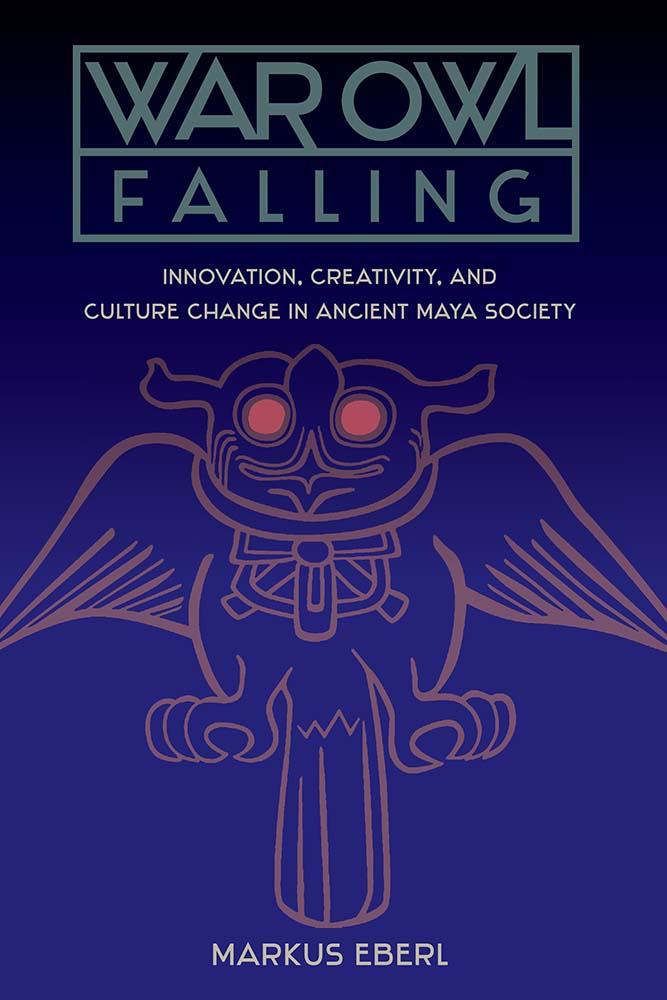
An archaeological exploration of the role of creativity and invention in the ancient Maya civilization
Drawing on archaeological findings from the Maya lowlands, War Owl Falling shows how innovation and creativity led to social change in ancient societies. Markus Eberl discusses the ways eighth-century Maya (and Maya commoners in particular) reinvented objects and signs that were associated with nobility, including scepters, ceramic vessels, ballgame equipment, and the symbol of the owl. These innovations, he argues, reflect assertions of independence and a redistribution of power that contributed to the Maya collapse in the Late Classic period.
Eberl emphasizes that decision-making—the ability to imagine alternate worlds and to act on that vision—plays a large role in changing social structure over time. Contextualizing these decisions in his “Garden of Forking Paths” model, Eberl shows how innovators were those individuals who imagined an array of possible futures and negotiated power to reach desirable outcomes. He dissects the social underpinning of Maya creativity by illustrating their situated method of learning via observation and imitation, stressing that societal constraints or opportunities dictated whether members’ ideas were realized. Pinpointing where and when Maya inventions emerged, how individuals adopted them and why, War Owl Falling connects technological and social change in a novel way.
Zahle einfach mit Karte, Klarna, Apple Pay oder Google Pay. Nicht zufrieden? Du hast immer ein 14-tägiges Widerrufsrecht. Lies mehr in unseren AGB. Hast du Fragen, schreib uns eine E-Mail an hello@memmo.org.
Memmo macht das Lernen einfacher – wo auch immer du bist. Bei uns findest du deine Kursbücher und smarte Lerntools an einem Ort: Zusammenfassungen, Quizzes, Podcasts und Lernkarten. Und Ted, dein Lernbuddy, beantwortet alles, was du wissen möchtest. Über 50.000 Studierende lernen bereits hier – gemacht, damit du schneller lernst und weniger Stress hast.