
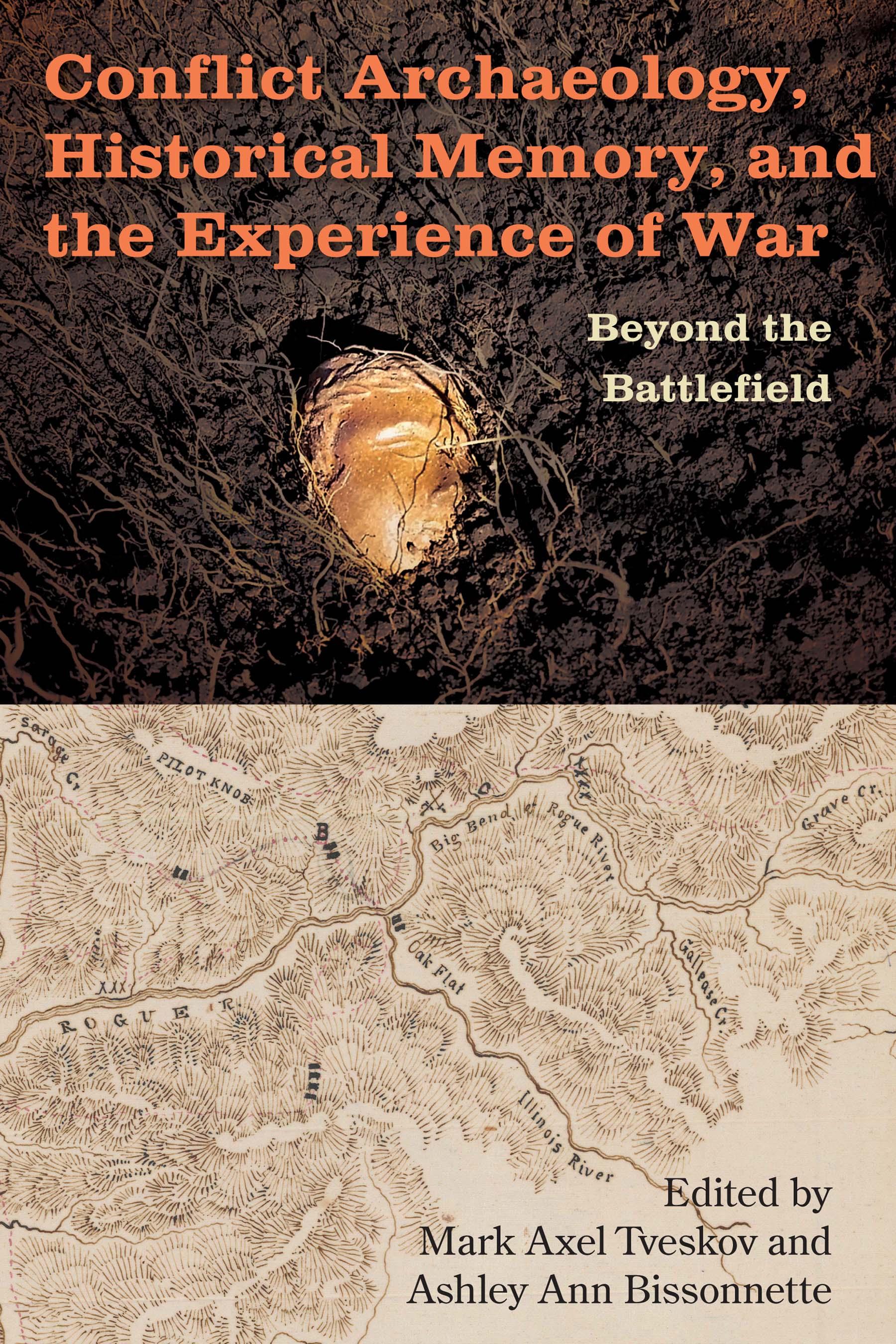
Countering dominant narratives of conflict through attention to memory and trauma
This volume presents approaches to the archaeology of war that move beyond the forensic analysis of battlefields, fortifications, and other sites of conflict to consider the historical memory, commemoration, and social experience of war. Leading scholars offer critical insights that challenge the dominant narratives about landscapes of war from throughout the history of North American settler colonialism.
Grounded in the empirical study of fields of conflict, these essays extend their scope to include a commitment to engaging local Indigenous and other descendant communities and to illustrating how public memories of war are actively and politically constructed. Contributors examine conflicts including the battle of Chikasha, King Philip’s War, the 1694 battle at Guadalupe Mesa, the Rogue River War, the Dakota-U.S. War of 1862, and a World War II battle on the island of Saipan. Studies also investigate the site of the Schenectady Massacre of 1690 and colonial posts staffed by Black soldiers.
Chapters discuss how prevailing narratives often minimized the complexity of these conflicts, smoothed over the contradictions and genocidal violence of colonialism, and erased the diversity of the participants. This volume demonstrates that the collaborative practice of conflict archaeology has the potential to reveal the larger meanings, erased voices, and lingering traumas of war.
Zahle einfach mit Karte, Klarna, Apple Pay oder Google Pay. Nicht zufrieden? Du hast immer ein 14-tägiges Widerrufsrecht. Lies mehr in unseren AGB. Hast du Fragen, schreib uns eine E-Mail an hello@memmo.org.
Memmo macht das Lernen einfacher – wo auch immer du bist. Bei uns findest du deine Kursbücher und smarte Lerntools an einem Ort: Zusammenfassungen, Quizzes, Podcasts und Lernkarten. Und Ted, dein Lernbuddy, beantwortet alles, was du wissen möchtest. Über 50.000 Studierende lernen bereits hier – gemacht, damit du schneller lernst und weniger Stress hast.