
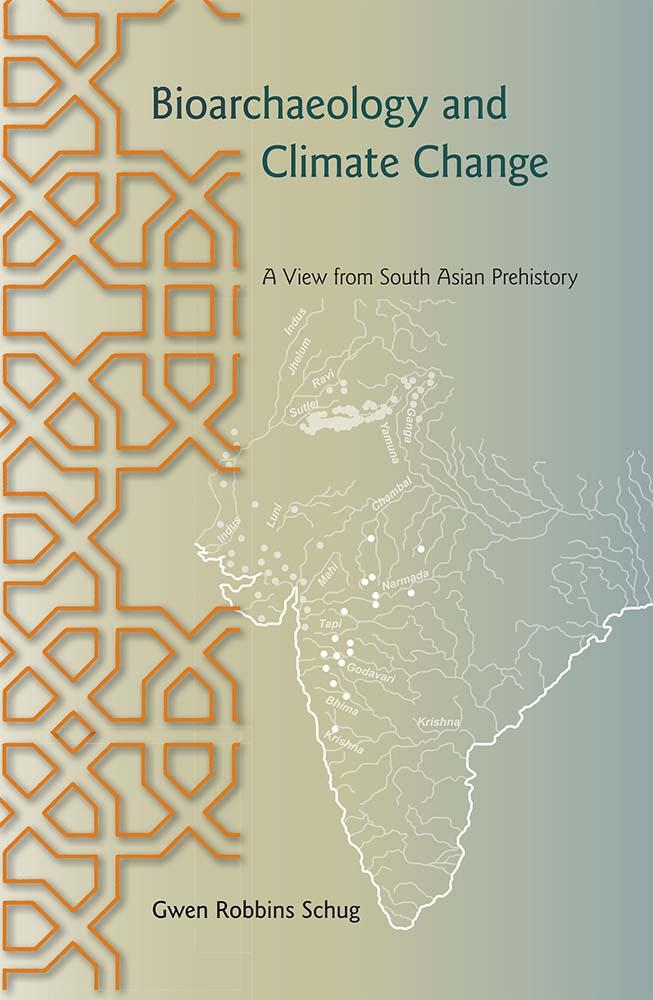
In the context of current debates about global warming, archaeology contributes important insights for understanding environmental changes in prehistory, and the consequences and responses of past populations to them.
In Indian archaeology, climate change and monsoon variability are often invoked to explain major demographic transitions, cultural changes, and migrations of prehistoric populations. During the late Holocene (1400-700 B.C.), agricultural communities flourished in a semiarid region of the Indian subcontinent, until they precipitously collapsed. Gwen Robbins Schug integrates the most recent paleoclimate reconstructions with an innovative analysis of skeletal remains from one of the last abandoned villages to provide a new interpretation of the archaeological record of this period.
Robbins Schug’s biocultural synthesis provides us with a new way of looking at the adaptive, social, and cultural transformations that took place in this region during the first and second millennia B.C. Her work clearly and compellingly usurps the climate change paradigm, demonstrating the complexity of human-environmental transformations. This original and significant contribution to bioarchaeological research and methodology enriches our understanding of both global climate change and South Asian prehistory.
Zahle einfach mit Karte, Klarna, Apple Pay oder Google Pay. Nicht zufrieden? Du hast immer ein 14-tägiges Widerrufsrecht. Lies mehr in unseren AGB. Hast du Fragen, schreib uns eine E-Mail an hello@memmo.org.
Memmo macht das Lernen einfacher – wo auch immer du bist. Bei uns findest du deine Kursbücher und smarte Lerntools an einem Ort: Zusammenfassungen, Quizzes, Podcasts und Lernkarten. Und Ted, dein Lernbuddy, beantwortet alles, was du wissen möchtest. Über 50.000 Studierende lernen bereits hier – gemacht, damit du schneller lernst und weniger Stress hast.