
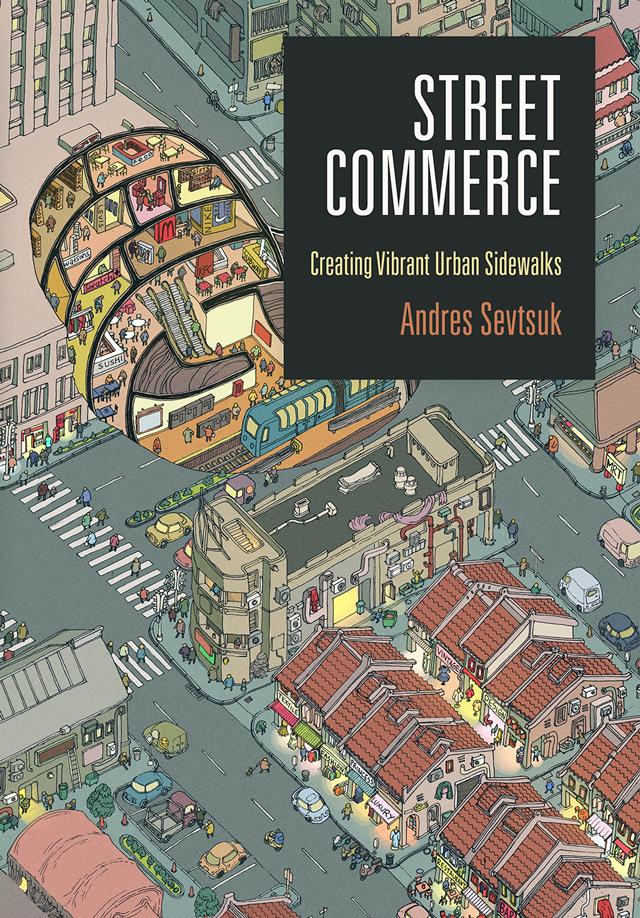
A comprehensive analysis of the issues involved in planning for and facilitating successful street commerce
Street commerce has gained prominence in urban areas, where demographic shifts such as increasing numbers of single people and childless "empty nesters," along with technological innovations enabling greater flexibility of work locations and hours, have changed how people shop and dine out. Contemporary city dwellers are demanding smaller-scale stores located in public spaces that are accessible on foot or by public transit. At the same time, the emergence of online retail undermines both the dominance and viability of big-box discount businesses and drives brick and mortar stores to focus as much on the experience of shopping as on the goods and services sold. Meanwhile, in many developing countries, the bulk of urban retail activity continues to take place on the street, even as new car-oriented shopping centers are on the rise. In light of such trends, street commerce will play an important role in twenty-first-century cities, particularly in producing far-reaching benefits for the environment and local communities.
Although street commerce is deeply intertwined with myriad contemporary urban visions and planning goals—walkability, quality of life, inclusion, equity, and economic resilience—it has rarely been the focus of systematic research and informed practice. In Street Commerce, Andres Sevtsuk presents a comprehensive analysis of the issues involved in implementing successful street commerce. Drawing on economic theory, urban design principles, regulatory policies, and merchant organization models, he conceptualizes key problems and offers innovative solutions. He provides a range of examples from around the world to detail how different cities and communities have bolstered and reinvigorated their street commerce. According to Sevtsuk, successful street commerce can only be achieved when the private sector, urban policy makers, planners, and the public are equipped with the relevant knowledge and tools to plan and regulate it.
Zahle einfach mit Karte, Klarna, Apple Pay oder Google Pay. Nicht zufrieden? Du hast immer ein 14-tägiges Widerrufsrecht. Lies mehr in unseren AGB. Hast du Fragen, schreib uns eine E-Mail an hello@memmo.org.
Memmo macht das Lernen einfacher – wo auch immer du bist. Bei uns findest du deine Kursbücher und smarte Lerntools an einem Ort: Zusammenfassungen, Quizzes, Podcasts und Lernkarten. Und Ted, dein Lernbuddy, beantwortet alles, was du wissen möchtest. Über 50.000 Studierende lernen bereits hier – gemacht, damit du schneller lernst und weniger Stress hast.