
Freedom of religion or belief is deeply entrenched in international human rights conventions and constitutional traditions around the world. Article 18 of the Universal Declaration of Human Rights enshrines the right to freedom of thought, conscience, and religion as does the International Covenant on Civil and Political Rights, which the United Nations General Assembly adopted in 1966. A rich jurisprudence on freedom of religion or belief is based on the European Convention on Human Rights, drafted in 1950 by the Council of Europe. Similar regional guarantees exist in the framework of the Organization of American States as well as within the African Union. Freedom of religion or belief has found recognition in numerous national constitutions, and some governments have shown a particularly strong commitment to the international promotion of this right.
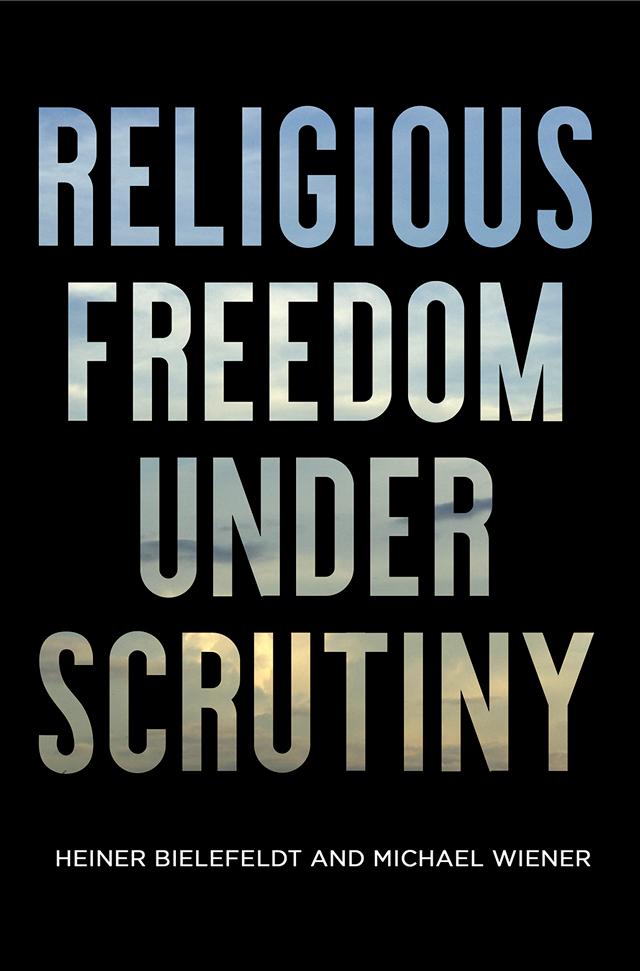
As Heiner Bielefeldt and Michael Wiener observe, however, freedom of religion or belief remains a source of political conflict, legal controversy, and intellectual debate. In Religious Freedom Under Scrutiny, Bielefeldt and Wiener explore various critiques leveled at this right. For example, does freedom of religion contribute to the spread of Western neoliberal values to the detriment of religious and cultural diversity? Can religious freedom serve as the entry point for antifeminist agendas within the human rights framework? Drawing on their considerable experience in the field, Bielefeldt and Wiener provide a typological overview and analysis of violations around the world that illustrate the underlying principles as well as the relationship between freedom of religion or belief and other human rights.
Religious Freedom Under Scrutiny argues that without freedom of religion or belief, human rights cannot fully address our complex needs, yearnings, and vulnerabilities as human beings. Furthermore, ignoring or marginalizing freedom of religion or belief would weaken the plausibility, attractiveness, and legitimacy of the entire system of human rights.
Zahle einfach mit Karte, Klarna, Apple Pay oder Google Pay. Nicht zufrieden? Du hast immer ein 14-tägiges Widerrufsrecht. Lies mehr in unseren AGB. Hast du Fragen, schreib uns eine E-Mail an hello@memmo.org.
Memmo macht das Lernen einfacher – wo auch immer du bist. Bei uns findest du deine Kursbücher und smarte Lerntools an einem Ort: Zusammenfassungen, Quizzes, Podcasts und Lernkarten. Und Ted, dein Lernbuddy, beantwortet alles, was du wissen möchtest. Über 50.000 Studierende lernen bereits hier – gemacht, damit du schneller lernst und weniger Stress hast.