
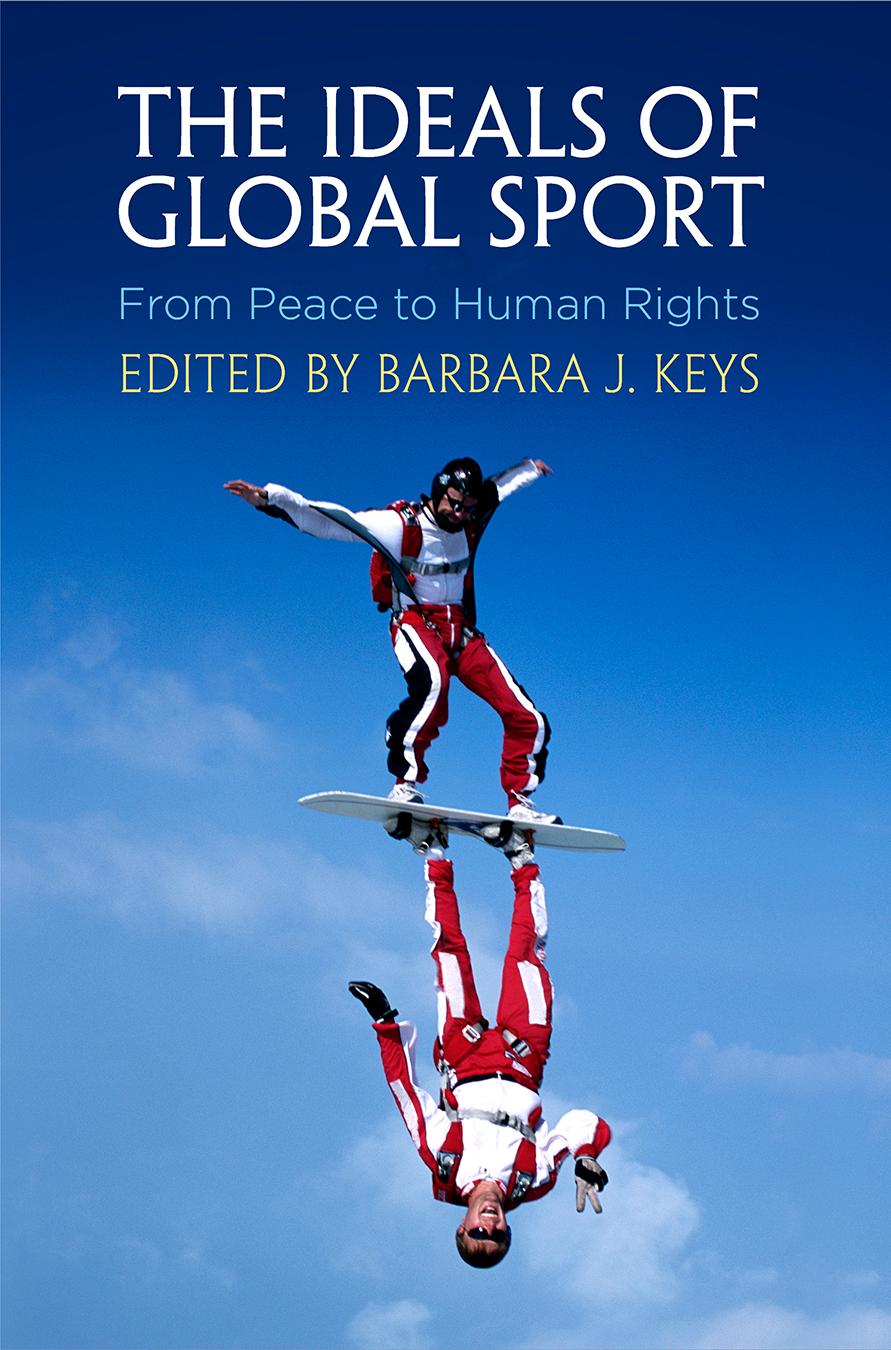
"Sport has the power to change the world," South African president Nelson Mandela told the Sporting Club in Monte Carlo in 2000. Today, we are inundated with similar claims—from politicians, diplomats, intellectuals, journalists, athletes, and fans—about the many ways that international sports competitions make the world a better place. Promoters of the Olympic Games and similar global sports events have spent more than a century telling us that these festivals offer a multitude of "goods": that they foster friendship and mutual understanding among peoples and nations, promote peace, combat racism, and spread democracy. In recent years boosters have suggested that sports mega-events can advance environmental protection in a world threatened by climate change, stimulate economic growth and reduce poverty in developing nations, and promote human rights in repressive countries. If the claims are to be believed, sport is the most powerful and effective form of idealistic internationalism on the planet.
The Ideals of Global Sport investigates these grandiose claims, peeling away the hype to reveal the reality: that shockingly little evidence underpins these endlessly repeated assertions. The essays, written by scholars from many regions and disciplines and drawn from an exceptionally diverse array of sources, show that these bold claims were sometimes cleverly leveraged by activist groups to pressure sports bodies into supporting moral causes. But the essays methodically debunk sports organizations' inflated proclamations about the record of their contributions to peace, mutual understanding, antiracism, and democracy.
Exposing enduring shortcomings in the newer realm of human rights protection, from the 1980 Moscow Olympic Games to Brazil's 2014 World Cup and the 2016 Rio Olympics, The Ideals of Global Sport suggests that sport's idealistic pretensions can have distinctly non-idealistic side effects, distracting from the staggering financial costs of hosting the events, serving corporate interests, and aiding the spread of neoliberal globalization.
Contributors: Jules Boykoff, Susan Brownell, Roland Burke, Simon Creak, Dmitry Dubrovsky, Joon Seok Hong, Barbara J. Keys, Renate Nagamine, João Roriz, Robert Skinner.
Zahle einfach mit Karte, Klarna, Apple Pay oder Google Pay. Nicht zufrieden? Du hast immer ein 14-tägiges Widerrufsrecht. Lies mehr in unseren AGB. Hast du Fragen, schreib uns eine E-Mail an hello@memmo.org.
Memmo macht das Lernen einfacher – wo auch immer du bist. Bei uns findest du deine Kursbücher und smarte Lerntools an einem Ort: Zusammenfassungen, Quizzes, Podcasts und Lernkarten. Und Ted, dein Lernbuddy, beantwortet alles, was du wissen möchtest. Über 50.000 Studierende lernen bereits hier – gemacht, damit du schneller lernst und weniger Stress hast.