
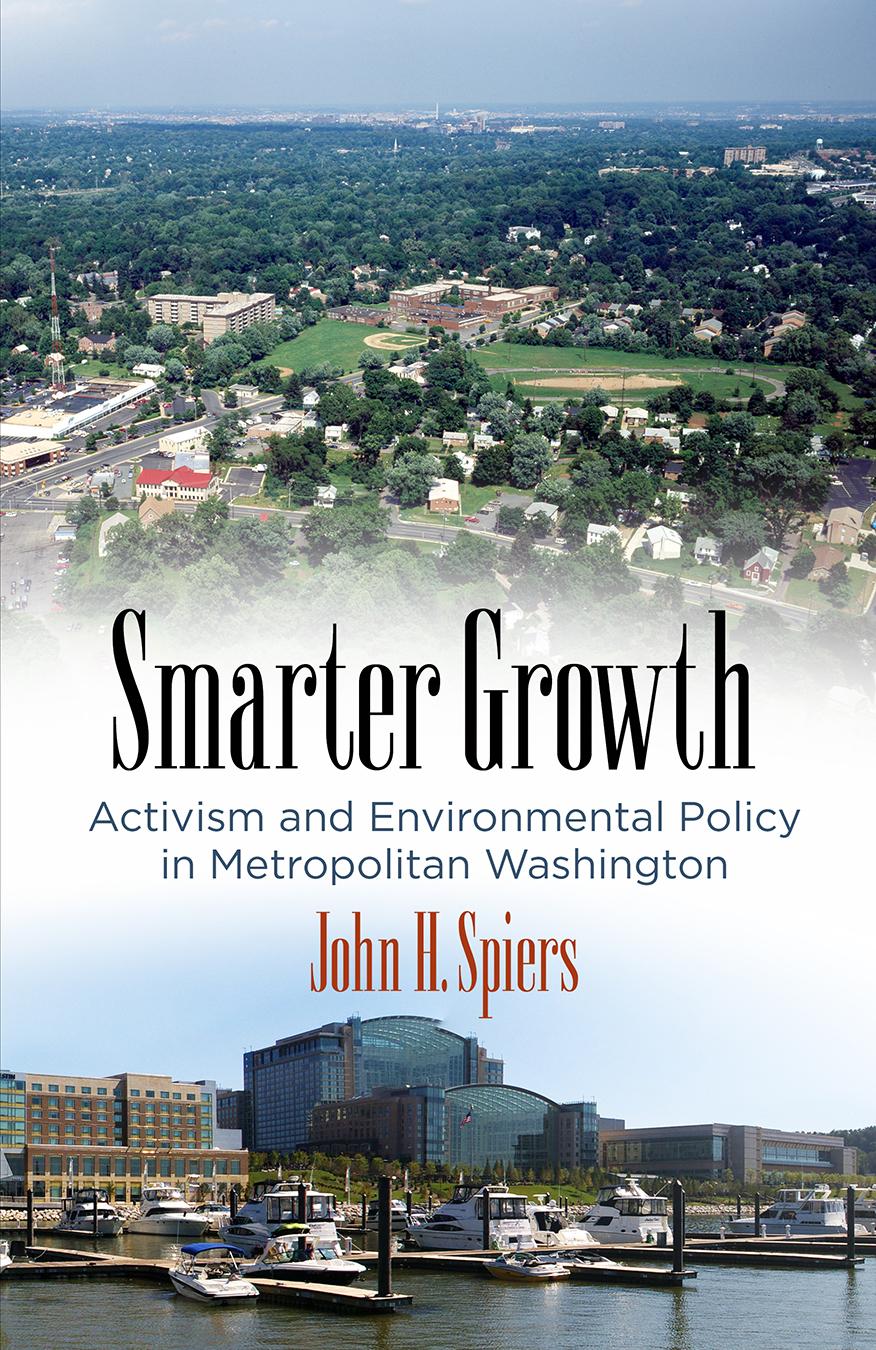
Suburban sprawl has been the prevailing feature—and double-edged sword—of metropolitan America's growth and development since 1945. The construction of homes, businesses, and highways that were signs of the nation's economic prosperity also eroded the presence of agriculture and polluted the environment. This in turn provoked fierce activism from an array of local, state, and national environmental groups seeking to influence planning and policy. Many places can lay claim to these twin legacies of sprawl and the attendant efforts to curb its impact, but, according to John H. Spiers, metropolitan Washington, D.C., in particular, laid the foundations for a smart growth movement that blossomed in the late twentieth century.
In Smarter Growth, Spiers argues that civic and social activists played a key role in pushing state and local officials to address the environmental and fiscal costs of growth. Drawing on case studies including the Potomac River's cleanup, local development projects, and agricultural preservation, he identifies two periods of heightened environmental consciousness in the early to mid-1970s and the late 1990s that resulted in stronger development regulations and land preservation across much of metropolitan Washington.
Smarter Growth offers a fresh understanding of environmental politics in metropolitan America, giving careful attention to the differences between rural, suburban, and urban communities and demonstrating how public officials and their constituents engaged in an ongoing dialogue that positioned environmental protection as an increasingly important facet of metropolitan development over the past four decades. It reveals that federal policies were only one part of a larger decision-making process—and not always for the benefit of the environment. Finally, it underscores the continued importance of grassroots activists for pursuing growth that is environmentally, fiscally, and socially equitable—in a word, smarter.
Zahle einfach mit Karte, Klarna, Apple Pay oder Google Pay. Nicht zufrieden? Du hast immer ein 14-tägiges Widerrufsrecht. Lies mehr in unseren AGB. Hast du Fragen, schreib uns eine E-Mail an hello@memmo.org.
Memmo macht das Lernen einfacher – wo auch immer du bist. Bei uns findest du deine Kursbücher und smarte Lerntools an einem Ort: Zusammenfassungen, Quizzes, Podcasts und Lernkarten. Und Ted, dein Lernbuddy, beantwortet alles, was du wissen möchtest. Über 50.000 Studierende lernen bereits hier – gemacht, damit du schneller lernst und weniger Stress hast.