
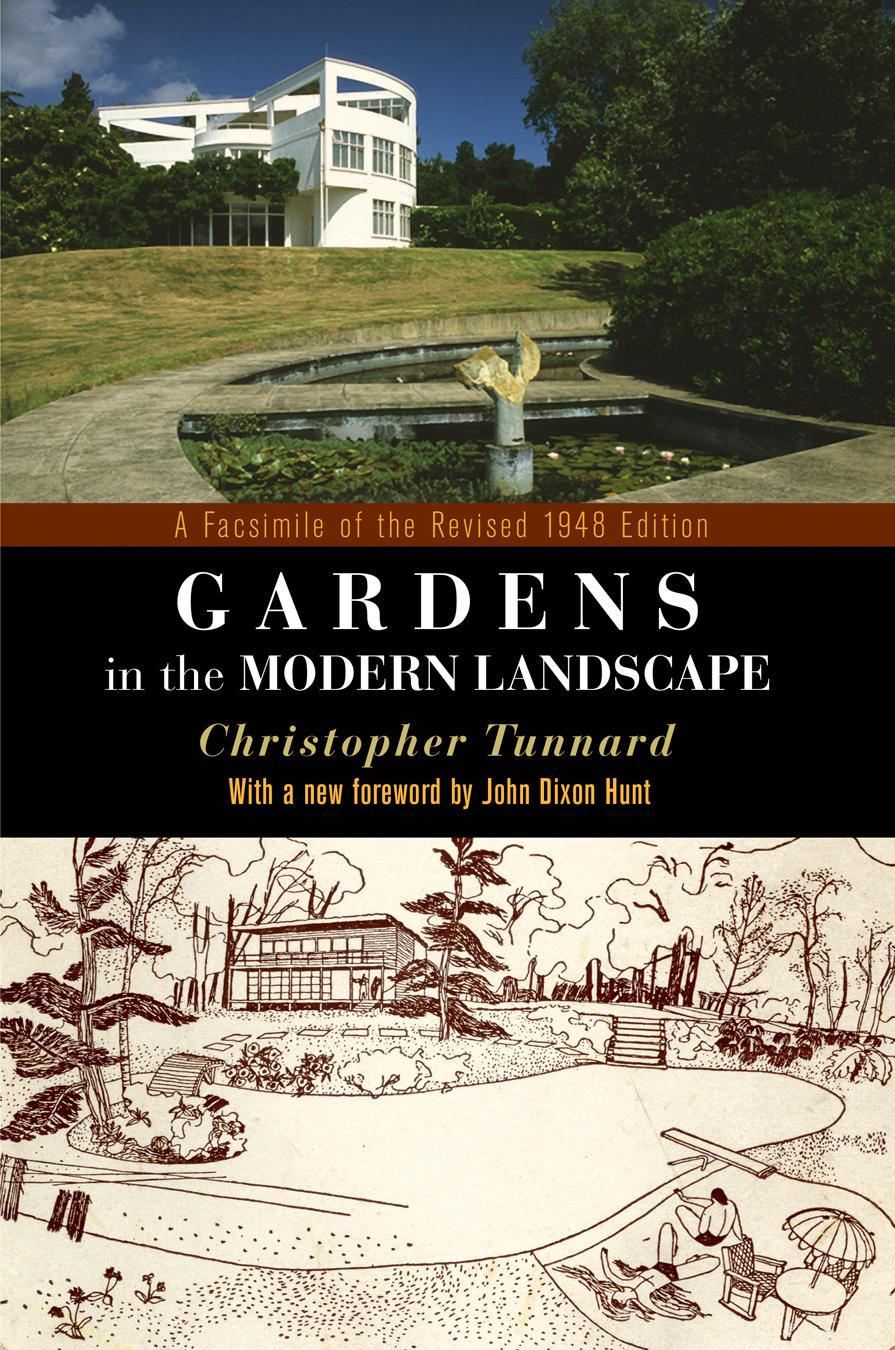
Between 1937 and 1938, garden designer Christopher Tunnard published a series of articles in the British Architectural Review that rejected the prevailing English landscape style. Inspired by the principles of Modernist art and Japanese aesthetics, Tunnard called for a "new technique" in garden design that emphasized an integration of form and purpose. "The functional garden avoids the extremes both of the sentimental expressionism of the wild garden and the intellectual classicism of the 'formal' garden," he wrote; "it embodies rather a spirit of rationalism and through an aesthetic and practical ordering of its units provides a friendly and hospitable milieu for rest and recreation."
Tunnard's magazine pieces were republished in book form as Gardens in the Modern Landscape in 1938, and a revised second edition was issued a decade later. Taken together, these articles constituted a manifesto for the modern garden, its influence evident in the work of such figures as Lawrence Halprin, Philip Johnson, and Edward Larrabee Barnes.
Long out of print, the book is here reissued in a facsimile of the 1948 edition, accompanied by a contextualizing foreword by John Dixon Hunt. Gardens in the Modern Landscape heralded a sea change in the evolution of twentieth-century design, and it also anticipated questions of urban sprawl, historic preservation, and the dynamic between the natural and built environments. Available once more to students, practitioners, and connoisseurs, it stands as a historical document and an invitation to continued innovative thought about landscape architecture.
Zahle einfach mit Karte, Klarna, Apple Pay oder Google Pay. Nicht zufrieden? Du hast immer ein 14-tägiges Widerrufsrecht. Lies mehr in unseren AGB. Hast du Fragen, schreib uns eine E-Mail an hello@memmo.org.
Memmo macht das Lernen einfacher – wo auch immer du bist. Bei uns findest du deine Kursbücher und smarte Lerntools an einem Ort: Zusammenfassungen, Quizzes, Podcasts und Lernkarten. Und Ted, dein Lernbuddy, beantwortet alles, was du wissen möchtest. Über 50.000 Studierende lernen bereits hier – gemacht, damit du schneller lernst und weniger Stress hast.