
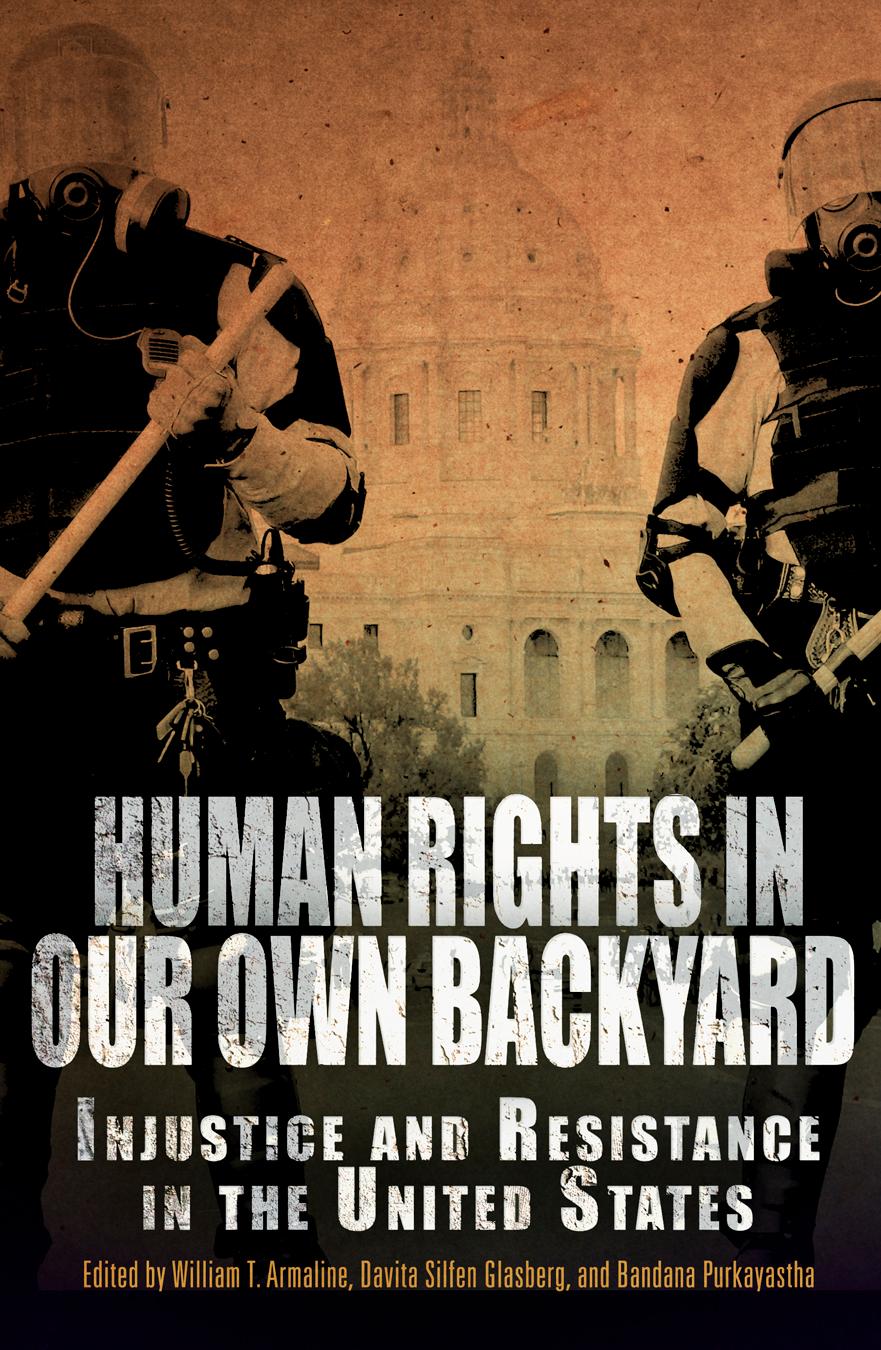
Most Americans assume that the United States provides a gold standard for human rights—a 2007 survey found that 80 percent of U.S. adults believed that "the U.S. does a better job than most countries when it comes to protecting human rights." As well, discussions among scholars and public officials in the United States frame human rights issues as concerning people, policies, or practices "over there." By contrast, the contributors to this volume argue that many of the greatest immediate and structural threats to human rights, and some of the most significant efforts to realize human rights in practice, can be found in our own backyard.
Human Rights in Our Own Backyard examines the state of human rights and responses to human rights issues, drawing on sociological literature and perspectives to interrogate assumptions of American exceptionalism. How do people in the U.S. address human rights issues? What strategies have they adopted, and how successful have these strategies been? Essays are organized around key conventions of human rights, focusing on the relationships between human rights and justice, the state and the individual, civil rights and human rights, and group rights versus individual rights. The contributors are united by a common conception of the human rights enterprise as a process involving not only state-defined and implemented rights but also human rights from below as promoted by activists.
Zahle einfach mit Karte, Klarna, Apple Pay oder Google Pay. Nicht zufrieden? Du hast immer ein 14-tägiges Widerrufsrecht. Lies mehr in unseren AGB. Hast du Fragen, schreib uns eine E-Mail an hello@memmo.org.
Memmo macht das Lernen einfacher – wo auch immer du bist. Bei uns findest du deine Kursbücher und smarte Lerntools an einem Ort: Zusammenfassungen, Quizzes, Podcasts und Lernkarten. Und Ted, dein Lernbuddy, beantwortet alles, was du wissen möchtest. Über 50.000 Studierende lernen bereits hier – gemacht, damit du schneller lernst und weniger Stress hast.