
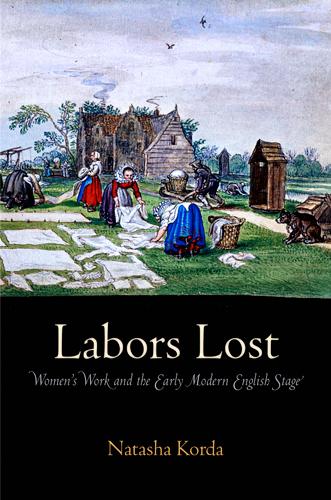
Labors Lost offers a fascinating and wide-ranging account of working women's behind-the-scenes and hitherto unacknowledged contributions to theatrical production in Shakespeare's time. Natasha Korda reveals that the purportedly all-male professional stage relied on the labor, wares, ingenuity, and capital of women of all stripes, including ordinary crafts- and tradeswomen who supplied costumes, props, and comestibles; wealthy heiresses and widows who provided much-needed capital and credit; wives, daughters, and widows of theater people who worked actively alongside their male kin; and immigrant women who fueled the fashion-driven stage with a range of newfangled skills and commodities.
Combining archival research on these and other women who worked in and around the playhouses with revisionist readings of canonical and lesser-known plays, Labors Lost retrieves this lost history by detailing the diverse ways women participated in the work of playing, and the ways male players and playwrights in turn helped to shape the cultural meanings of women's work. Far from a marginal phenomenon, the gendered division of theatrical labor was crucial to the rise of the commercial theaters in London and had an influence on the material culture of the stage and the dramatic works of Shakespeare and his contemporaries.
Zahle einfach mit Karte, Klarna, Apple Pay oder Google Pay. Nicht zufrieden? Du hast immer ein 14-tägiges Widerrufsrecht. Lies mehr in unseren AGB. Hast du Fragen, schreib uns eine E-Mail an hello@memmo.org.
Memmo macht das Lernen einfacher – wo auch immer du bist. Bei uns findest du deine Kursbücher und smarte Lerntools an einem Ort: Zusammenfassungen, Quizzes, Podcasts und Lernkarten. Und Ted, dein Lernbuddy, beantwortet alles, was du wissen möchtest. Über 50.000 Studierende lernen bereits hier – gemacht, damit du schneller lernst und weniger Stress hast.