
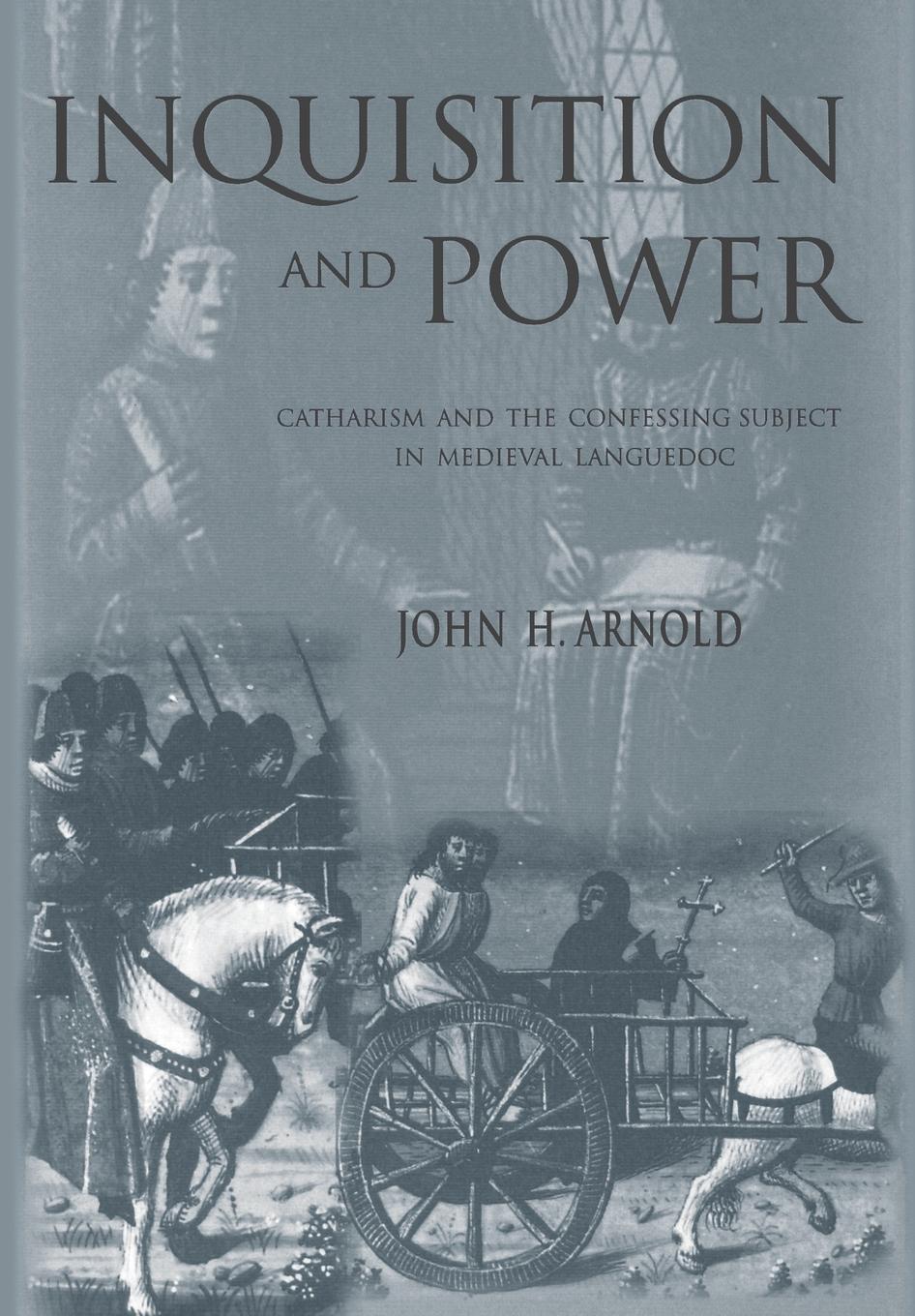
What should historians do with the words of the dead? Inquisition and Power reformulates the historiography of heresy and the inquisition by focusing on depositions taken from the Cathars, a religious sect that opposed the Catholic church and took root in southern France during the twelfth century. Despite the fact that these depositions were spoken in the vernacular, but recorded in Latin in the third person and rewritten in the past tense, historians have often taken these accounts as verbatim transcriptions of personal testimony. This belief has prompted some historians, including E. Le Roy Ladurie, to go so far as to retranslate the testimonies into the first-person. These testimonies have been a long source of controversy for historians and scholars of the Middle Ages.
Arnold enters current theoretical debates about subjectivity and the nature of power to develop reading strategies that will permit a more nuanced reinterpretation of these documents of interrogation. Rather than seeking to recover the true voice of the Cathars from behind the inquisitor's framework, this book shows how the historian is better served by analyzing texts as sites of competing discourses that construct and position a variety of subjectivities. In this critically informed history, Arnold suggests that what we do with the voices of history in fact has as much to do with ourselves as with those we seek to 'rescue' from the silences of past.
Zahle einfach mit Karte, Klarna, Apple Pay oder Google Pay. Nicht zufrieden? Du hast immer ein 14-tägiges Widerrufsrecht. Lies mehr in unseren AGB. Hast du Fragen, schreib uns eine E-Mail an hello@memmo.org.
Memmo macht das Lernen einfacher – wo auch immer du bist. Bei uns findest du deine Kursbücher und smarte Lerntools an einem Ort: Zusammenfassungen, Quizzes, Podcasts und Lernkarten. Und Ted, dein Lernbuddy, beantwortet alles, was du wissen möchtest. Über 50.000 Studierende lernen bereits hier – gemacht, damit du schneller lernst und weniger Stress hast.