
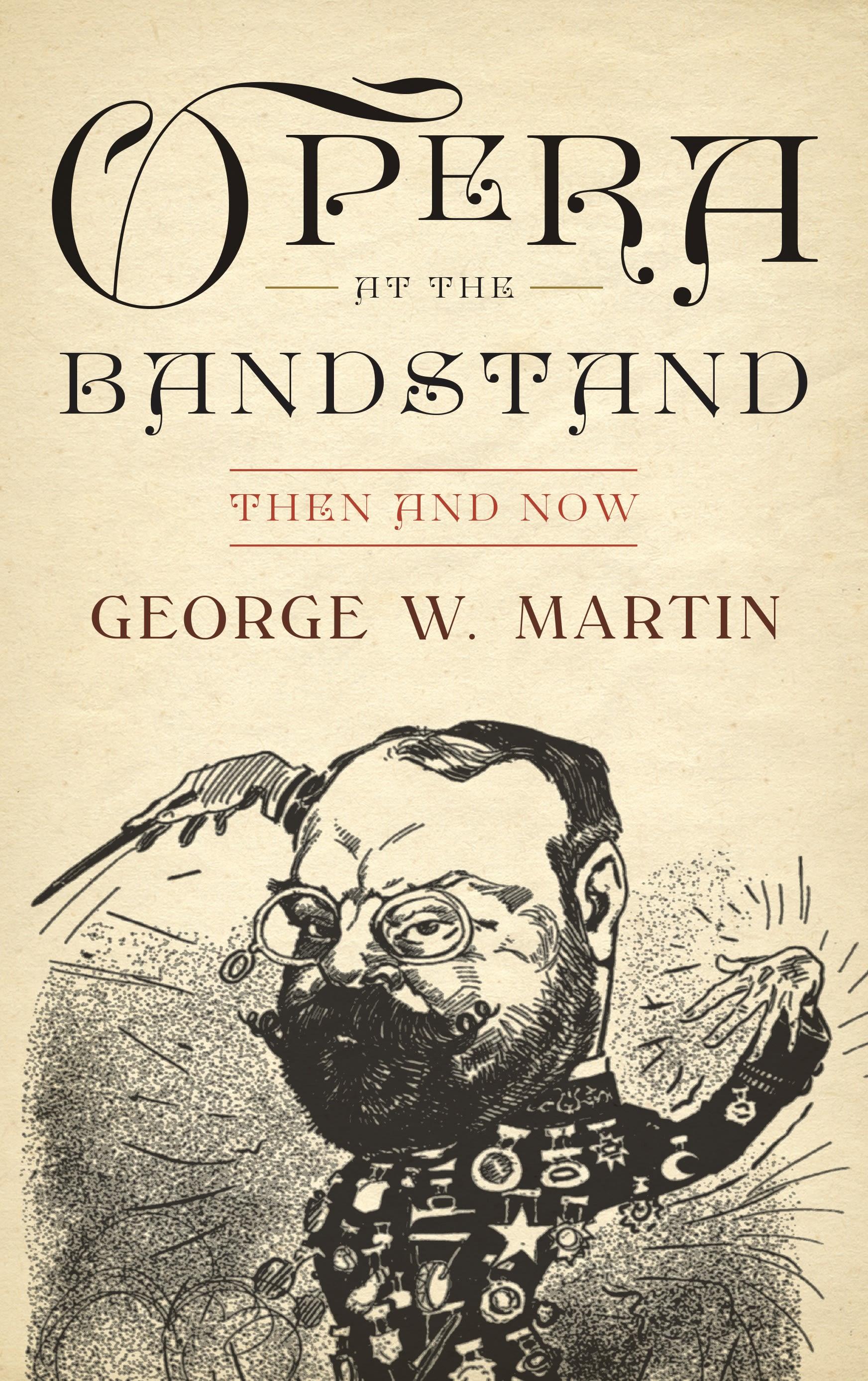
In Opera at the Bandstand: Then and Now, George W. Martin surveys the role of concert bands during the nineteenth and early twentieth centuries in making contemporary opera popular. He also chronicles how in part they lost their audience in the second half of the twentieth century by abandoning operatic repertory.
Martin begins with the Dodworth bands in New York City from the 1850s and moves to the American tour of French conductor and composer Louis Antoine Jullien, bandmaster Patrick S. Gilmore’s jubilee festivals, the era of John Philip Sousa from 1892 to 1932, performances of the Goldman Band of New York City from 1920 to 2005, and finally the wind ensembles sparked by Frederick Fennell. He illustrates the degree to which operatic material comprised these bands’ overall repertory and provides detailed programs in the appendixes.
Opera at the Bandstand describes how the technological advancements sweeping the country, such as radio, automobiles, recordings, television, and air conditioning, along with changes in demographics, affected the country’s musical life. It will appeal to bandmasters and their players, as well as those with an interest in American history, music, popular culture, and opera.
Martin begins with the Dodworth bands in New York City from the 1850s and moves to the American tour of French conductor and composer Louis Antoine Jullien, bandmaster Patrick S. Gilmore’s jubilee festivals, the era of John Philip Sousa from 1892 to 1932, performances of the Goldman Band of New York City from 1920 to 2005, and finally the wind ensembles sparked by Frederick Fennell. He illustrates the degree to which operatic material comprised these bands’ overall repertory and provides detailed programs in the appendixes.
Opera at the Bandstand describes how the technological advancements sweeping the country, such as radio, automobiles, recordings, television, and air conditioning, along with changes in demographics, affected the country’s musical life. It will appeal to bandmasters and their players, as well as those with an interest in American history, music, popular culture, and opera.
Zahle einfach mit Karte, Klarna, Apple Pay oder Google Pay. Nicht zufrieden? Du hast immer ein 14-tägiges Widerrufsrecht. Lies mehr in unseren AGB. Hast du Fragen, schreib uns eine E-Mail an hello@memmo.org.
Memmo macht das Lernen einfacher – wo auch immer du bist. Bei uns findest du deine Kursbücher und smarte Lerntools an einem Ort: Zusammenfassungen, Quizzes, Podcasts und Lernkarten. Und Ted, dein Lernbuddy, beantwortet alles, was du wissen möchtest. Über 50.000 Studierende lernen bereits hier – gemacht, damit du schneller lernst und weniger Stress hast.