
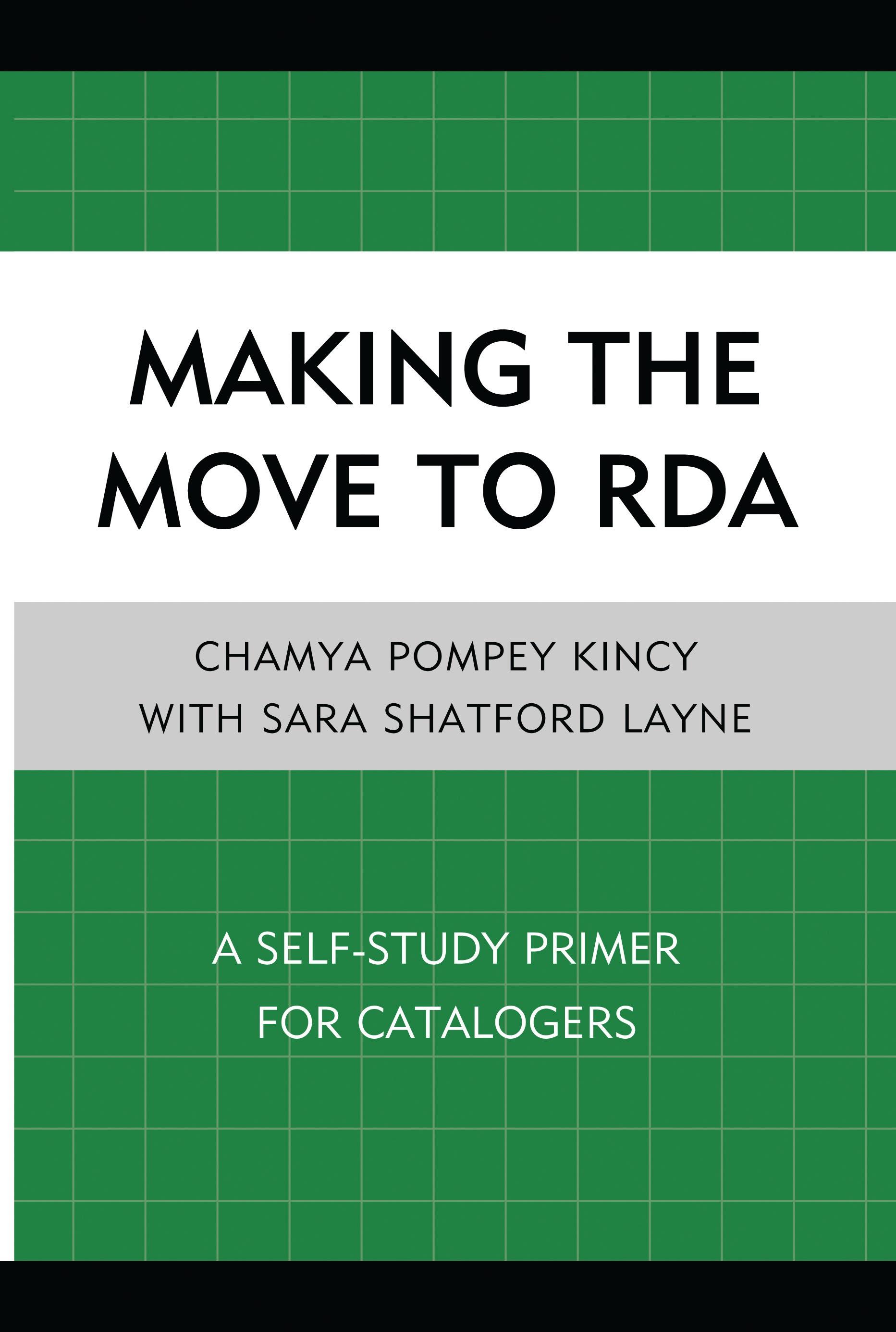
Making the Move to RDA: A Self-Study Primer for Catalogers is aimed at catalogers working in the MARC environment who currently create records using AACR2 and need to transition to using the new standard, Resource Description and Access (RDA). Since both RDA’s structure and content differ from AACR2 in many respects, this primer details the development and rationale for RDA as well as its intended goals, principles, and objectives. It then explains RDA’s theoretical underpinnings—collectively known as the FRBR Family of Models.
Framing the text along these lines provides readers the context for understanding the similarities and differences between AACR2 and RDA, both in terms of content and structure. With this foundation in place, the book takes the reader on a survey of RDA elements used to describe bibliographic and authority records and demonstrates how the MARC code has been expanded to accommodate new elements. Finally, it leads the reader field-by-field through MARC bibliographic records for book and non-book resources as well as through authority records for works, expressions, persons, families, and corporate bodies, describing the similarities and differences between AACR2 and RDA for each field.
Examples are provided throughout the text to help the reader visualize the concepts presented.
Framing the text along these lines provides readers the context for understanding the similarities and differences between AACR2 and RDA, both in terms of content and structure. With this foundation in place, the book takes the reader on a survey of RDA elements used to describe bibliographic and authority records and demonstrates how the MARC code has been expanded to accommodate new elements. Finally, it leads the reader field-by-field through MARC bibliographic records for book and non-book resources as well as through authority records for works, expressions, persons, families, and corporate bodies, describing the similarities and differences between AACR2 and RDA for each field.
Examples are provided throughout the text to help the reader visualize the concepts presented.
Seiten: 346
Kategorie: Samhällsvetenskap
e-ISBN: 9780810887701
Versandgewicht: 1.2 kg
Versand in: 1-2 Tage
Zahle einfach mit Karte, Klarna, Apple Pay oder Google Pay. Nicht zufrieden? Du hast immer ein 14-tägiges Widerrufsrecht. Lies mehr in unseren AGB. Hast du Fragen, schreib uns eine E-Mail an hello@memmo.org.
Memmo macht das Lernen einfacher – wo auch immer du bist. Bei uns findest du deine Kursbücher und smarte Lerntools an einem Ort: Zusammenfassungen, Quizzes, Podcasts und Lernkarten. Und Ted, dein Lernbuddy, beantwortet alles, was du wissen möchtest. Über 50.000 Studierende lernen bereits hier – gemacht, damit du schneller lernst und weniger Stress hast.