
Committed utilitarian reading is either dominantly practical or more or less equally practical and fulfilling. Pleasurable reading is conceptualized as an important kind of casual leisure, experienced primarily as relaxation, active entertainment, and sexual stimulation (racy, pornographic stories). Such reading can also be a launching pad for day-dreams or lively conversation. Self-fulfilling reading is explored in a disquisition on the liberal arts hobbies. This is no place for speed reading, but instead is where we care to pause often to appreciate the artistry of the writing, creativity of the plot, profundity of the message (i.e., the information it contains), and the like. And in fulfilling reading we sometimes want to analyze the material.
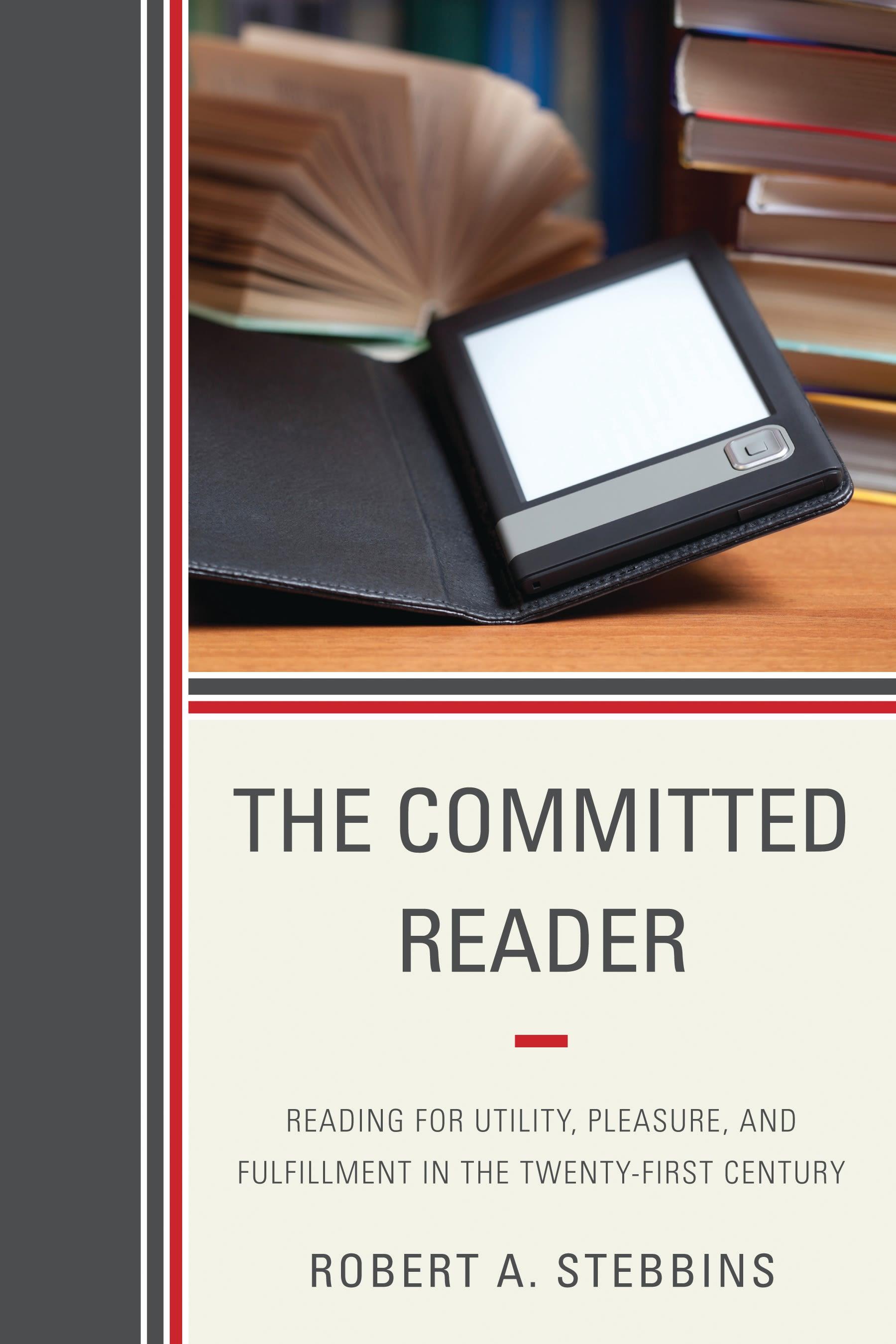
This book explores three main motives for reading identified as utilitarian, pleasurable, and fulfilling. Its principal object is to deepen our understanding of why some adults (and eager late adolescent readers) go in for “committed reading,” or reading that, as we strive to acquire literary knowledge and experience, necessarily consumes considerable time and requires continuous concentration. The conceptual frameworks guiding this endeavor are library and information science and the serious leisure perspective. Through their lenses the author examines the reading of books, magazines, manuals, reports, and other lengthy material as carried out in the three domains of life: work, leisure, and non-work obligation. In brief, committed reading provides its enthusiasts with knowledge and experience, which among other ways, are sought, acquired, interpreted, organized, and sometimes disseminated within the three domains.
This book also examines committed reading in daily life, its ease, convenience, affordability, and enduring effects. There follows a portrait of the various reading environments, including music to read by, reading at airports and on airplanes, reading in one’s study, in a park, on public transit, in public libraries, and elsewhere. This is part of the reader’s social world, which is further comprised of book clubs, bookstores, Amazon.com, censorship, author public readings, and more.
This book explores three main motives for reading identified as utilitarian, pleasurable, and fulfilling. Its principal object is to deepen our understanding of why some adults (and eager late adolescent readers) go in for “committed reading,” or reading that, as we strive to acquire literary knowledge and experience, necessarily consumes considerable time and requires continuous concentration. The conceptual frameworks guiding this endeavor are library and information science and the serious leisure perspective. Through their lenses the author examines the reading of books, magazines, manuals, reports, and other lengthy material as carried out in the three domains of life: work, leisure, and non-work obligation. In brief, committed reading provides its enthusiasts with knowledge and experience, which among other ways, are sought, acquired, interpreted, organized, and sometimes disseminated within the three domains.
This book also examines committed reading in daily life, its ease, convenience, affordability, and enduring effects. There follows a portrait of the various reading environments, including music to read by, reading at airports and on airplanes, reading in one’s study, in a park, on public transit, in public libraries, and elsewhere. This is part of the reader’s social world, which is further comprised of book clubs, bookstores, Amazon.com, censorship, author public readings, and more.
Zahle einfach mit Karte, Klarna, Apple Pay oder Google Pay. Nicht zufrieden? Du hast immer ein 14-tägiges Widerrufsrecht. Lies mehr in unseren AGB. Hast du Fragen, schreib uns eine E-Mail an hello@memmo.org.
Memmo macht das Lernen einfacher – wo auch immer du bist. Bei uns findest du deine Kursbücher und smarte Lerntools an einem Ort: Zusammenfassungen, Quizzes, Podcasts und Lernkarten. Und Ted, dein Lernbuddy, beantwortet alles, was du wissen möchtest. Über 50.000 Studierende lernen bereits hier – gemacht, damit du schneller lernst und weniger Stress hast.