
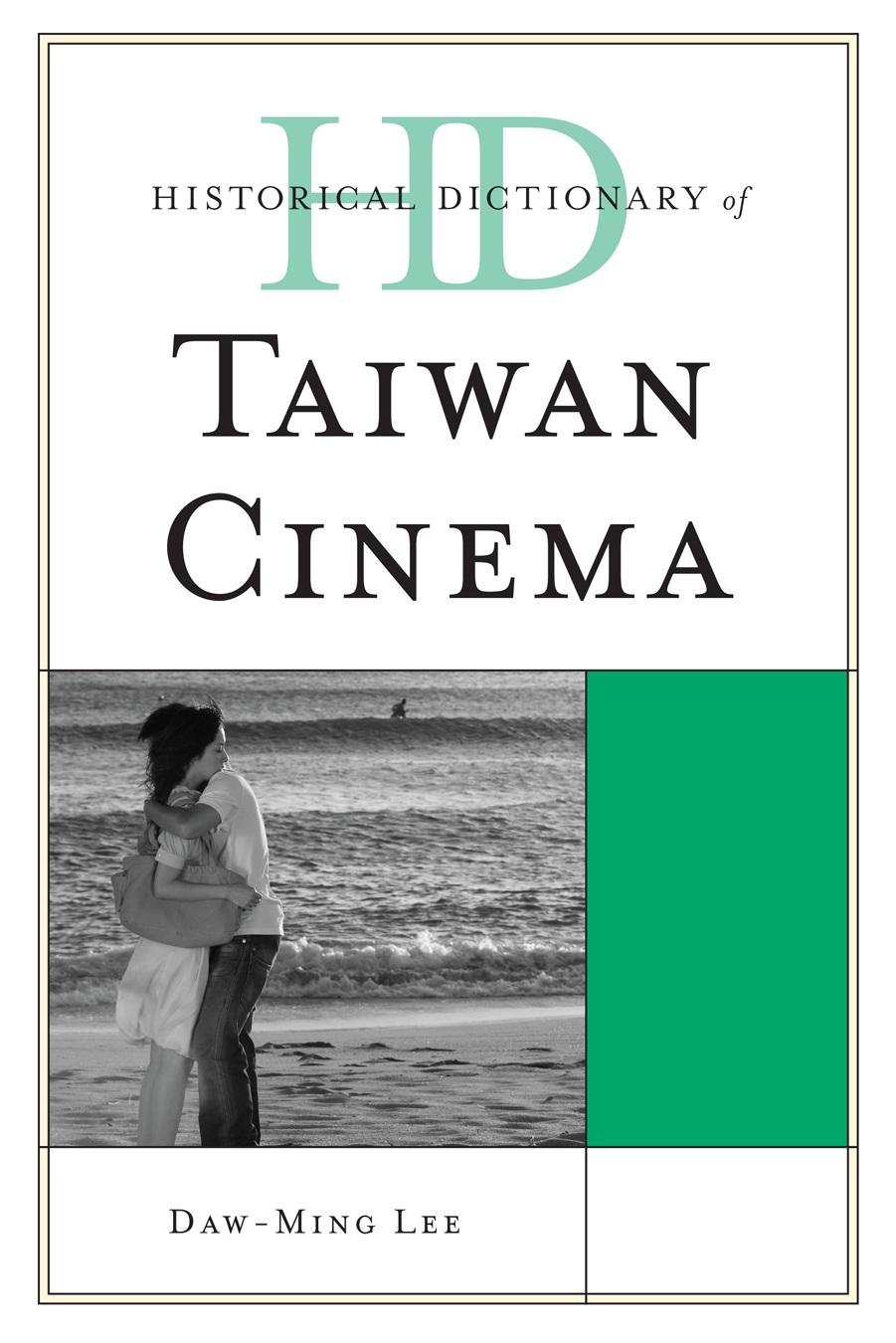
Taiwan was able to solidly build and sustain a film industry only after locally-produced Mandarin films secured markets in Hong Kong and Southeast Asia during the 1960s and 1970s. Though only a small island with a limited population, in its heyday, Taiwan was among the top-10 film producing countries/areas in the world, turning out hundreds of martial arts kung fu films and romantic melodramas annually that were screened in theaters across Southeast Asia and other areas internationally. However, except for one acclaimed film by director King Hu, Taiwan cinema was nearly invisible on the art cinema map until the 1980s, when the films of Hou Hsiao-hsien, Edward Yang, and other Taiwan New Cinema directors gained recognition at international film festivals, first in Europe, and later, throughout the world. Since then, many other Taiwan directors have also become an important part of cinema history, such as Ang Lee and Tsai Ming-liang.
The Historical Dictionary of Taiwan Cinema covers the history of cinema in Taiwan during both the Japanese colonial period (1895-1945) and the Chinese Nationalist period (1945-present). This is accomplished through a chronology highlighting the main events during the long period and an introduction which carefully analyses the progression. The bulk of the information, however, appears in a dictionary section including over a hundred very extensive entries on directors, producers, performers, films, film studios and genres. Photos are also included in the dictionary section. More information can be found through the bibliography. Taiwan cinema is truly unique and this book is a good place to find out more about it, whether you are a student, or teacher, or just a fan.
The Historical Dictionary of Taiwan Cinema covers the history of cinema in Taiwan during both the Japanese colonial period (1895-1945) and the Chinese Nationalist period (1945-present). This is accomplished through a chronology highlighting the main events during the long period and an introduction which carefully analyses the progression. The bulk of the information, however, appears in a dictionary section including over a hundred very extensive entries on directors, producers, performers, films, film studios and genres. Photos are also included in the dictionary section. More information can be found through the bibliography. Taiwan cinema is truly unique and this book is a good place to find out more about it, whether you are a student, or teacher, or just a fan.
Zahle einfach mit Karte, Klarna, Apple Pay oder Google Pay. Nicht zufrieden? Du hast immer ein 14-tägiges Widerrufsrecht. Lies mehr in unseren AGB. Hast du Fragen, schreib uns eine E-Mail an hello@memmo.org.
Memmo macht das Lernen einfacher – wo auch immer du bist. Bei uns findest du deine Kursbücher und smarte Lerntools an einem Ort: Zusammenfassungen, Quizzes, Podcasts und Lernkarten. Und Ted, dein Lernbuddy, beantwortet alles, was du wissen möchtest. Über 50.000 Studierende lernen bereits hier – gemacht, damit du schneller lernst und weniger Stress hast.