
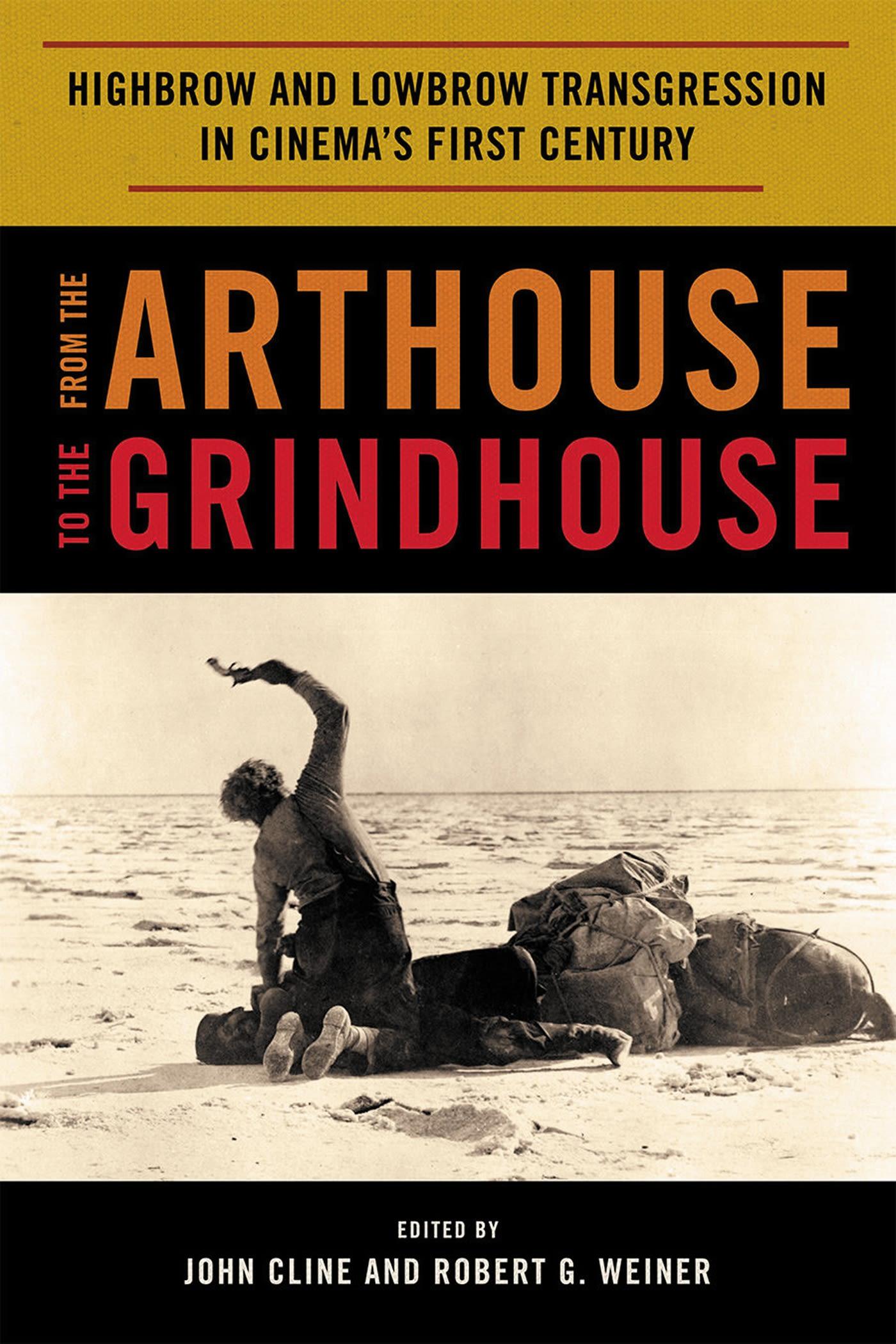
While there are numerous books on art and exploitation cinema, very few attempt to examine both. Covering the first 100 years of cinematic transgressions, From the Arthouse to the Grindhouse is a collection of numerous essays representing key contributions to overlooked, forgotten, or under-analyzed parts of film history. From cult favorites like Arch Hall Jr. to revered but under-documented marquee names like Lon Chaney, filmmakers both major and minor are covered here.
Starting with a section that pairs exploitation pioneers like Dwain Esper alongside cutting edge auteurs like Erich Von Stroheim, the volume documents the bleeding edge of the high/low cultural divide. Other essays examine the sexual melodramas of Weimer German cinema, explore the concept of Borat as a model for the new standardized cult film, and discuss the films of directors Tod Browning, Pier Pasolini, and Peter Watkins. This volume also contains a section devoted to the idea of "reality" inside and outside the documentary sphere, emphasizing audiences' desire to believe that "this is really happening," whether they're horrified or titillated. Addressing many aspects of "transgression" in cinema, these essays suggest that the distance between the venues and the audiences may not be quite as wide as viewers might imagine.
Starting with a section that pairs exploitation pioneers like Dwain Esper alongside cutting edge auteurs like Erich Von Stroheim, the volume documents the bleeding edge of the high/low cultural divide. Other essays examine the sexual melodramas of Weimer German cinema, explore the concept of Borat as a model for the new standardized cult film, and discuss the films of directors Tod Browning, Pier Pasolini, and Peter Watkins. This volume also contains a section devoted to the idea of "reality" inside and outside the documentary sphere, emphasizing audiences' desire to believe that "this is really happening," whether they're horrified or titillated. Addressing many aspects of "transgression" in cinema, these essays suggest that the distance between the venues and the audiences may not be quite as wide as viewers might imagine.
Zahle einfach mit Karte, Klarna, Apple Pay oder Google Pay. Nicht zufrieden? Du hast immer ein 14-tägiges Widerrufsrecht. Lies mehr in unseren AGB. Hast du Fragen, schreib uns eine E-Mail an hello@memmo.org.
Memmo macht das Lernen einfacher – wo auch immer du bist. Bei uns findest du deine Kursbücher und smarte Lerntools an einem Ort: Zusammenfassungen, Quizzes, Podcasts und Lernkarten. Und Ted, dein Lernbuddy, beantwortet alles, was du wissen möchtest. Über 50.000 Studierende lernen bereits hier – gemacht, damit du schneller lernst und weniger Stress hast.