
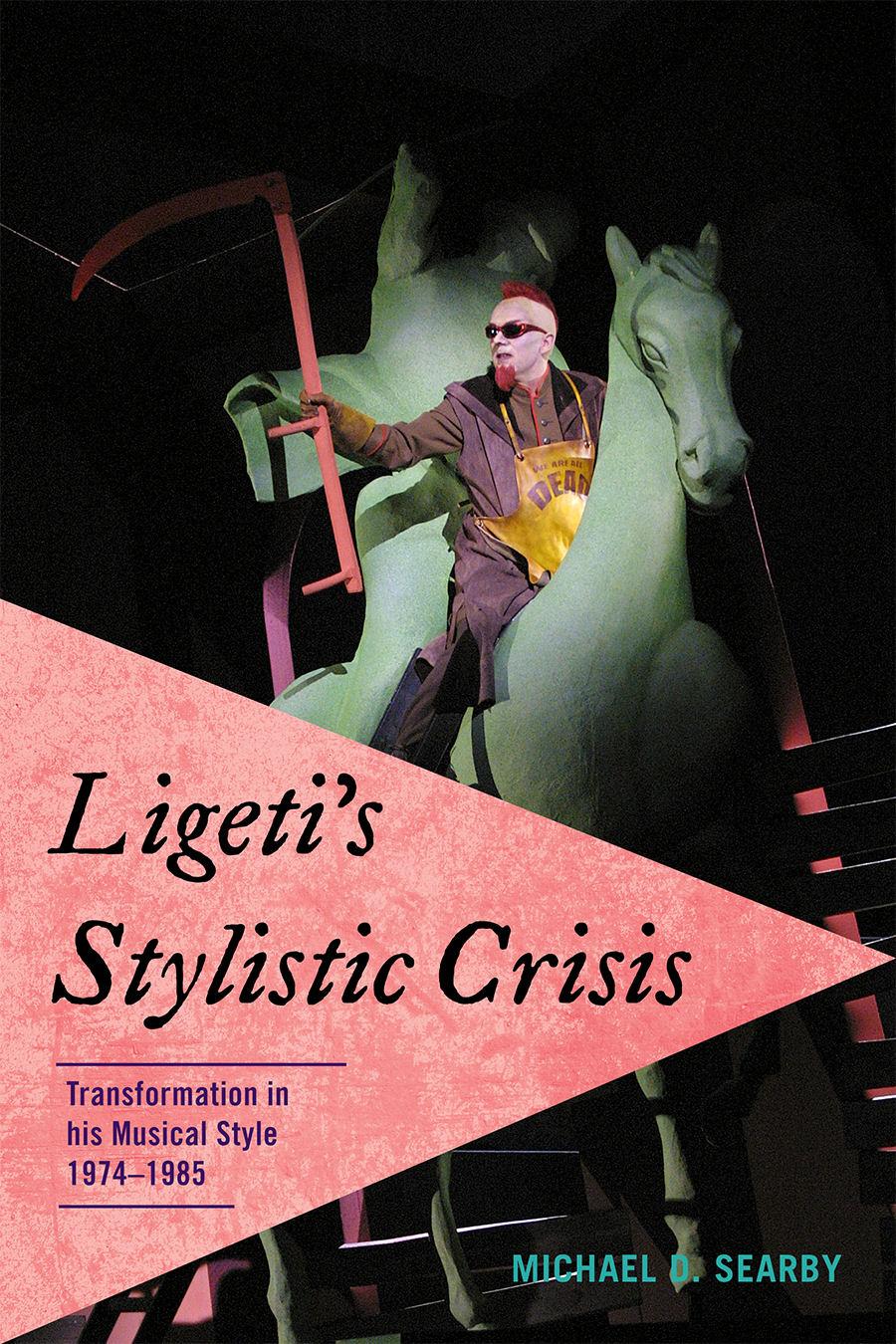
The Hungarian composer György Ligeti (1923-2006) was one of the most innovative and influential composers of the last 50 years. He was one of a number of Central and East European composers, including Witold Lutoslawski and Krzysztof Penderecki, who have created musical languages that combine elements of the modernism of the West with a more flexible attitude to compositional technique. Ligeti's Stylistic Crisis: Transformation in His Musical Style, 1974-1985 explores how Ligeti's compositional style completely transformed during and after the composition of his only opera Le Grand Macabre (1974-1977). Michael D. Searby examines Ligeti's music from 1974 to 1985 in detail, with a particular emphasis on Le Grand Macabre, analyzing the music and providing possible explanations for the stylistic and compositional changes, as well as considering the consequences for Ligeti's subsequent music.
In this first English-language book to focus on Ligeti's most significant work, Le Grand Macabre, Searby investigates Ligeti's music and its relationship to tonality, looking at his return to tradition and use of quotation and pastiche in the opera, and considering the transformation of Ligeti's style and technique after the opera. The Horn Trio (1982) with its romantic phrase structure is also analyzed to demonstrate the radical change in the composer's stylistic approach. Searby also examines Ligeti's relationship with postmodernism, addressing the modernist versus postmodernist polemic as it pertains to Ligeti's works. Many musical examples support the discussion, and an appendix summarizing the opera and photographs from a recent production, as well as an extensive bibliography, add to this valuable reference.
In this first English-language book to focus on Ligeti's most significant work, Le Grand Macabre, Searby investigates Ligeti's music and its relationship to tonality, looking at his return to tradition and use of quotation and pastiche in the opera, and considering the transformation of Ligeti's style and technique after the opera. The Horn Trio (1982) with its romantic phrase structure is also analyzed to demonstrate the radical change in the composer's stylistic approach. Searby also examines Ligeti's relationship with postmodernism, addressing the modernist versus postmodernist polemic as it pertains to Ligeti's works. Many musical examples support the discussion, and an appendix summarizing the opera and photographs from a recent production, as well as an extensive bibliography, add to this valuable reference.
Zahle einfach mit Karte, Klarna, Apple Pay oder Google Pay. Nicht zufrieden? Du hast immer ein 14-tägiges Widerrufsrecht. Lies mehr in unseren AGB. Hast du Fragen, schreib uns eine E-Mail an hello@memmo.org.
Memmo macht das Lernen einfacher – wo auch immer du bist. Bei uns findest du deine Kursbücher und smarte Lerntools an einem Ort: Zusammenfassungen, Quizzes, Podcasts und Lernkarten. Und Ted, dein Lernbuddy, beantwortet alles, was du wissen möchtest. Über 50.000 Studierende lernen bereits hier – gemacht, damit du schneller lernst und weniger Stress hast.