
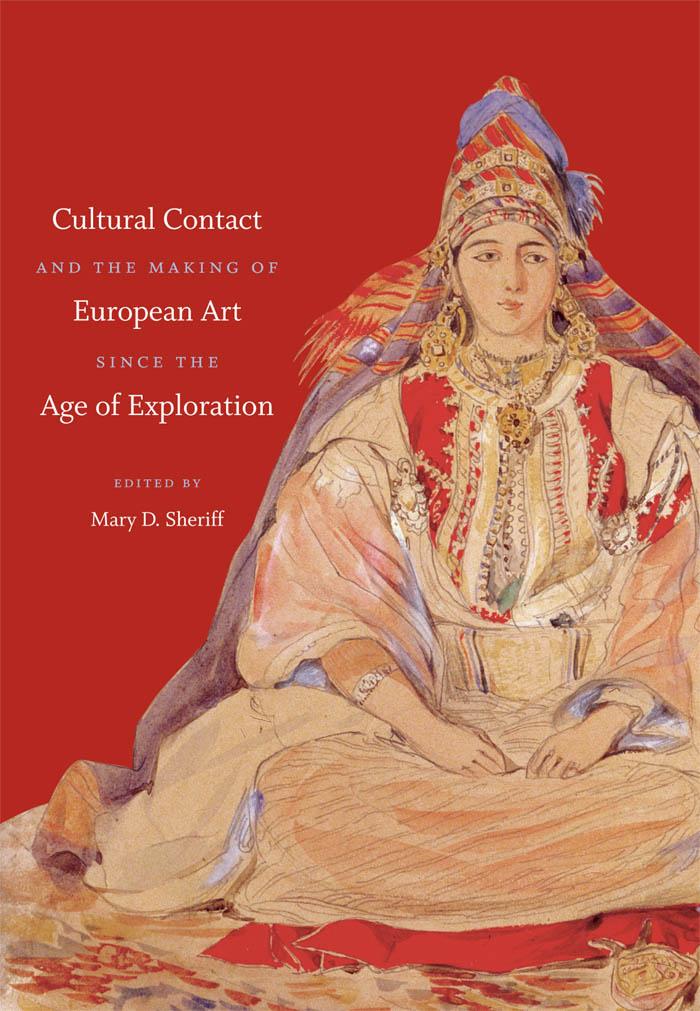
Art historians have long been accustomed to thinking about art and artists in terms of national traditions. This volume takes a different approach, suggesting instead that a history of art based on national divisions often obscures the processes of cultural appropriation and global exchange that shaped the visual arts of Europe in fundamental ways between 1492 and the early twentieth century.
Essays here analyze distinct zones of contact — between various European states, between Asia and Europe, or between Europe and so-called primitive cultures in Africa, the Americas, and the South Pacific — focusing mainly but not exclusively on painting, drawing, or the decorative arts. Each case foregrounds the centrality of international borrowings or colonial appropriations and counters conceptions of European art as a “pure” tradition uninfluenced by the artistic forms of other cultures. The contributors analyze the social, cultural, commercial, and political conditions of cultural contact — including tourism, colonialism, religious pilgrimage, trade missions, and scientific voyages — that enabled these exchanges well before the modern age of globalization.
Contributors:
Claire Farago, University of Colorado at Boulder
Elisabeth A. Fraser, University of South Florida
Julie Hochstrasser, University of Iowa
Christopher Johns, Vanderbilt University
Carol Mavor, University of North Carolina at Chapel Hill
Mary D. Sheriff, University of North Carolina at Chapel Hill
Lyneise E. Williams, University of North Carolina at Chapel Hill
Essays here analyze distinct zones of contact — between various European states, between Asia and Europe, or between Europe and so-called primitive cultures in Africa, the Americas, and the South Pacific — focusing mainly but not exclusively on painting, drawing, or the decorative arts. Each case foregrounds the centrality of international borrowings or colonial appropriations and counters conceptions of European art as a “pure” tradition uninfluenced by the artistic forms of other cultures. The contributors analyze the social, cultural, commercial, and political conditions of cultural contact — including tourism, colonialism, religious pilgrimage, trade missions, and scientific voyages — that enabled these exchanges well before the modern age of globalization.
Contributors:
Claire Farago, University of Colorado at Boulder
Elisabeth A. Fraser, University of South Florida
Julie Hochstrasser, University of Iowa
Christopher Johns, Vanderbilt University
Carol Mavor, University of North Carolina at Chapel Hill
Mary D. Sheriff, University of North Carolina at Chapel Hill
Lyneise E. Williams, University of North Carolina at Chapel Hill
Zahle einfach mit Karte, Klarna, Apple Pay oder Google Pay. Nicht zufrieden? Du hast immer ein 14-tägiges Widerrufsrecht. Lies mehr in unseren AGB. Hast du Fragen, schreib uns eine E-Mail an hello@memmo.org.
Memmo macht das Lernen einfacher – wo auch immer du bist. Bei uns findest du deine Kursbücher und smarte Lerntools an einem Ort: Zusammenfassungen, Quizzes, Podcasts und Lernkarten. Und Ted, dein Lernbuddy, beantwortet alles, was du wissen möchtest. Über 50.000 Studierende lernen bereits hier – gemacht, damit du schneller lernst und weniger Stress hast.
Das könnte dir auch gefallen
Buch kaufen0