
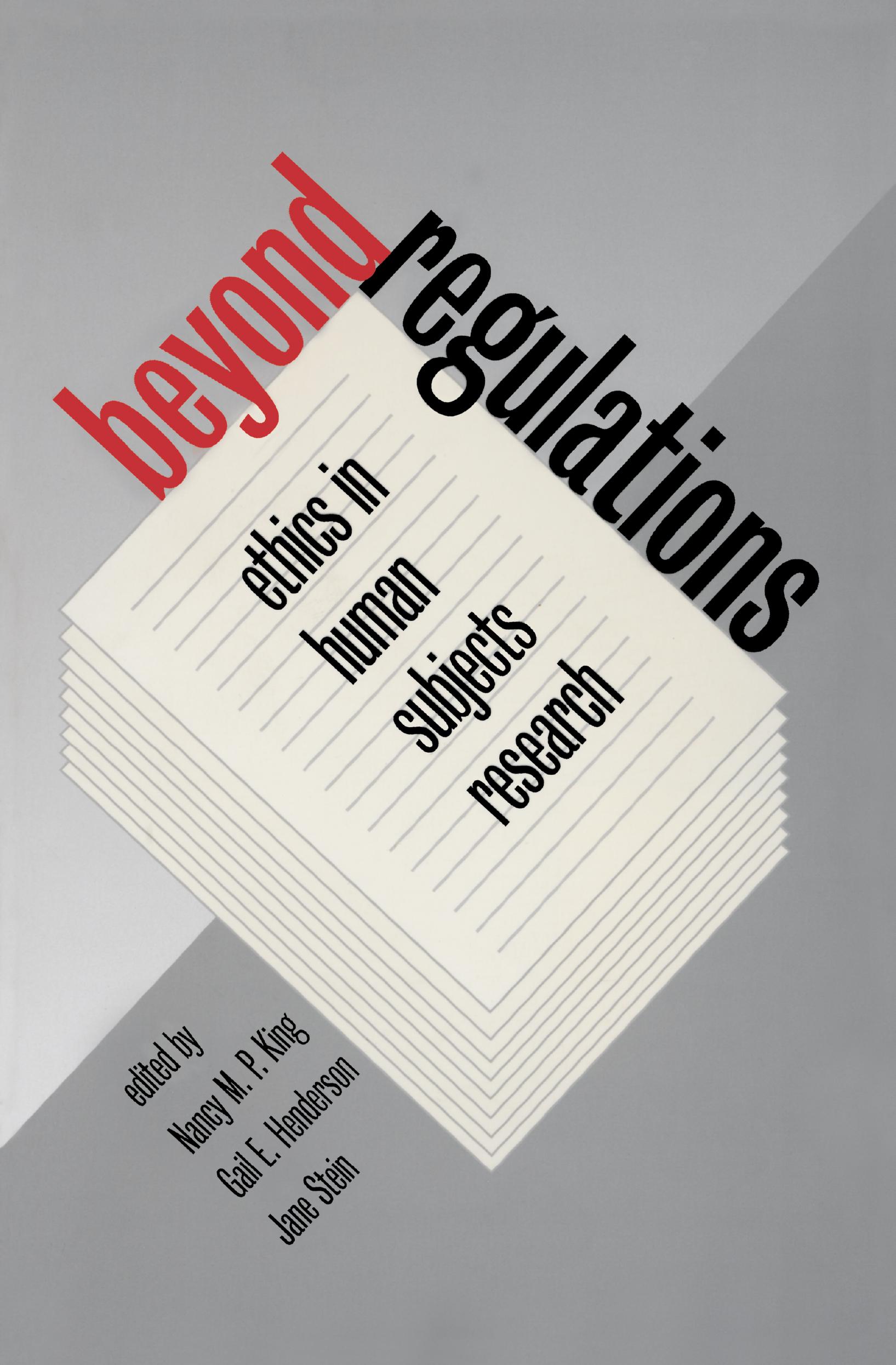
Across a broad range of disciplines — in medicine, social science, and the humanities — researchers, scholars, teachers, and administrators increasingly are looking for new ways to approach ethical issues in research with human subjects. Questions about how relationships between funders and researchers should affect research design, for example, or whether the potential benefits of research can outweigh the importance of its subjects' interests are inadequately addressed by the prevailing, regulation-based research ethics paradigm.
This book constitutes a reexamination of research ethics. It combines case studies and commentaries by a multidisciplinary group of scholars and researchers to explore such topics as informed consent, conflict of interest, confidentiality, and research on illegal behavior. All human subjects research takes place within complex social, cultural, and political contexts, the contributors argue. Increased consideration of the relationships between researchers and their subjects, funders, and institutions within these contexts will facilitate research that is sensitive and responsible as well as scientifically fruitful.
Beyond Regulations features a keynote essay by Ruth Macklin. Other contributors are Marcela Aracena Alvarez, Jorge Balan, B. Susan Bauer, Alan F. Benjamin, Lynn Blanchard, Allan M. Brandt, J. Pat Browder, Barbara Entwisle, Sue E. Estroff, Renee C. Fox, Lara Freidenfelds, Gail E. Henderson, Nancy M. P. King, Loretta M. Kopelman, Ernest N. Kraybill, Barry M. Popkin, Silvina Ramos, Desmond K. Runyan, Jane Stein, Ronald P. Strauss, Keith A. Wailoo, and Cynthia Waszak.
Across a broad range of disciplines — in biomedicine, the social sciences, and the humanities — researchers, scholars, administrators, and teachers increasingly struggle with questions of ethics in research with human subjects. All research takes place in complex social, cultural, political, and economic contexts; yet the prevailing principle-based research ethics paradigm does not adequately account for them.
This book reexamines research ethics using a new relationships paradigm. Through in-depth cases, commentaries, and essays, a multidisciplinary group of scholars and researchers addresses informed consent, conflict of interest, confidentiality, and other issues, considering questions like: What relationships should researchers have with their subjects' communities? When researchers and subjects have different views about research, who should have control? How should relationships between funders and researchers affect research design? Can research be so potentially beneficial that its importance outweighs the interests of subjects? Examining the relationships between researchers and subjects, communities, funders, and institutions — including considerations of authority and voice — can facilitate human subjects research that is morally sensitive and responsible as well as scientifically fruitful.
This book constitutes a reexamination of research ethics. It combines case studies and commentaries by a multidisciplinary group of scholars and researchers to explore such topics as informed consent, conflict of interest, confidentiality, and research on illegal behavior. All human subjects research takes place within complex social, cultural, and political contexts, the contributors argue. Increased consideration of the relationships between researchers and their subjects, funders, and institutions within these contexts will facilitate research that is sensitive and responsible as well as scientifically fruitful.
Beyond Regulations features a keynote essay by Ruth Macklin. Other contributors are Marcela Aracena Alvarez, Jorge Balan, B. Susan Bauer, Alan F. Benjamin, Lynn Blanchard, Allan M. Brandt, J. Pat Browder, Barbara Entwisle, Sue E. Estroff, Renee C. Fox, Lara Freidenfelds, Gail E. Henderson, Nancy M. P. King, Loretta M. Kopelman, Ernest N. Kraybill, Barry M. Popkin, Silvina Ramos, Desmond K. Runyan, Jane Stein, Ronald P. Strauss, Keith A. Wailoo, and Cynthia Waszak.
Across a broad range of disciplines — in biomedicine, the social sciences, and the humanities — researchers, scholars, administrators, and teachers increasingly struggle with questions of ethics in research with human subjects. All research takes place in complex social, cultural, political, and economic contexts; yet the prevailing principle-based research ethics paradigm does not adequately account for them.
This book reexamines research ethics using a new relationships paradigm. Through in-depth cases, commentaries, and essays, a multidisciplinary group of scholars and researchers addresses informed consent, conflict of interest, confidentiality, and other issues, considering questions like: What relationships should researchers have with their subjects' communities? When researchers and subjects have different views about research, who should have control? How should relationships between funders and researchers affect research design? Can research be so potentially beneficial that its importance outweighs the interests of subjects? Examining the relationships between researchers and subjects, communities, funders, and institutions — including considerations of authority and voice — can facilitate human subjects research that is morally sensitive and responsible as well as scientifically fruitful.
Zahle einfach mit Karte, Klarna, Apple Pay oder Google Pay. Nicht zufrieden? Du hast immer ein 14-tägiges Widerrufsrecht. Lies mehr in unseren AGB. Hast du Fragen, schreib uns eine E-Mail an hello@memmo.org.
Memmo macht das Lernen einfacher – wo auch immer du bist. Bei uns findest du deine Kursbücher und smarte Lerntools an einem Ort: Zusammenfassungen, Quizzes, Podcasts und Lernkarten. Und Ted, dein Lernbuddy, beantwortet alles, was du wissen möchtest. Über 50.000 Studierende lernen bereits hier – gemacht, damit du schneller lernst und weniger Stress hast.
Das könnte dir auch gefallen
Buch kaufen0