
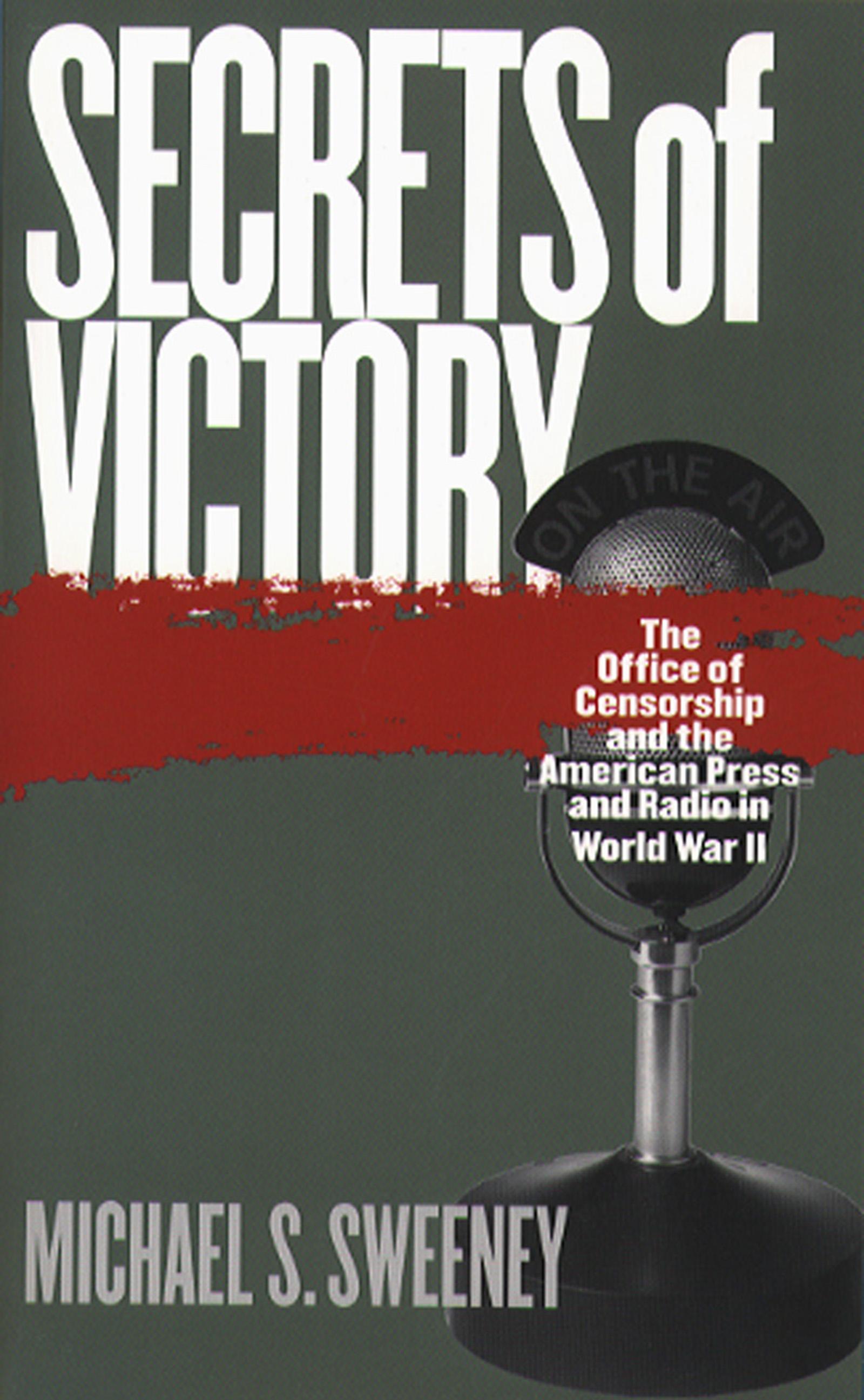
During World War II, the civilian Office of Censorship supervised a huge and surprisingly successful program of news management: the voluntary self-censorship of the American press. In January 1942, censorship codebooks were distributed to all American newspapers, magazines, and radio stations with the request that journalists adhere to the guidelines within. Remarkably, over the course of the war no print journalist, and only one radio journalist, ever deliberately violated the censorship code after having been made aware of it and understanding its intent.
Secrets of Victory examines the World War II censorship program and analyzes the reasons for its success. Using archival sources, including the Office of Censorship’s own records, Michael Sweeney traces the development of news media censorship from a pressing necessity after the attack on Pearl Harbor to the centralized yet efficient bureaucracy that persuaded thousands of journalists to censor themselves for the sake of national security. At the heart of this often dramatic story is the Office of Censorship’s director Byron Price. A former reporter himself, Price relied on cooperation with — rather than coercion of — American journalists in his fight to safeguard the nation’s secrets.
Zahle einfach mit Karte, Klarna, Apple Pay oder Google Pay. Nicht zufrieden? Du hast immer ein 14-tägiges Widerrufsrecht. Lies mehr in unseren AGB. Hast du Fragen, schreib uns eine E-Mail an hello@memmo.org.
Memmo macht das Lernen einfacher – wo auch immer du bist. Bei uns findest du deine Kursbücher und smarte Lerntools an einem Ort: Zusammenfassungen, Quizzes, Podcasts und Lernkarten. Und Ted, dein Lernbuddy, beantwortet alles, was du wissen möchtest. Über 50.000 Studierende lernen bereits hier – gemacht, damit du schneller lernst und weniger Stress hast.