
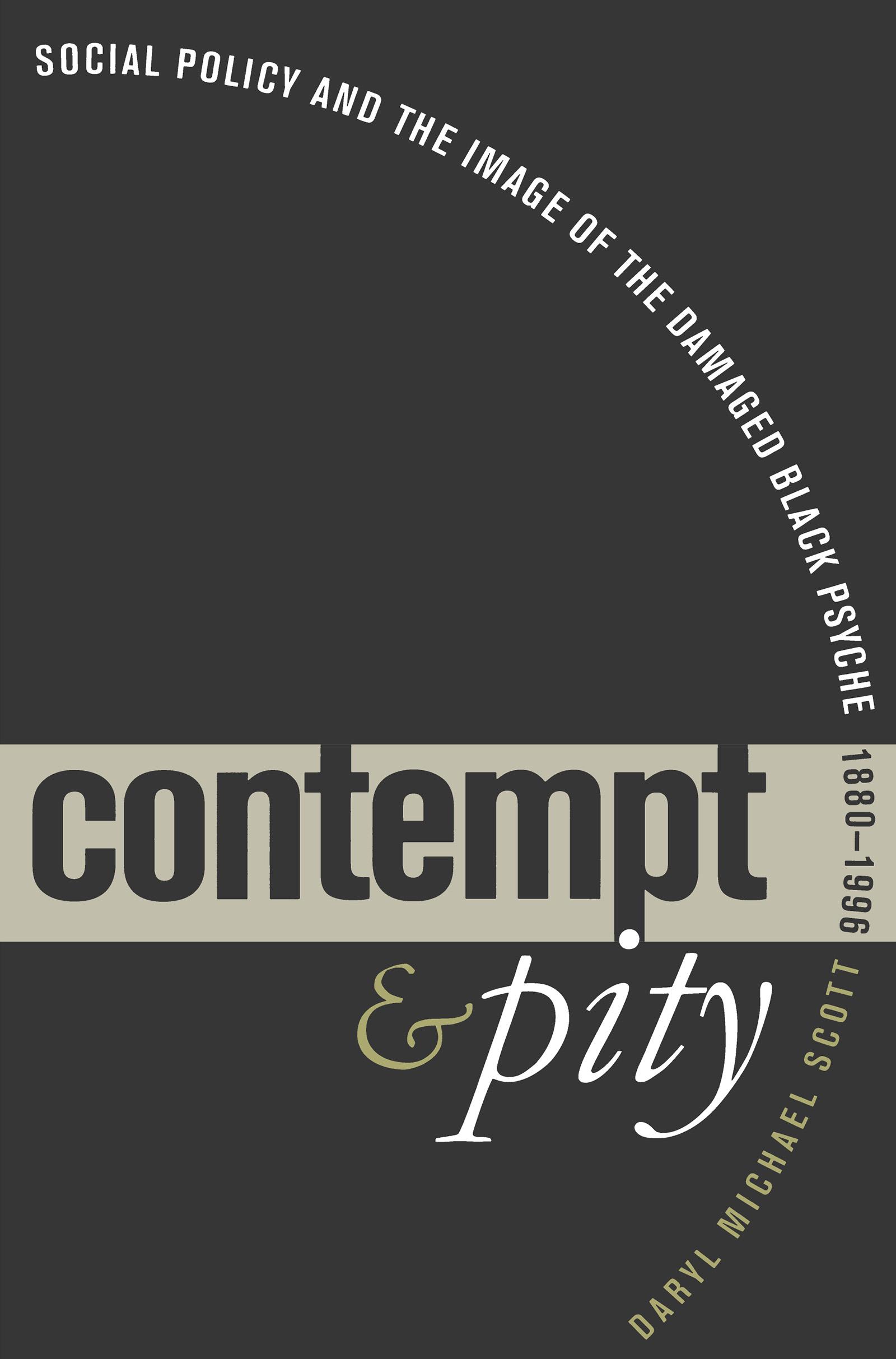
For over a century, the idea that African Americans are psychologically damaged has played an important role in discussions of race. In this provocative work, Daryl Michael Scott argues that damage imagery has been the product of liberals and conservatives, of racists and antiracists. While racial conservatives, often playing on white contempt for blacks, have sought to use findings of black pathology to justify exclusionary policies, racial liberals have used damage imagery primarily to promote policies of inclusion and rehabilitation. In advancing his argument, Scott challenges some long-held beliefs about the history of damage imagery. He rediscovers the liberal impulses behind Stanley Elkins’s Sambo hypothesis and Daniel Patrick Moynihan’s Negro Family and exposes the damage imagery in the work of Ralph Ellison, the leading anti-pathologist. He also corrects the view that the Chicago School depicted blacks as pathological products of matriarchy. New Negro experts such as Charles Johnson and E. Franklin Frazier, he says, disdained sympathy-seeking and refrained from exploring individual pathology. Scott’s reassessment of social science sheds new light on Brown v. Board of Education, revealing how experts reversed four decades of theory in order to represent segregation as inherently damaging to blacks. In this controversial work, Scott warns the Left of the dangers in their recent rediscovery of damage imagery in an age of conservative reform.
Zahle einfach mit Karte, Klarna, Apple Pay oder Google Pay. Nicht zufrieden? Du hast immer ein 14-tägiges Widerrufsrecht. Lies mehr in unseren AGB. Hast du Fragen, schreib uns eine E-Mail an hello@memmo.org.
Memmo macht das Lernen einfacher – wo auch immer du bist. Bei uns findest du deine Kursbücher und smarte Lerntools an einem Ort: Zusammenfassungen, Quizzes, Podcasts und Lernkarten. Und Ted, dein Lernbuddy, beantwortet alles, was du wissen möchtest. Über 50.000 Studierende lernen bereits hier – gemacht, damit du schneller lernst und weniger Stress hast.