
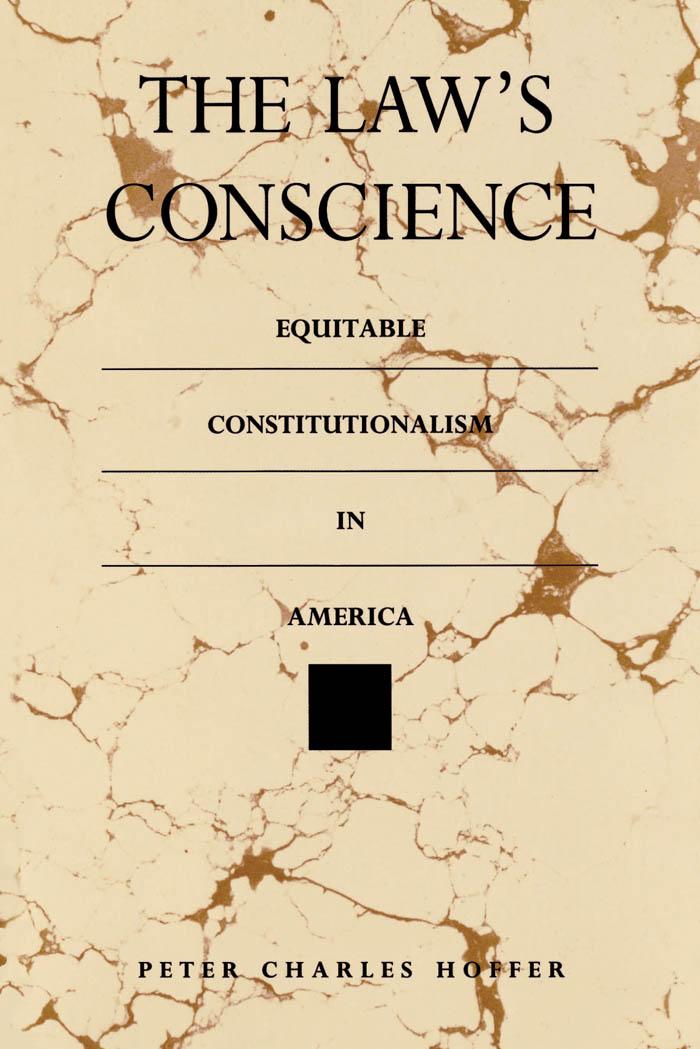
The Law’s Conscience is a history of equity in Anglo-American juris-prudence from the inception of the chancellor’s court in medieval England to the recent civil rights and affirmative action decisions of the United States Supreme Court. Peter Hoffer argues that equity embodies a way of looking at law, including constitutions, based on ideas of mutual fairness, public trusteeship, and equal protection. His central theme is the tension between the ideal of equity and the actual availability of equitable remedies.
Hoffer examines this tension in the trusteeship constitutionalism of John Locke and Thomas Jefferson; the incorporation of equity in the first American constitutions; the antebellum controversy over slavery; the fortunes of the Freedmen’s Bureau after the Civil War; the emergence of the doctrine of “Balance of Equity” in twentieth-century public-interest law; and the desegregation and reverse discrimination cases of the past thirty-five years. Brown v. Board of Education (1954) was the most important equity suit in American history, and Hoffer begins and ends his book with a new interpretation of its lessons.
Zahle einfach mit Karte, Klarna, Apple Pay oder Google Pay. Nicht zufrieden? Du hast immer ein 14-tägiges Widerrufsrecht. Lies mehr in unseren AGB. Hast du Fragen, schreib uns eine E-Mail an hello@memmo.org.
Memmo macht das Lernen einfacher – wo auch immer du bist. Bei uns findest du deine Kursbücher und smarte Lerntools an einem Ort: Zusammenfassungen, Quizzes, Podcasts und Lernkarten. Und Ted, dein Lernbuddy, beantwortet alles, was du wissen möchtest. Über 50.000 Studierende lernen bereits hier – gemacht, damit du schneller lernst und weniger Stress hast.