
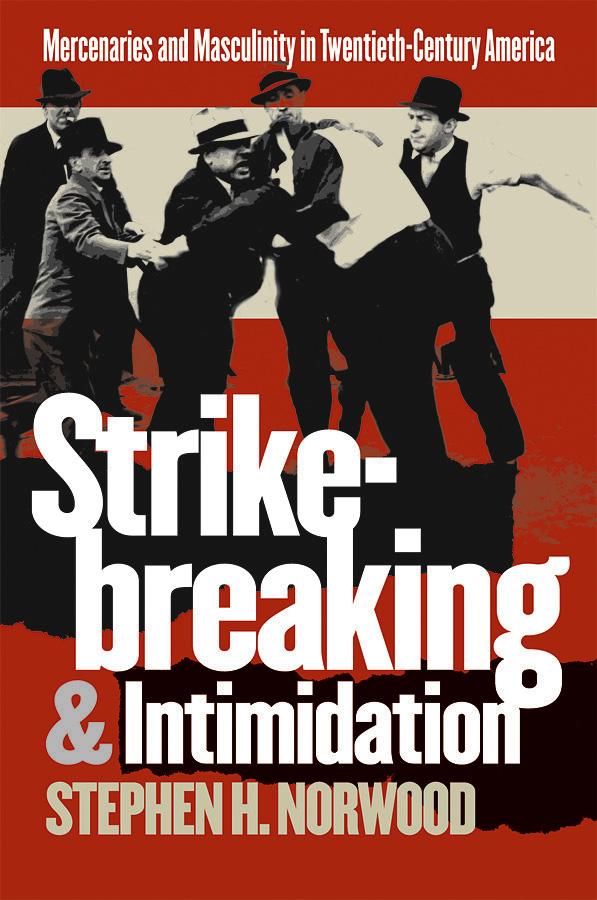
This is the first systematic study of strikebreaking, intimidation, and anti-unionism in the United States, subjects essential to a full understanding of labor’s fortunes in the twentieth century. Paradoxically, the country that pioneered the expansion of civil liberties allowed corporations to assemble private armies to disrupt union organizing, spy on workers, and break strikes. Using a social-historical approach, Stephen Norwood focuses on the mercenaries the corporations enlisted in their anti-union efforts — particularly college students, African American men, the unemployed, and men associated with organized crime. Norwood also considers the paramilitary methods unions developed to counter mercenary violence. The book covers a wide range of industries across much of the country.
Norwood explores how the early twentieth-century crisis of masculinity shaped strikebreaking’s appeal to elite youth and the media’s romanticization of the strikebreaker as a new soldier of fortune. He examines how mining communities' perception of mercenaries as agents of a ribald, sexually unrestrained, new urban culture intensified labor conflict. The book traces the ways in which economic restructuring, as well as shifting attitudes toward masculinity and anger, transformed corporate anti-unionism from World War II to the present.
Zahle einfach mit Karte, Klarna, Apple Pay oder Google Pay. Nicht zufrieden? Du hast immer ein 14-tägiges Widerrufsrecht. Lies mehr in unseren AGB. Hast du Fragen, schreib uns eine E-Mail an hello@memmo.org.
Memmo macht das Lernen einfacher – wo auch immer du bist. Bei uns findest du deine Kursbücher und smarte Lerntools an einem Ort: Zusammenfassungen, Quizzes, Podcasts und Lernkarten. Und Ted, dein Lernbuddy, beantwortet alles, was du wissen möchtest. Über 50.000 Studierende lernen bereits hier – gemacht, damit du schneller lernst und weniger Stress hast.