
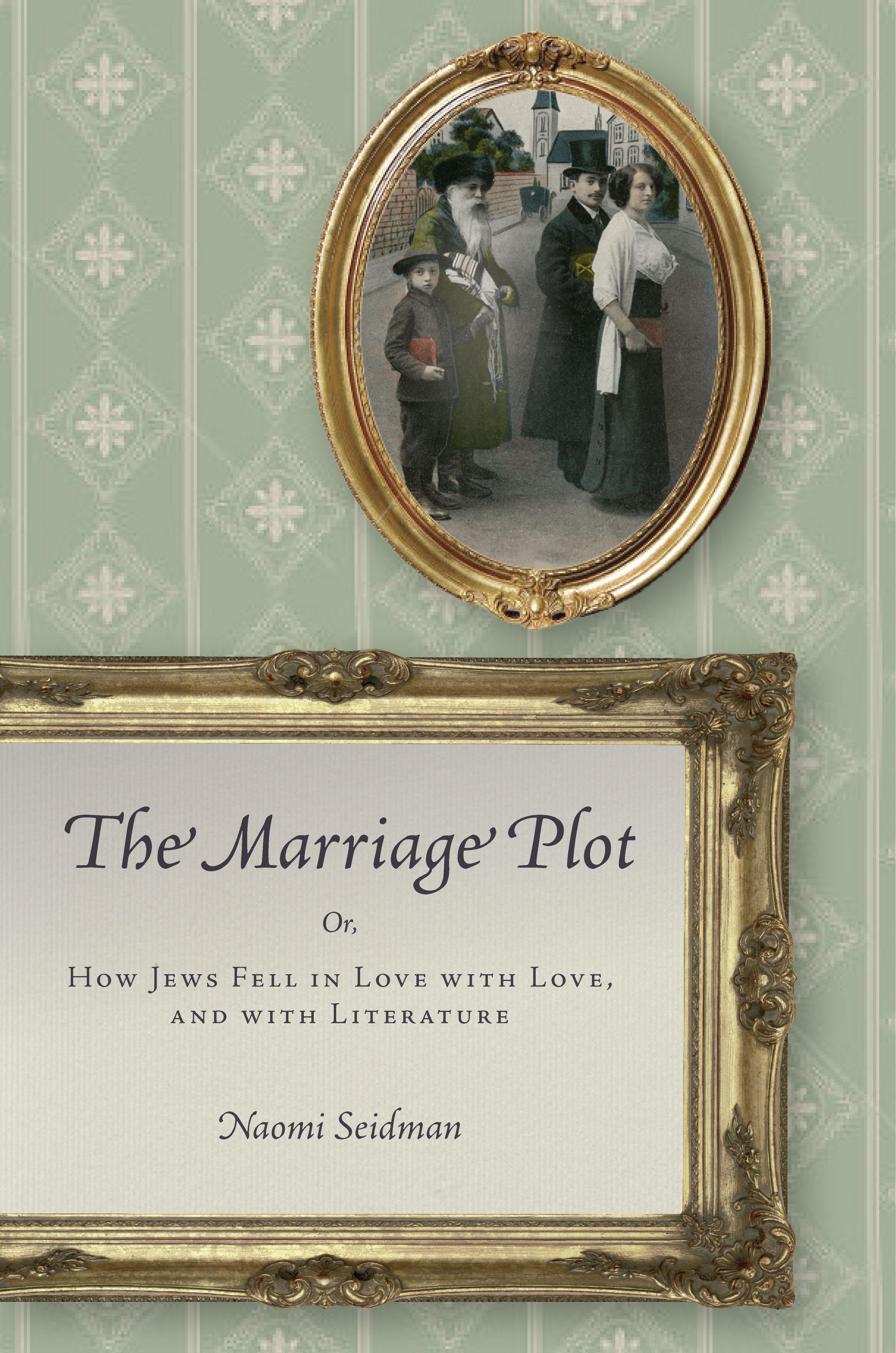
For nineteenth-century Eastern European Jews, modernization entailed the abandonment of arranged marriage in favor of the "love match." Romantic novels taught Jewish readers the rules of romance and the choreography of courtship. But because these new conceptions of romance were rooted in the Christian and chivalric traditions, the Jewish embrace of "the love religion" was always partial.
In The Marriage Plot, Naomi Seidman considers the evolution of Jewish love and marriage though the literature that provided Jews with a sentimental education, highlighting a persistent ambivalence in the Jewish adoption of European romantic ideologies. Nineteenth-century Hebrew and Yiddish literature tempered romantic love with the claims of family and community, and treated the rules of gender complementarity as comedic fodder. Twentieth-century Jewish writers turned back to tradition, finding pleasures in matchmaking, intergenerational ties, and sexual segregation. In the modern Jewish voices of Sigmund Freud, Erica Jong, Philip Roth, and Tony Kushner, the Jewish heretical challenge to the European romantic sublime has become the central sexual ideology of our time.
Zahle einfach mit Karte, Klarna, Apple Pay oder Google Pay. Nicht zufrieden? Du hast immer ein 14-tägiges Widerrufsrecht. Lies mehr in unseren AGB. Hast du Fragen, schreib uns eine E-Mail an hello@memmo.org.
Memmo macht das Lernen einfacher – wo auch immer du bist. Bei uns findest du deine Kursbücher und smarte Lerntools an einem Ort: Zusammenfassungen, Quizzes, Podcasts und Lernkarten. Und Ted, dein Lernbuddy, beantwortet alles, was du wissen möchtest. Über 50.000 Studierende lernen bereits hier – gemacht, damit du schneller lernst und weniger Stress hast.