
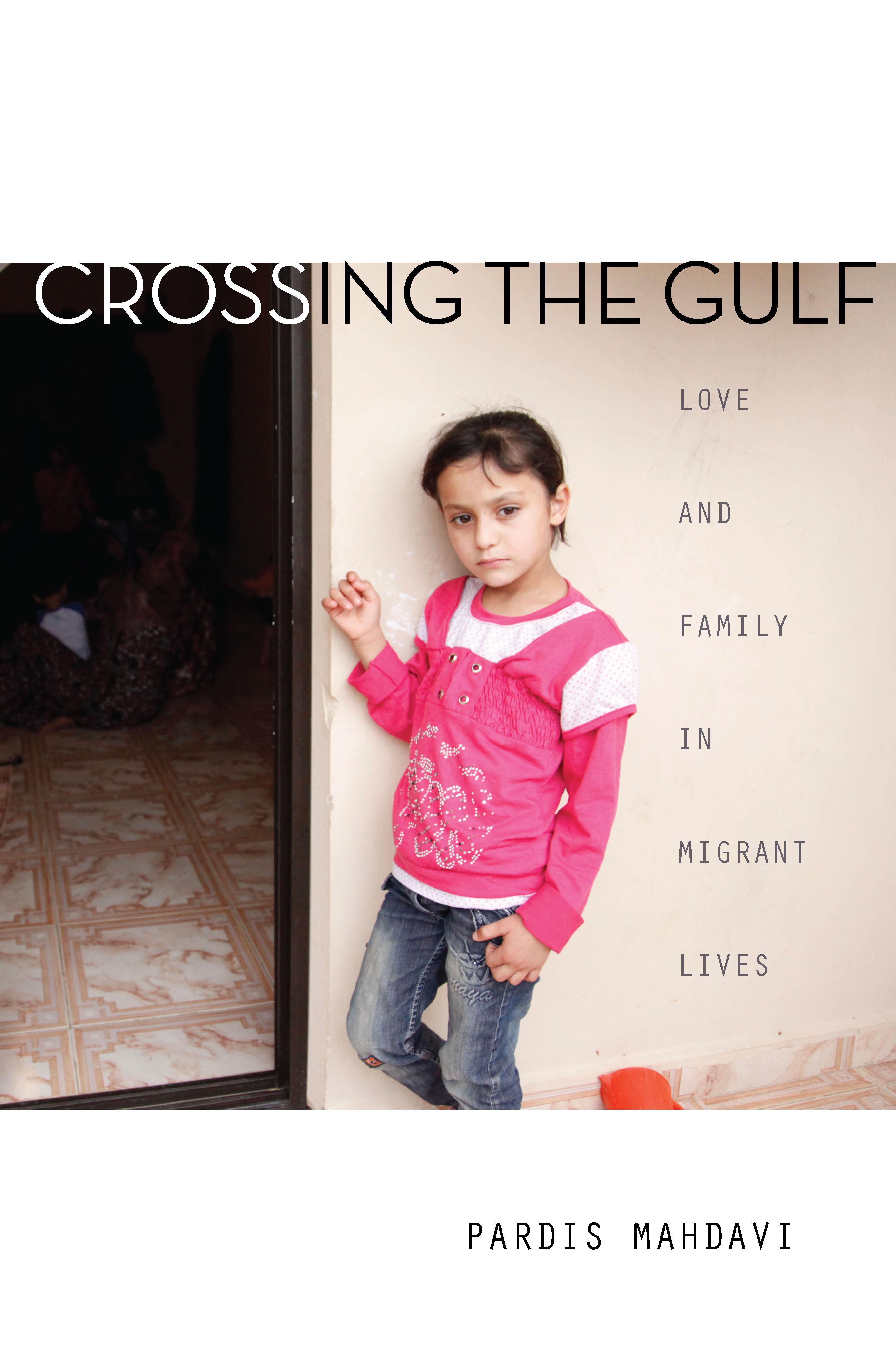
The lines between what constitutes migration and what constitutes human trafficking are messy at best. State policies rarely acknowledge the lived experiences of migrants, and too often the laws and policies meant to protect individuals ultimately increase the challenges faced by migrants and their kin. In some cases, the laws themselves lead to illegality or statelessness, particularly for migrant mothers and their children.
Crossing the Gulf tells the stories of the intimate lives of migrants in the Gulf cities of Dubai, Abu Dhabi, and Kuwait City. Pardis Mahdavi reveals the interconnections between migration and emotion, between family and state policy, and shows how migrants can be both mobilized and immobilized by their family relationships and the bonds of love they share across borders. The result is an absorbing and literally moving ethnography that illuminates the mutually reinforcing and constitutive forces that impact the lives of migrants and their loved ones—and how profoundly migrants are underserved by policies that more often lead to their illegality, statelessness, deportation, detention, and abuse than to their aid.
Zahle einfach mit Karte, Klarna, Apple Pay oder Google Pay. Nicht zufrieden? Du hast immer ein 14-tägiges Widerrufsrecht. Lies mehr in unseren AGB. Hast du Fragen, schreib uns eine E-Mail an hello@memmo.org.
Memmo macht das Lernen einfacher – wo auch immer du bist. Bei uns findest du deine Kursbücher und smarte Lerntools an einem Ort: Zusammenfassungen, Quizzes, Podcasts und Lernkarten. Und Ted, dein Lernbuddy, beantwortet alles, was du wissen möchtest. Über 50.000 Studierende lernen bereits hier – gemacht, damit du schneller lernst und weniger Stress hast.