
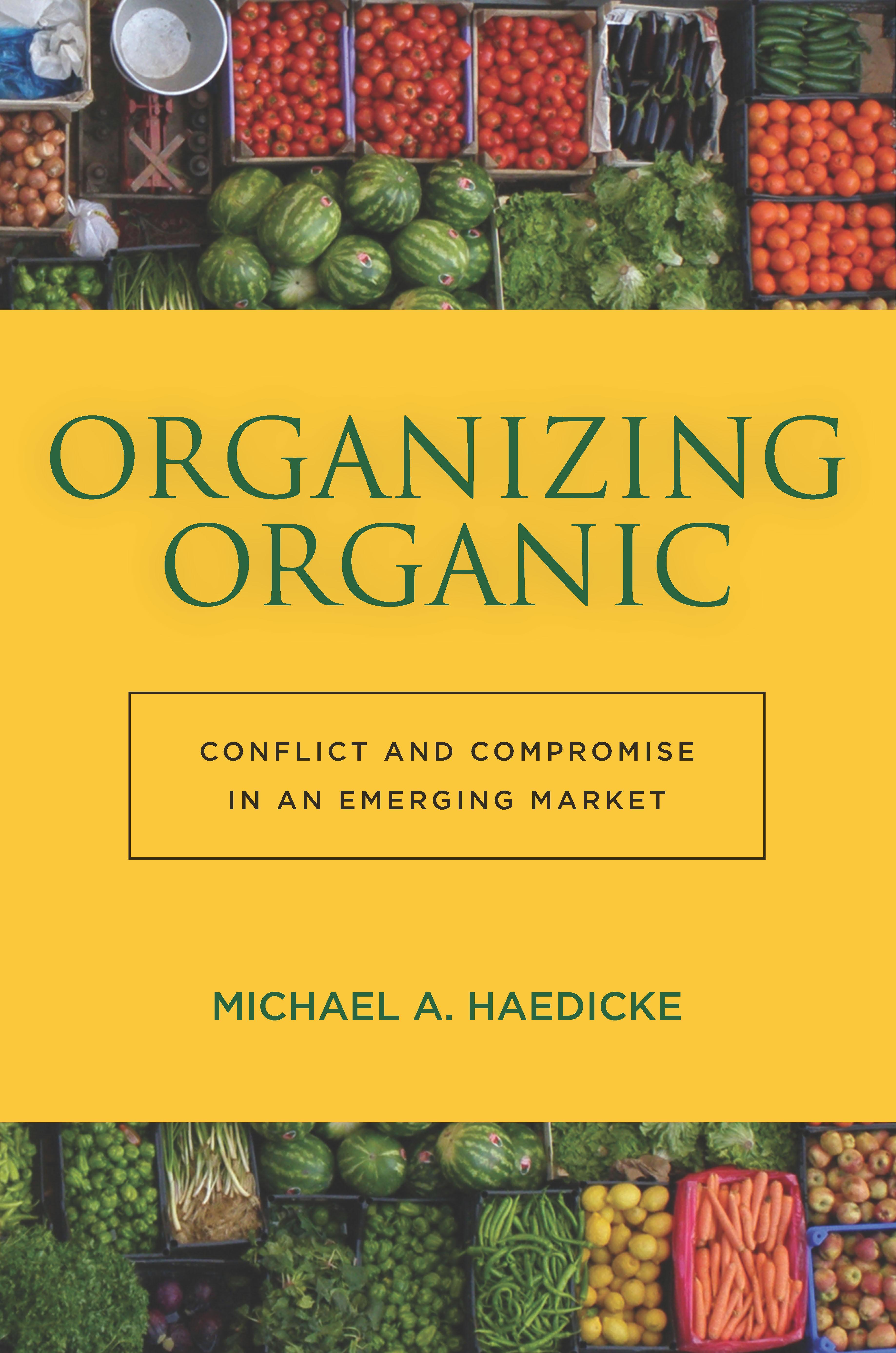
Stakeholders in the organic food movement agree that it has the potential to transform our food system, and yet there is little consensus about what this transformation should look like.
Tracing the history of the organic food sector, Michael A. Haedicke charts the development of two narratives that do more than simply polarize the organic debate, they give way to competing institutional logics. On the one hand, social activists contend that organics can break up the concentration of power that rests in the hands of a big, traditional agribusiness. Alternatively, professionals who are steeped in the culture of business emphasize the potential for market growth, for fostering better behemoths. Independent food store owners are then left to reconcile these ideas as they construct their professional identities and hone their business strategies.
Drawing on extensive interviews and unique archival sources, Haedicke looks at how these groups make sense of their everyday work. He pays particular attention to instances in which individuals overcome the conflicting narratives of industry transformation and market expansion by creating new cultural concepts and organizational forms. At once an account of the sector's development and an analysis of individual choices within it, Organizing Organic provides a nuanced account of the way the organic movement continues to negotiate ethical values and economic productivity.
Zahle einfach mit Karte, Klarna, Apple Pay oder Google Pay. Nicht zufrieden? Du hast immer ein 14-tägiges Widerrufsrecht. Lies mehr in unseren AGB. Hast du Fragen, schreib uns eine E-Mail an hello@memmo.org.
Memmo macht das Lernen einfacher – wo auch immer du bist. Bei uns findest du deine Kursbücher und smarte Lerntools an einem Ort: Zusammenfassungen, Quizzes, Podcasts und Lernkarten. Und Ted, dein Lernbuddy, beantwortet alles, was du wissen möchtest. Über 50.000 Studierende lernen bereits hier – gemacht, damit du schneller lernst und weniger Stress hast.