
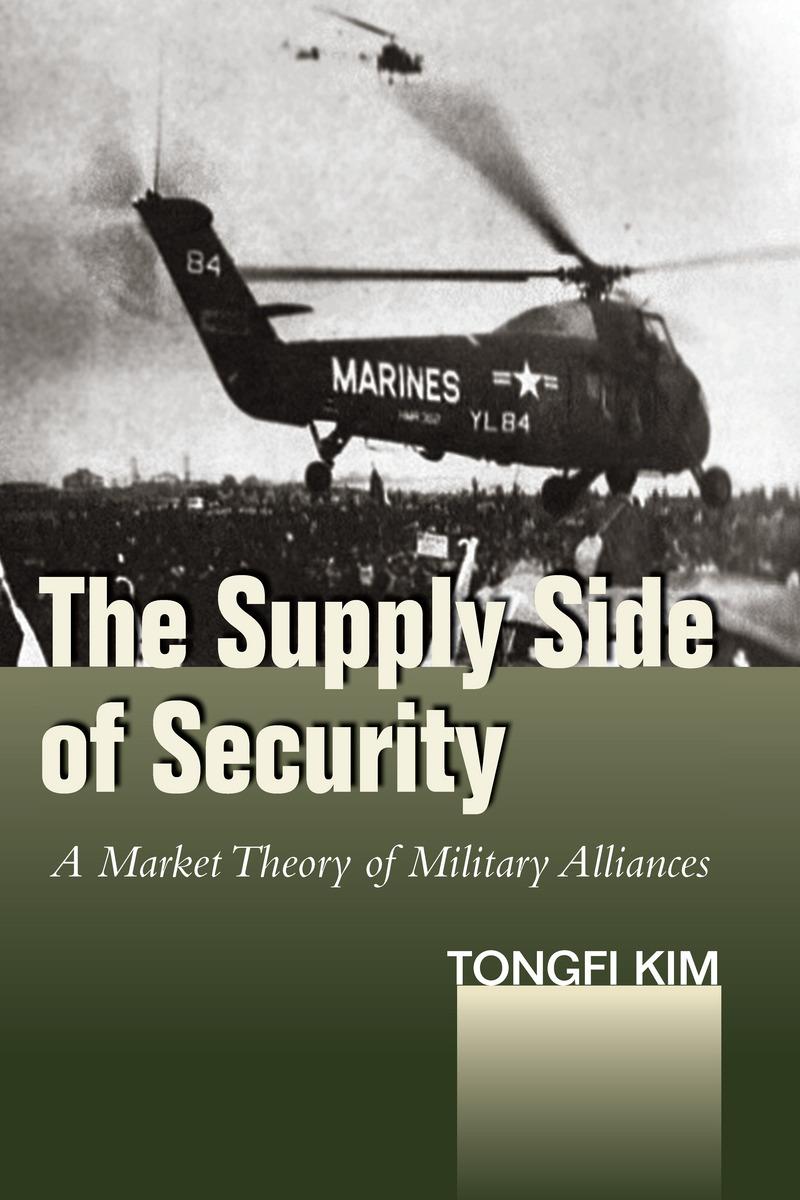
The Supply Side of Security conceptualizes military alliances as contracts for exchanging goods and services. At the international level, the market for these contracts is shaped by how many countries can supply security.
Tongfi Kim identifies the supply of policy concessions and military commitments as the main factors that explain the bargaining power of a state in a potential or existing alliance. Additionally, three variables of a state's domestic politics significantly affect its negotiating power: whether there is strong domestic opposition to the alliance, whether the state's leader is pro-alliance, and whether that leader is vulnerable. Kim then looks beyond existing alliance literature, which focuses on threats, to produce a deductive theory based on analysis of how the global power structure and domestic politics affect alliances. As China becomes stronger and the U.S. military budget shrinks, The Supply Side of Security shows that these countries should be understood not just as competing threats, but as competing security suppliers.
Zahle einfach mit Karte, Klarna, Apple Pay oder Google Pay. Nicht zufrieden? Du hast immer ein 14-tägiges Widerrufsrecht. Lies mehr in unseren AGB. Hast du Fragen, schreib uns eine E-Mail an hello@memmo.org.
Memmo macht das Lernen einfacher – wo auch immer du bist. Bei uns findest du deine Kursbücher und smarte Lerntools an einem Ort: Zusammenfassungen, Quizzes, Podcasts und Lernkarten. Und Ted, dein Lernbuddy, beantwortet alles, was du wissen möchtest. Über 50.000 Studierende lernen bereits hier – gemacht, damit du schneller lernst und weniger Stress hast.