
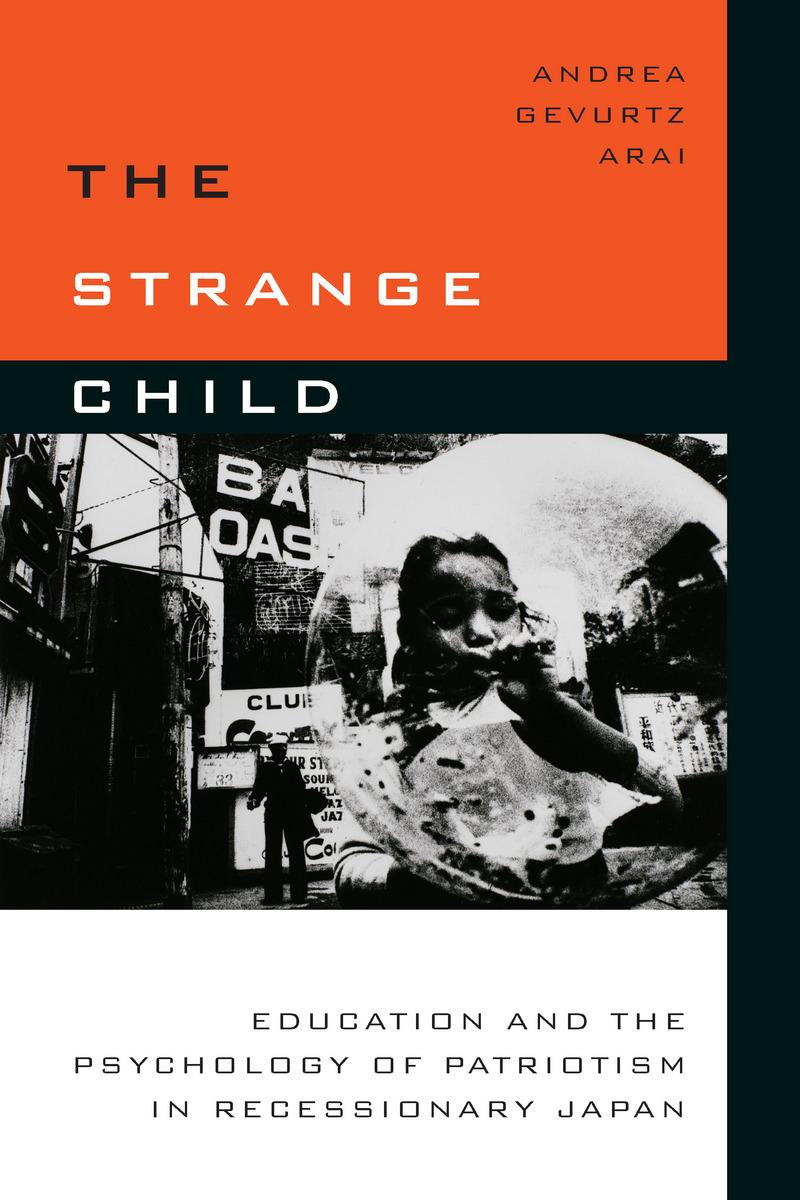
The Strange Child examines how the Japanese financial crisis of the 1990s gave rise to "the child problem," a powerful discourse of social anxiety that refocused concerns about precarious economic futures and shifting ideologies of national identity onto the young.
Andrea Gevurtz Arai's ethnography details the different forms of social and cultural dislocation that erupted in Japan starting in the late 1990s. Arai reveals the effects of shifting educational practices; increased privatization of social services; recessionary vocabulary of self-development and independence; and the neoliberalization of patriotism. Arai argues that the child problem and the social unease out of which it emerged provided a rationale for reimagining governance in education, liberalizing the job market, and a new role for psychology in the overturning of national-cultural ideologies. The Strange Child uncovers the state of nationalism in contemporary Japan, the politics of distraction around the child, and the altered life conditions of—and alternatives created by—the recessionary generation.
Zahle einfach mit Karte, Klarna, Apple Pay oder Google Pay. Nicht zufrieden? Du hast immer ein 14-tägiges Widerrufsrecht. Lies mehr in unseren AGB. Hast du Fragen, schreib uns eine E-Mail an hello@memmo.org.
Memmo macht das Lernen einfacher – wo auch immer du bist. Bei uns findest du deine Kursbücher und smarte Lerntools an einem Ort: Zusammenfassungen, Quizzes, Podcasts und Lernkarten. Und Ted, dein Lernbuddy, beantwortet alles, was du wissen möchtest. Über 50.000 Studierende lernen bereits hier – gemacht, damit du schneller lernst und weniger Stress hast.