
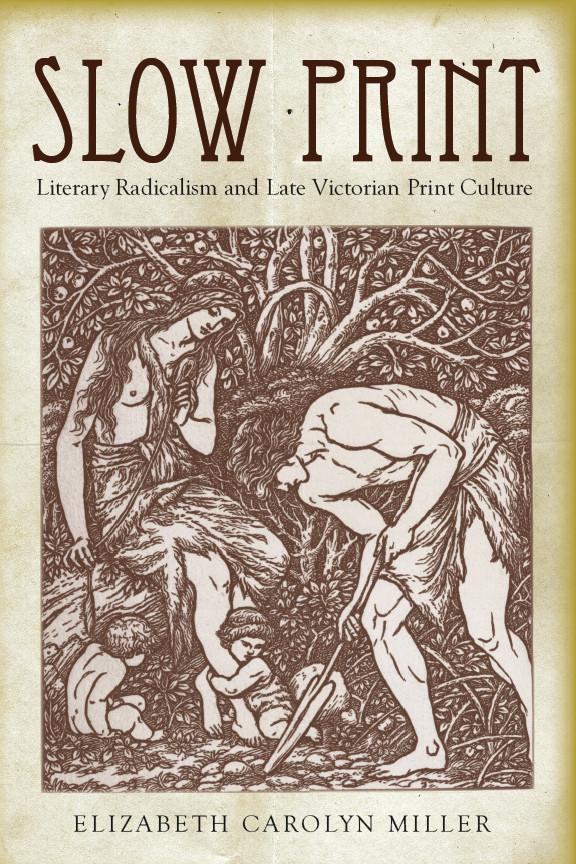
This book explores the literary culture of Britain's radical press from 1880 to 1910, a time that saw a flourishing of radical political activity as well as the emergence of a mass print industry. While Enlightenment radicals and their heirs had seen free print as an agent of revolutionary transformation, socialist, anarchist and other radicals of this later period suspected that a mass public could not exist outside the capitalist system. In response, they purposely reduced the scale of print by appealing to a small, counter-cultural audience. "Slow print," like "slow food" today, actively resisted industrial production and the commercialization of new domains of life.
Drawing on under-studied periodicals and archives, this book uncovers a largely forgotten literary-political context. It looks at the extensive debate within the radical press over how to situate radical values within an evolving media ecology, debates that engaged some of the most famous writers of the era (William Morris and George Bernard Shaw), a host of lesser-known figures (theosophical socialist and birth control reformer Annie Besant, gay rights pioneer Edward Carpenter, and proto-modernist editor Alfred Orage), and countless anonymous others.
Zahle einfach mit Karte, Klarna, Apple Pay oder Google Pay. Nicht zufrieden? Du hast immer ein 14-tägiges Widerrufsrecht. Lies mehr in unseren AGB. Hast du Fragen, schreib uns eine E-Mail an hello@memmo.org.
Memmo macht das Lernen einfacher – wo auch immer du bist. Bei uns findest du deine Kursbücher und smarte Lerntools an einem Ort: Zusammenfassungen, Quizzes, Podcasts und Lernkarten. Und Ted, dein Lernbuddy, beantwortet alles, was du wissen möchtest. Über 50.000 Studierende lernen bereits hier – gemacht, damit du schneller lernst und weniger Stress hast.