
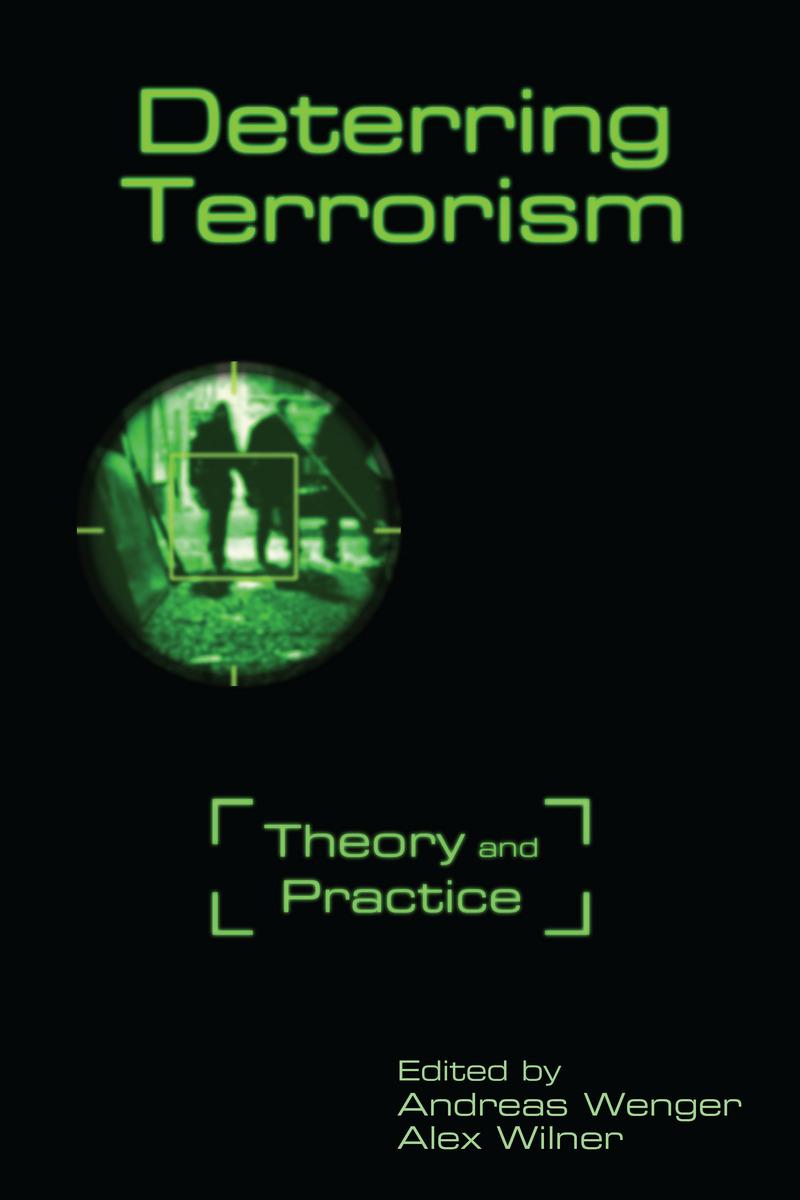
During the Cold War, deterrence theory was the cornerstone of U.S. foreign policy. Following the 9/11 terrorist attacks, however, popular wisdom dictated that terrorist organizations and radical fanatics could not be deterred—and governments shifted their attention to combating terrorism rather than deterring it.
This book challenges that prevailing assumption and offers insight as to when and where terrorism can be deterred. It first identifies how and where theories of deterrence apply to counterterrorism, highlighting how traditional and less-traditional notions of deterrence can be applied to evolving terrorist threats. It then applies these theoretical propositions to real-world threats to establish the role deterrence has within a dynamic counterterrorism strategy—and to identify how metrics can be created for measuring the success of terrorism deterrence strategies. In sum, it provides a foundation for developing effective counterterrorism policies to help states contain or curtail the terrorism challenges they face.
Zahle einfach mit Karte, Klarna, Apple Pay oder Google Pay. Nicht zufrieden? Du hast immer ein 14-tägiges Widerrufsrecht. Lies mehr in unseren AGB. Hast du Fragen, schreib uns eine E-Mail an hello@memmo.org.
Memmo macht das Lernen einfacher – wo auch immer du bist. Bei uns findest du deine Kursbücher und smarte Lerntools an einem Ort: Zusammenfassungen, Quizzes, Podcasts und Lernkarten. Und Ted, dein Lernbuddy, beantwortet alles, was du wissen möchtest. Über 50.000 Studierende lernen bereits hier – gemacht, damit du schneller lernst und weniger Stress hast.