
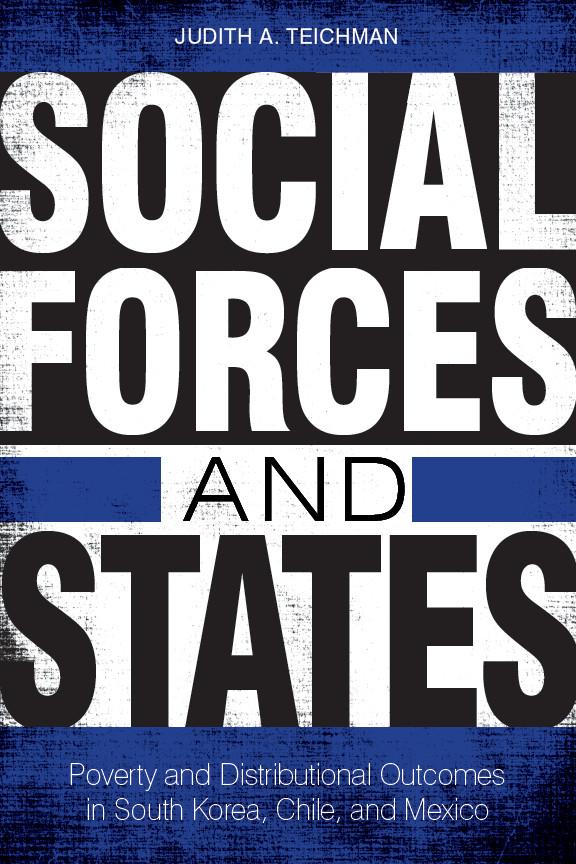
With the failure of market reform to generate sustained growth in many countries of the Global South, poverty reduction has become an urgent moral and political issue in the last several decades. In practice, considerable research shows that high levels of inequality are likely to produce high levels of criminal and political violence. On the road to development, states cannot but grapple with the challenges posed by poverty and wealth distribution.
Social Forces and States explains the reasons behind distinct distributional and poverty outcomes in three countries: South Korea, Chile, and Mexico. South Korea has successfully reduced poverty and has kept inequality low. Chile has reduced poverty but inequality remains high. Mexico has confronted higher levels of poverty and high inequality than either of the other countries. Judith Teichman takes a comparative historical approach, focusing upon the impact of the interaction between social forces and states. Distinct from approaches that explain social well-being through a comparative examination of social welfare regimes, this book probes more deeply, incorporating a careful consideration of how historical contexts and political struggles shaped very different development trajectories, welfare arrangements, and social possibilities.
Zahle einfach mit Karte, Klarna, Apple Pay oder Google Pay. Nicht zufrieden? Du hast immer ein 14-tägiges Widerrufsrecht. Lies mehr in unseren AGB. Hast du Fragen, schreib uns eine E-Mail an hello@memmo.org.
Memmo macht das Lernen einfacher – wo auch immer du bist. Bei uns findest du deine Kursbücher und smarte Lerntools an einem Ort: Zusammenfassungen, Quizzes, Podcasts und Lernkarten. Und Ted, dein Lernbuddy, beantwortet alles, was du wissen möchtest. Über 50.000 Studierende lernen bereits hier – gemacht, damit du schneller lernst und weniger Stress hast.