
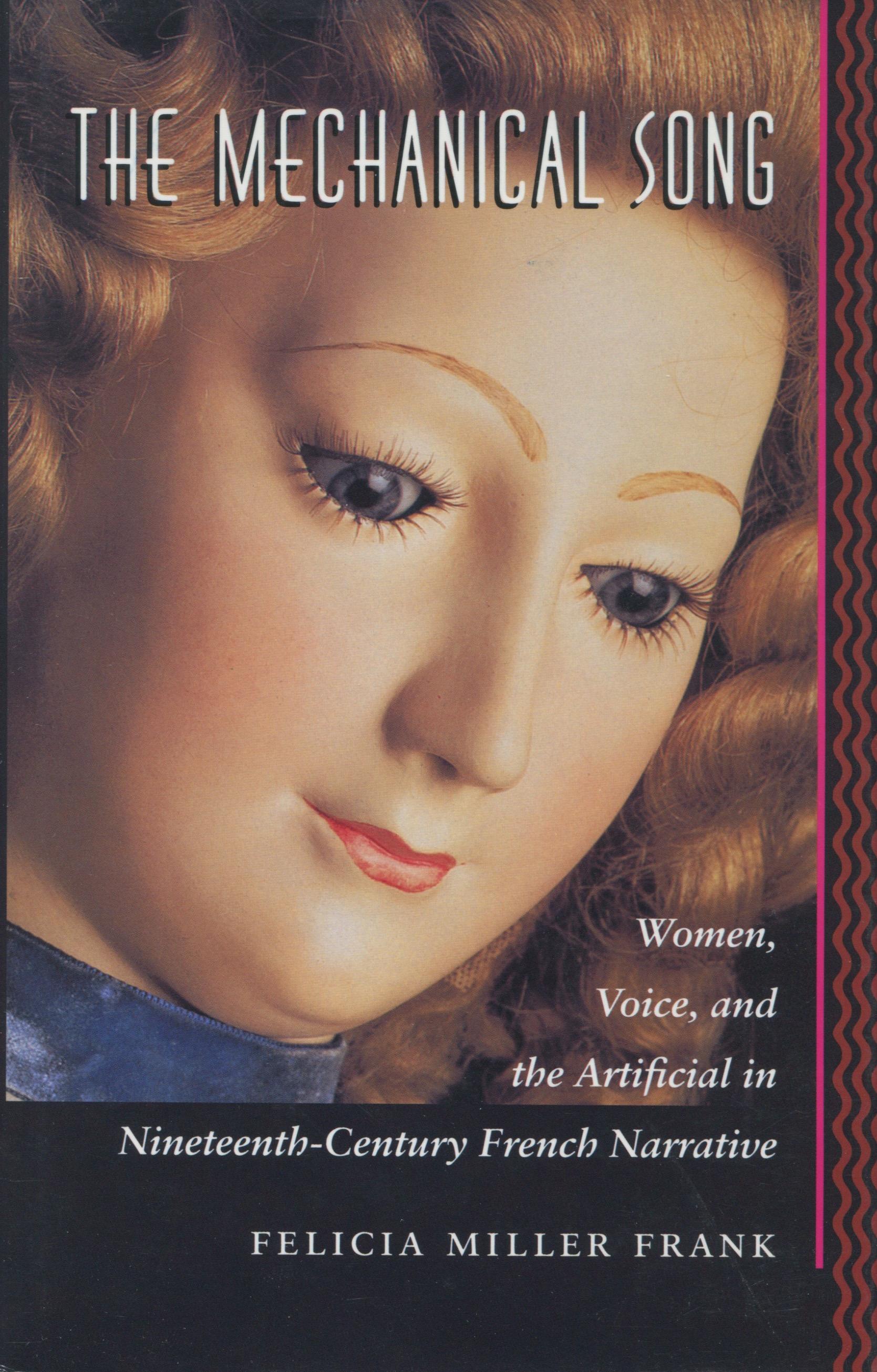
Examining the privileged relation of women to the singing voice in nineteenth-century literary works, the author argues for an emerging identification between women and artifice in the period. Beginning with texts by Rousseau and Proust that show a link between nostalgia for the maternal voice and the writer's self, the book then turns to the psychoanalytic literature on the role of the voice in the formation of the psyche. In the process, it analyses feminist polemics on the maternal voice to show how voice and rhythm together form the matrices of the subject. The voice of the soprano occupied a special place in nineteenth-century operatic history, replacing the castrato voice as a sexless, angelic, ethereal source of pleasure for the opera-goer. The author shows how these qualities are identified with women's voices in literary texts by Sand, Balzac, du Maurier and Nerval.
Zahle einfach mit Karte, Klarna, Apple Pay oder Google Pay. Nicht zufrieden? Du hast immer ein 14-tägiges Widerrufsrecht. Lies mehr in unseren AGB. Hast du Fragen, schreib uns eine E-Mail an hello@memmo.org.
Memmo macht das Lernen einfacher – wo auch immer du bist. Bei uns findest du deine Kursbücher und smarte Lerntools an einem Ort: Zusammenfassungen, Quizzes, Podcasts und Lernkarten. Und Ted, dein Lernbuddy, beantwortet alles, was du wissen möchtest. Über 50.000 Studierende lernen bereits hier – gemacht, damit du schneller lernst und weniger Stress hast.