
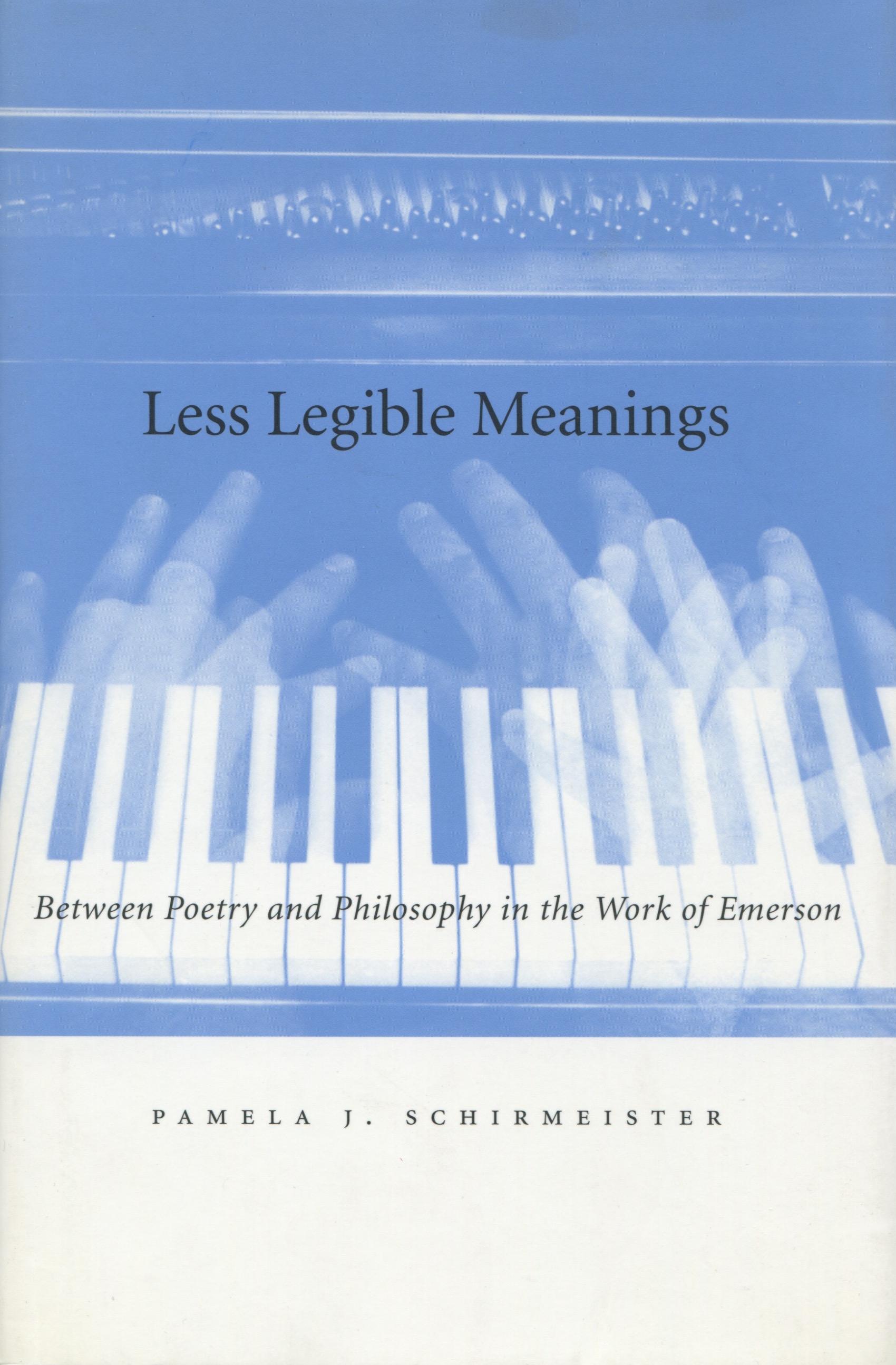
Examining both why and how Emerson evades the ancient quarrel between literature and philosophy, this book entirely rethinks the nature of Emerson's radical individualism and its relation to the possibility of an ethics and a politics.
The author argues that the quarrel between literature and philosophy never took place in America, and that instead traditional philosophical work staged itself here as a form of literary praxis and cultural therapeutics. Epitomized in the work of Emerson, this praxis takes shape explicitly in Emerson's understanding of democracy and occurs as an exchange within the act of reading. This is the exchange that Emerson so eloquently calls for in "The American Scholar" under the name of "letters." Emerson's project for American letters is the creation of a new national identity; as Less Legible Meanings makes clear, we have not yet understood the full range of implications that this project entails.
After situating American letters in relation to German and British Romanticism and the features of American culture that augmented and altered their reception in the United States, the book goes on to explore the type of reading that Emersonian rhetoric engenders. Both persuasive and tropological, this rhetoric elicits from the reader something similar to psychoanalytic transference. Its goal is to lead the reader to a point at which representational logic breaks down so that a new subject can take shape. The purpose of such rhetoric, however, extends well beyond personal self-creation, because the construction of the subject emerges as the very possibility of the passage from the private sphere to the public one. In this passage, our entire notion of liberal individualism must be rethought, and with it, the pragmatic question of Emersonian ethics and politics.
A revisionary study of some of Emerson's central essays, Less Legible Meanings also invites the reader to reconsider the nature of Emerson's influence on contemporary American culture and to discover new ways in which we might continue to understand his work. Interdisciplinary in scope, the book makes equal use of the history of philosophy, psychoanalytic theory, and cultural history.
Zahle einfach mit Karte, Klarna, Apple Pay oder Google Pay. Nicht zufrieden? Du hast immer ein 14-tägiges Widerrufsrecht. Lies mehr in unseren AGB. Hast du Fragen, schreib uns eine E-Mail an hello@memmo.org.
Memmo macht das Lernen einfacher – wo auch immer du bist. Bei uns findest du deine Kursbücher und smarte Lerntools an einem Ort: Zusammenfassungen, Quizzes, Podcasts und Lernkarten. Und Ted, dein Lernbuddy, beantwortet alles, was du wissen möchtest. Über 50.000 Studierende lernen bereits hier – gemacht, damit du schneller lernst und weniger Stress hast.