
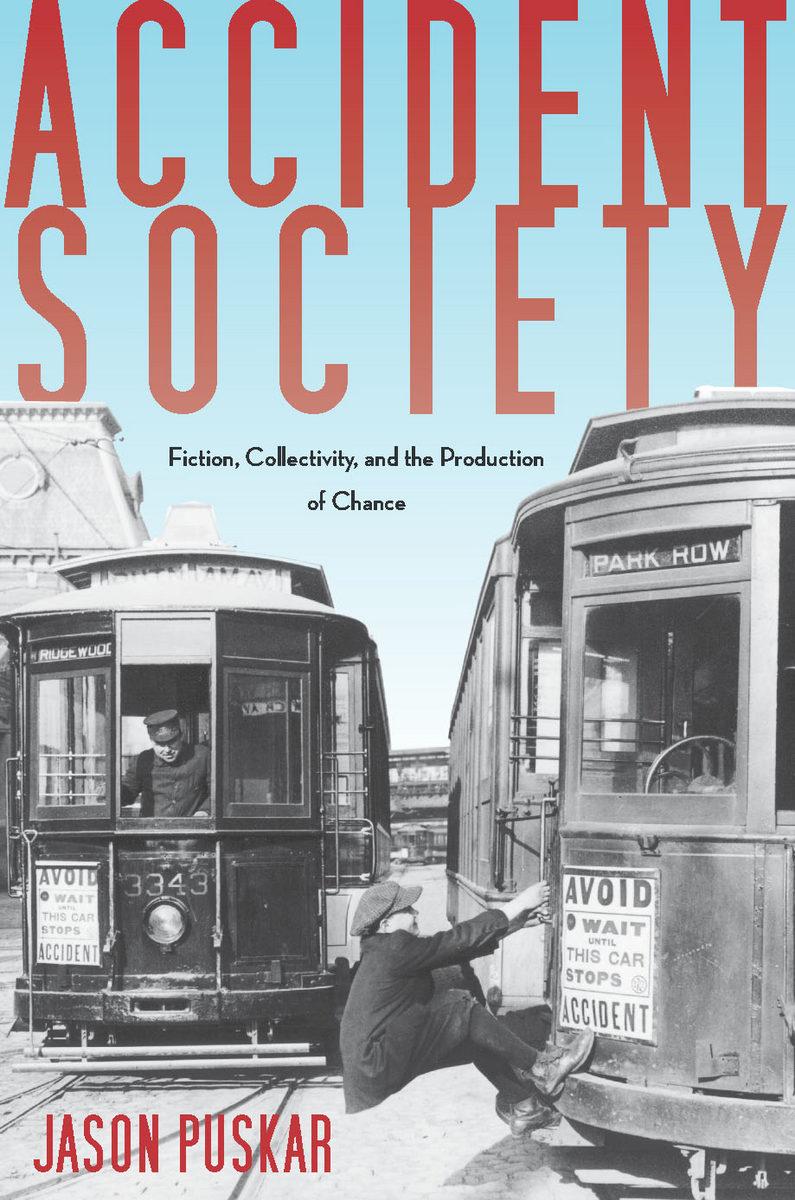
This book argues that language and literature actively produced chance in the late nineteenth and early twentieth centuries by categorizing injuries and losses as innocent of design. Automobile collisions and occupational injuries became "car accidents" and "industrial accidents." During the post-Civil War period of racial, ethnic, and class-based hostility, chance was an abstract enemy against which society might unite. By producing chance, novels by William Dean Howells, Stephen Crane, Anna Katharine Green, Edith Wharton, Theodore Dreiser, and James Cain documented and helped establish new modes of collective interdependence. Chance here is connected not with the competitive individualism of the Gilded Age, but with important progressive and social democratic reforms, including developments in insurance, which had long employed accident narratives to shape its own "mutual society." Accident Society reveals the extent to which American collectivity has depended—and continues to depend—on the literary production of chance.
Zahle einfach mit Karte, Klarna, Apple Pay oder Google Pay. Nicht zufrieden? Du hast immer ein 14-tägiges Widerrufsrecht. Lies mehr in unseren AGB. Hast du Fragen, schreib uns eine E-Mail an hello@memmo.org.
Memmo macht das Lernen einfacher – wo auch immer du bist. Bei uns findest du deine Kursbücher und smarte Lerntools an einem Ort: Zusammenfassungen, Quizzes, Podcasts und Lernkarten. Und Ted, dein Lernbuddy, beantwortet alles, was du wissen möchtest. Über 50.000 Studierende lernen bereits hier – gemacht, damit du schneller lernst und weniger Stress hast.