
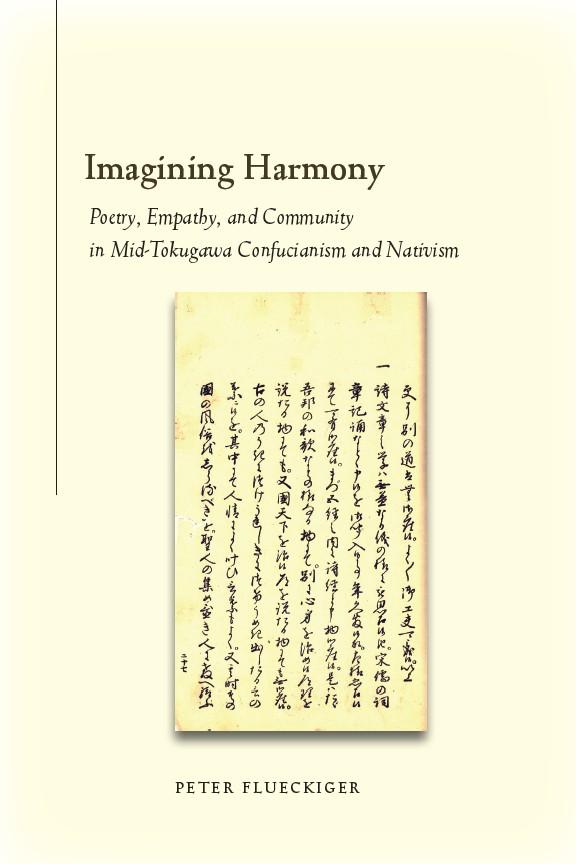
Many intellectuals in eighteenth-century Japan valued classical poetry in either Chinese or Japanese for its expression of unadulterated human sentiments. They also saw such poetry as a distillation of the language and aesthetic values of ancient China and Japan, which offered models of the good government and social harmony lacking in their time. By studying the poetry of the past and composing new poetry emulating its style, they believed it possible to reform their own society. Imagining Harmony focuses on the development of these ideas in the life and work of Ogyu Sorai, the most influential Confucian philosopher of the eighteenth century, and that of his key disciples and critics.
This study contends that the literary thought of these figures needs to be understood not just for what it has to say about the composition of poetry but as a form of political and philosophical discourse. Unlike other scholars of this literature, Peter Flueckiger argues that the increased valorization of human emotions in eighteenth-century literary thought went hand in hand with new demands for how emotions were to be regulated and socialized, and that literary and political thought of the time were thus not at odds but inextricably linked.
Zahle einfach mit Karte, Klarna, Apple Pay oder Google Pay. Nicht zufrieden? Du hast immer ein 14-tägiges Widerrufsrecht. Lies mehr in unseren AGB. Hast du Fragen, schreib uns eine E-Mail an hello@memmo.org.
Memmo macht das Lernen einfacher – wo auch immer du bist. Bei uns findest du deine Kursbücher und smarte Lerntools an einem Ort: Zusammenfassungen, Quizzes, Podcasts und Lernkarten. Und Ted, dein Lernbuddy, beantwortet alles, was du wissen möchtest. Über 50.000 Studierende lernen bereits hier – gemacht, damit du schneller lernst und weniger Stress hast.