
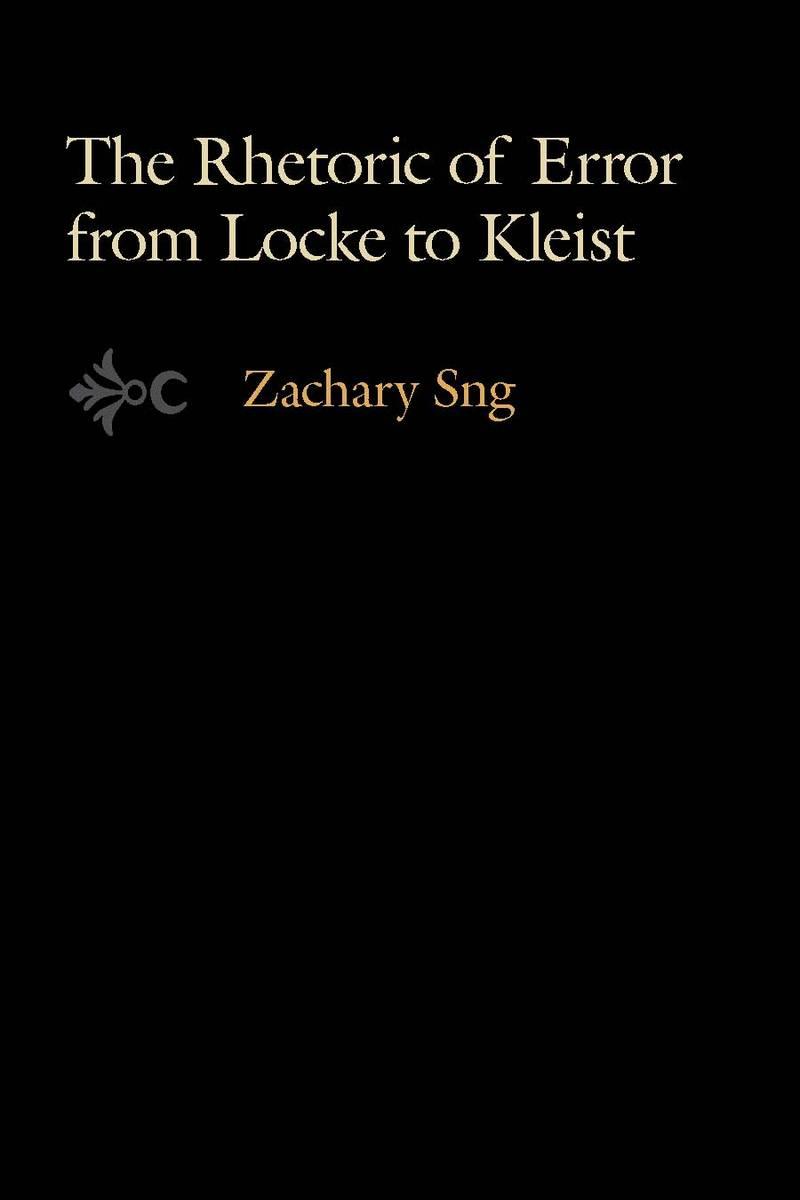
Eighteenth-century Europe, preoccupied with both the origins and the defense of reason, was naturally concerned with what might be the root of all error. A topic any systematic account of knowledge must grapple with, error became a frequent point of debate in new scientific, aesthetic, and philosophical investigations. Taking John Locke's Essay Concerning Human Understanding as his point of departure, Sng examines a number of such debates, focusing on literary and philosophical accounts of the relationship between language and thought. Rather than approaching its topic conceptually or historically, he takes on canonical texts of the Enlightenment and Romanticism and engages with their rhetorical strategies. In so doing, Sng elucidates how people wrote about error and how texts claimed to produce reliable and error-free modes of knowledge. The range of authors addressed—Leibniz, Adam Smith, Coleridge, Kant, and Goethe—demonstrates the diversity and heterogeneity underlying the textual production of the age.
Zahle einfach mit Karte, Klarna, Apple Pay oder Google Pay. Nicht zufrieden? Du hast immer ein 14-tägiges Widerrufsrecht. Lies mehr in unseren AGB. Hast du Fragen, schreib uns eine E-Mail an hello@memmo.org.
Memmo macht das Lernen einfacher – wo auch immer du bist. Bei uns findest du deine Kursbücher und smarte Lerntools an einem Ort: Zusammenfassungen, Quizzes, Podcasts und Lernkarten. Und Ted, dein Lernbuddy, beantwortet alles, was du wissen möchtest. Über 50.000 Studierende lernen bereits hier – gemacht, damit du schneller lernst und weniger Stress hast.