
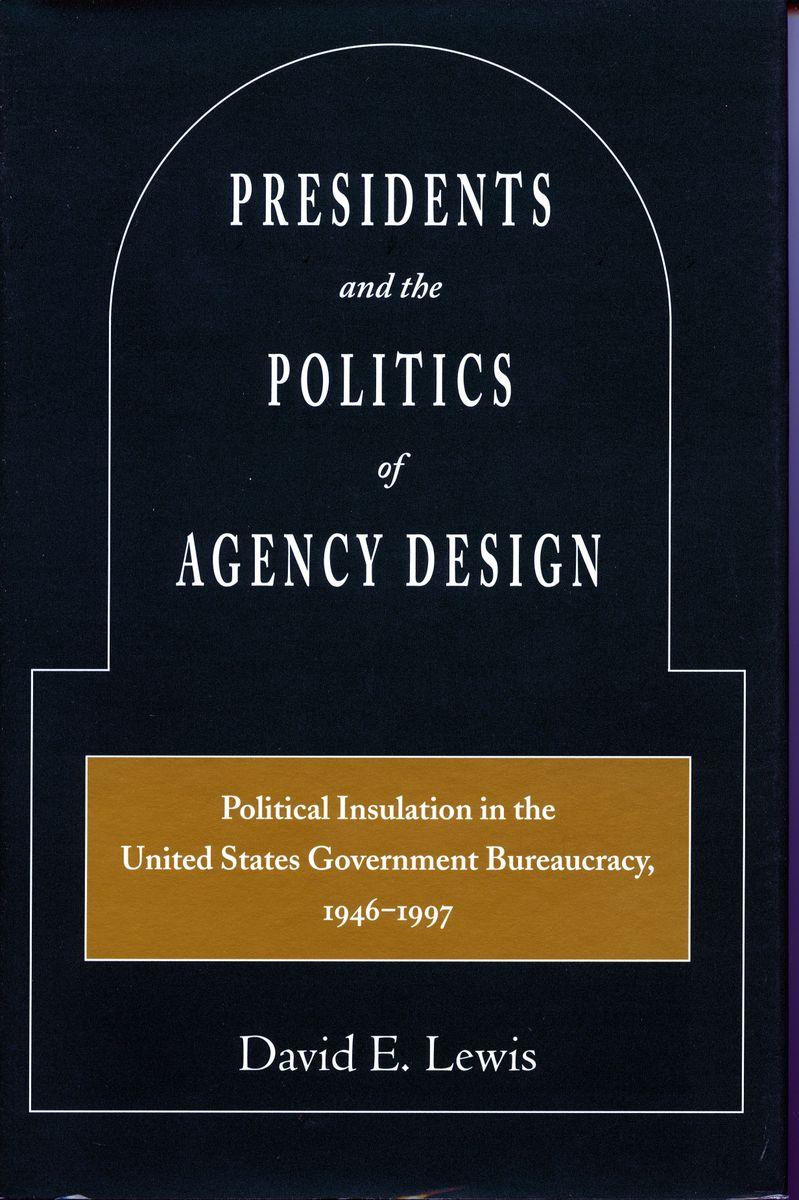
The administrative state is the nexus of American policy making in the postwar period. The vague and sometimes conflicting policy mandates of Congress, the president, and courts are translated into real public policy in the bureaucracy. As the role of the national government has expanded, the national legislature and executive have increasingly delegated authority to administrative agencies to make fundamental policy decisions. How this administrative state is designed, its coherence, its responsiveness, and its efficacy determine, in Robert Dahl’s phrase, “who gets what, when, and how.” This study of agency design, thus, has implications for the study of politics in many areas.
The structure of bureaucracies can determine the degree to which political actors can change the direction of agency policy. Politicians frequently attempt to lock their policy preferences into place through insulating structures that are mandated by statute or executive decree. This insulation of public bureaucracies such as the National Transportation Safety Board, the Federal Election Commission, and the National Nuclear Security Administration, is essential to understanding both administrative policy outputs and executive-legislative politics in the United States.
This book explains why, when, and how political actors create administrative agencies in such a way as to insulate them from political control, particularly presidential control.
Zahle einfach mit Karte, Klarna, Apple Pay oder Google Pay. Nicht zufrieden? Du hast immer ein 14-tägiges Widerrufsrecht. Lies mehr in unseren AGB. Hast du Fragen, schreib uns eine E-Mail an hello@memmo.org.
Memmo macht das Lernen einfacher – wo auch immer du bist. Bei uns findest du deine Kursbücher und smarte Lerntools an einem Ort: Zusammenfassungen, Quizzes, Podcasts und Lernkarten. Und Ted, dein Lernbuddy, beantwortet alles, was du wissen möchtest. Über 50.000 Studierende lernen bereits hier – gemacht, damit du schneller lernst und weniger Stress hast.