
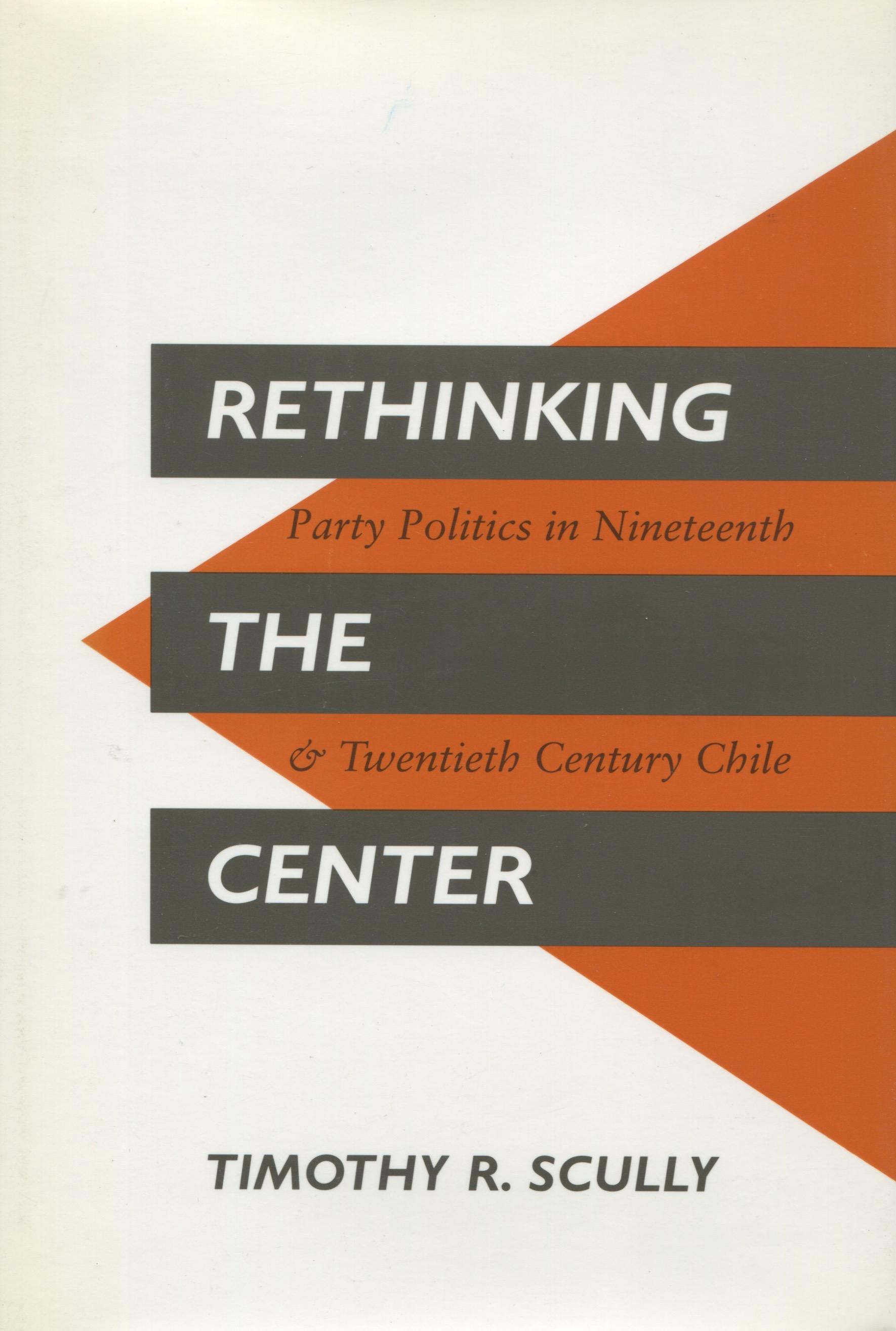
From their beginnings in the mid-nineteenth century through the 1980's, political parties in Chile have displayed three discrete ideological tendencies, with two at opposite ends of the political spectrum and at least one in the center. This tripartite distribution made Chile's party system unlike any other in Latin America. How did Chile's distinctive system evolve? This book finds the answer in how three basic social cleavages—religious, urban, and rural—became polarized at three periods of "critical juncture." Clerical-anticlerical conflict gave initial definition to the party system in the period 1857-61, and continued to shape the political arena long after specific issues had receded into the background. Then, between 1920 and 1932, class conflict in the urban and mining enclave sectors forced party elites to respond to the demands of leaders of middle-sector and working groups for increased political and social power. This was the second of what the author calls Chile's "critical junctures" for party formation. The third, occurring in the period 1952-58, saw the spread of working-class politics into the countryside. Crucial here was a shift in the position of the Catholic Church on class conflict, resulting in the emergence of an important Church-inspired center party. The book compares the behavior of the political center during the three historical periods and suggests a conceptual framework for understanding different types of center parties. The author also addresses certain questions raised by the emergence and behavior of center parties: What were the implications of the presence of a center party for the patterns of party competition? Why did the center emerge and re-emerge at each critical point in the evolution of Chile's party system? Can this be understood in terms of an underlying coalitional logic, or are factors such as leadership, political choice, and historical accident more useful explanations? Consistent with this focus on the center is a new account of the key role of the Christian Democrats in the reconstitution of party competition in the late 1980's and early 1990's. The author concludes by offering some observations on the probable shape of party politics—and the role of the political center within it—in tomorrow's Chile.
Seiten: 292
Kategorie: Statsvetenskap & Politik
e-ISBN: 9780804765978
Versandgewicht: 1.2 kg
Versand in: 1-2 Tage
Zahle einfach mit Karte, Klarna, Apple Pay oder Google Pay. Nicht zufrieden? Du hast immer ein 14-tägiges Widerrufsrecht. Lies mehr in unseren AGB. Hast du Fragen, schreib uns eine E-Mail an hello@memmo.org.
Memmo macht das Lernen einfacher – wo auch immer du bist. Bei uns findest du deine Kursbücher und smarte Lerntools an einem Ort: Zusammenfassungen, Quizzes, Podcasts und Lernkarten. Und Ted, dein Lernbuddy, beantwortet alles, was du wissen möchtest. Über 50.000 Studierende lernen bereits hier – gemacht, damit du schneller lernst und weniger Stress hast.
Das könnte dir auch gefallen
Buch kaufen0