
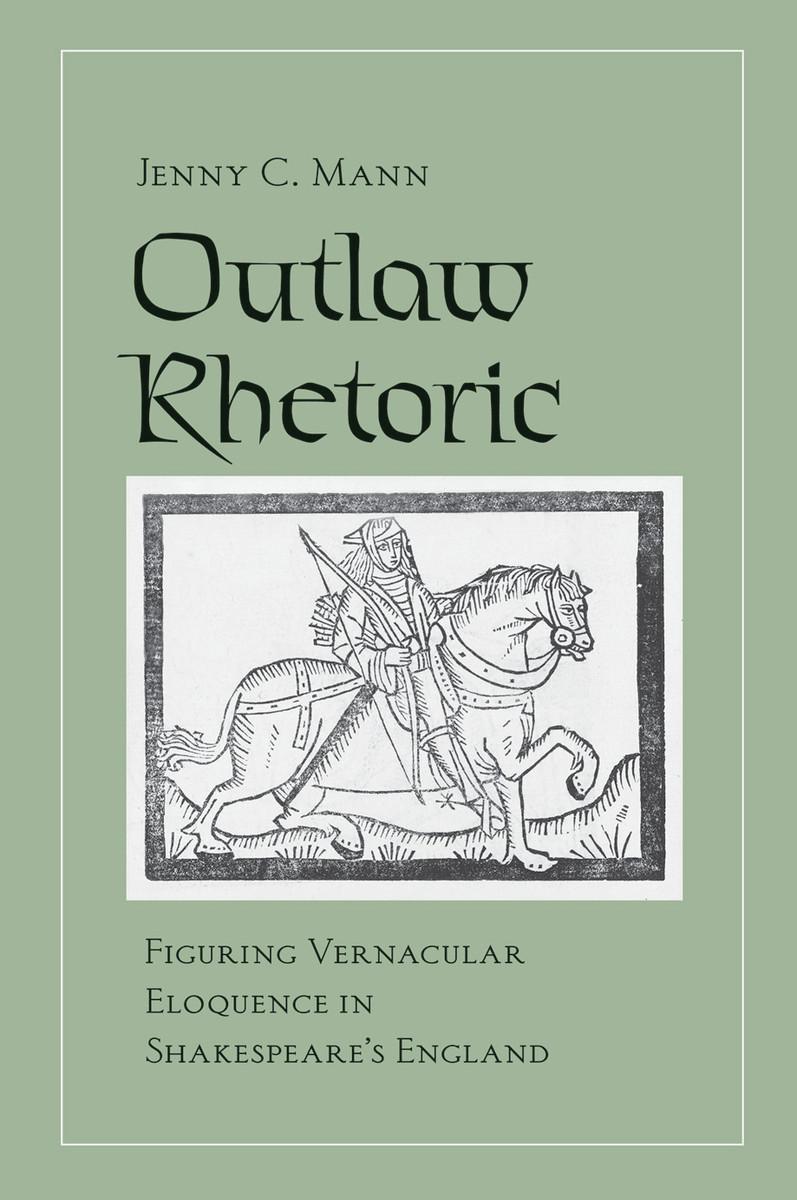
A central feature of English Renaissance humanism was its reverence for classical Latin as the one true form of eloquent expression. Yet sixteenth-century writers increasingly came to believe that England needed an equally distinguished vernacular language to serve its burgeoning national community. Thus, one of the main cultural projects of Renaissance rhetoricians was that of producing a "common" vernacular eloquence, mindful of its classical origins yet self-consciously English in character. The process of vernacularization began during Henry VIII's reign and continued, with fits and starts, late into the seventeenth century.
In Outlaw Rhetoric, Jenny C. Mann examines the substantial and largely unexplored archive of vernacular rhetorical guides produced in England between 1500 and 1700. Writers of these guides drew upon classical training as they translated Greek and Latin figures of speech into an everyday English that could serve the ends of literary and national invention. In the process, however, they confronted aspects of rhetoric that run counter to its civilizing impulse. For instance, Mann finds repeated references to Robin Hood, indicating an ongoing concern that vernacular rhetoric is "outlaw" to the classical tradition because it is common, popular, and ephemeral. As this book shows, however, such allusions hint at a growing acceptance of the nonclassical along with a new esteem for literary production that can be identified as native to England. Working across a range of genres, Mann demonstrates the effects of this tension between classical rhetoric and English outlawry in works by Spenser, Shakespeare, Sidney, Jonson, and Cavendish. In so doing she reveals the political stakes of the vernacular rhetorical project in the age of Shakespeare.
Zahle einfach mit Karte, Klarna, Apple Pay oder Google Pay. Nicht zufrieden? Du hast immer ein 14-tägiges Widerrufsrecht. Lies mehr in unseren AGB. Hast du Fragen, schreib uns eine E-Mail an hello@memmo.org.
Memmo macht das Lernen einfacher – wo auch immer du bist. Bei uns findest du deine Kursbücher und smarte Lerntools an einem Ort: Zusammenfassungen, Quizzes, Podcasts und Lernkarten. Und Ted, dein Lernbuddy, beantwortet alles, was du wissen möchtest. Über 50.000 Studierende lernen bereits hier – gemacht, damit du schneller lernst und weniger Stress hast.