
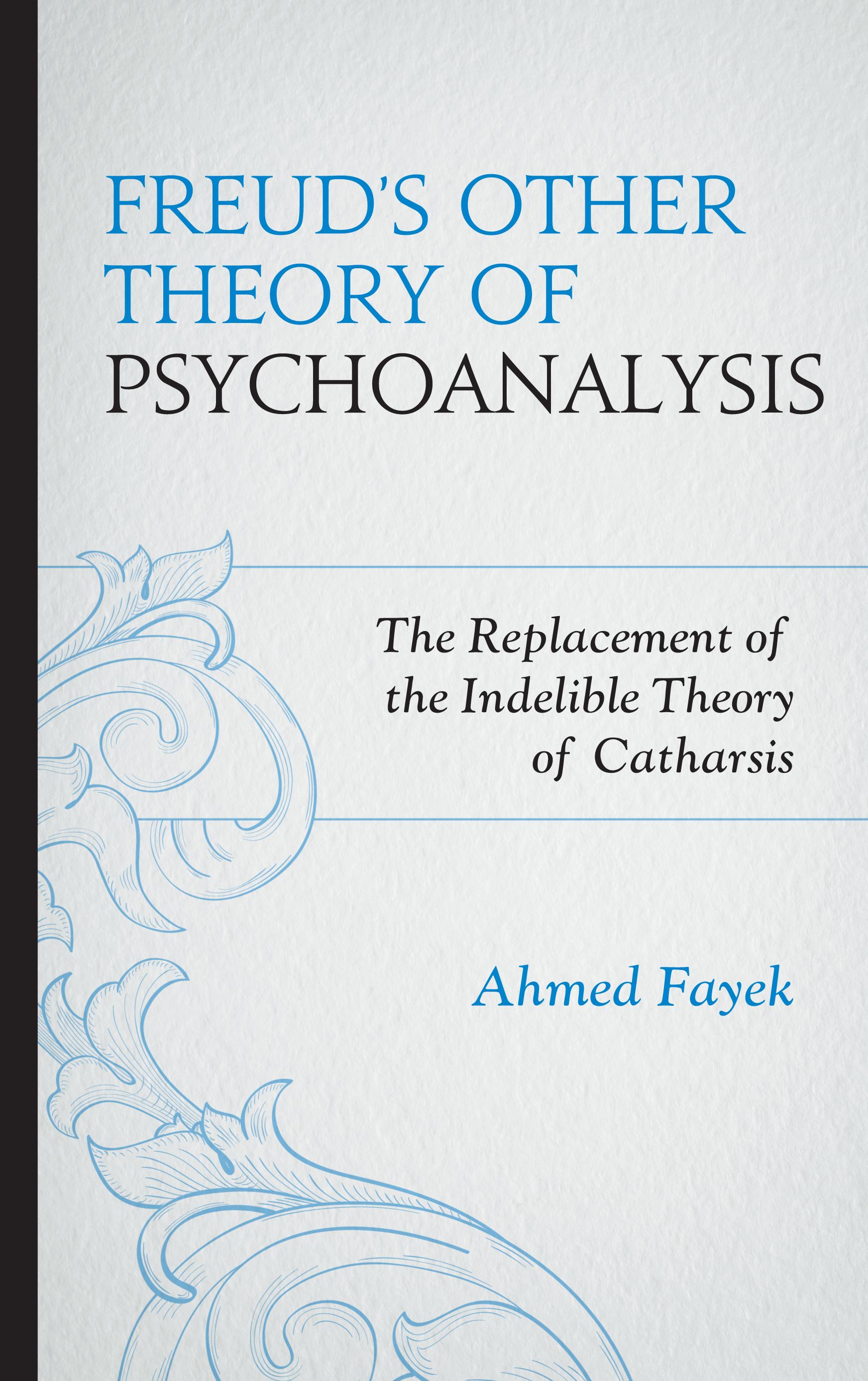
Freud’s Other Theory of Psychoanalysis: The Replacement for the Indelible Theory of Catharsis argues that Freud’s familiar theory of psychoanalysis is an elaboration of his catharsis theory. Although it changed from repression of painful memories to the repression sexuality, to repression of infantile sexuality, to repressing of the Id, it still remained structurally a theory of the repression of objectionable urges. Even in Freud’s desperate attempt to replace it with a psychology of the ego, the repression of the objectionable urges, or the Id, remained the source of psychopathology. This theory had an indelible effect on Freud, and remained ‘the prototype’ of almost all theories of contemporary psychoanalysis.
However, when Freud changed his method of dealing with his patients to listening to their associations he discovered the workings of the primary process, the representation in the mind of the endosomatic stimuli, and the manner in which the primary and the secondary processes entwine to form both the normal and abnormal ‘psychical’ products. Another theory of psychoanalysis came out of those core observations and Freud was able to give psychoanalysis a central position in western culture as a whole, and a significant place in the study and treatment of mental disorders. Freud’s unstated discoveries had all the elements of another full theory; it was the theory that gave psychoanalysis its outstanding status. However, he did not articulate it as a distinct theory that could replace the catharsis theory. This tacit theory is a theory that does not explain psychopathology in terms of repression of objectionable urges, but explicates the manners of the entwinement of the primary and secondary processes that create the healthy and the psychopathological conditions. It is a comprehensive theory of psychoanalysis that has applications in almost all psychical matters, one of which is clinical.
The replacement theory is not another theory like the ones offered by the contemporary schools. It is implicit in the Freudian text; it is a Freudian replacement for a popular, but flawed, Freudian theory.
However, when Freud changed his method of dealing with his patients to listening to their associations he discovered the workings of the primary process, the representation in the mind of the endosomatic stimuli, and the manner in which the primary and the secondary processes entwine to form both the normal and abnormal ‘psychical’ products. Another theory of psychoanalysis came out of those core observations and Freud was able to give psychoanalysis a central position in western culture as a whole, and a significant place in the study and treatment of mental disorders. Freud’s unstated discoveries had all the elements of another full theory; it was the theory that gave psychoanalysis its outstanding status. However, he did not articulate it as a distinct theory that could replace the catharsis theory. This tacit theory is a theory that does not explain psychopathology in terms of repression of objectionable urges, but explicates the manners of the entwinement of the primary and secondary processes that create the healthy and the psychopathological conditions. It is a comprehensive theory of psychoanalysis that has applications in almost all psychical matters, one of which is clinical.
The replacement theory is not another theory like the ones offered by the contemporary schools. It is implicit in the Freudian text; it is a Freudian replacement for a popular, but flawed, Freudian theory.
Zahle einfach mit Karte, Klarna, Apple Pay oder Google Pay. Nicht zufrieden? Du hast immer ein 14-tägiges Widerrufsrecht. Lies mehr in unseren AGB. Hast du Fragen, schreib uns eine E-Mail an hello@memmo.org.
Memmo macht das Lernen einfacher – wo auch immer du bist. Bei uns findest du deine Kursbücher und smarte Lerntools an einem Ort: Zusammenfassungen, Quizzes, Podcasts und Lernkarten. Und Ted, dein Lernbuddy, beantwortet alles, was du wissen möchtest. Über 50.000 Studierende lernen bereits hier – gemacht, damit du schneller lernst und weniger Stress hast.