
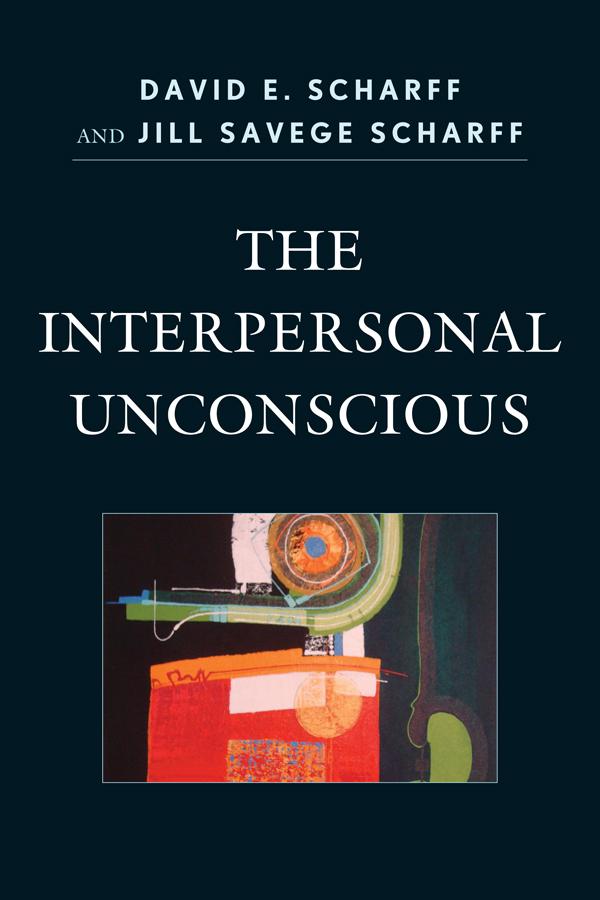
In The Interpersonal Unconscious, the Scharffs explore the construction and expression of the unconscious in interpersonal interaction. The authors draw from individual analysis, conjoint psychotherapy with families and couples, and from the use of group process in teaching. They introduce chaos theory applied to dynamical systems and South American theories of the link and the analytic field, now available in English. Advances in development, neuroscience, ethology, and attachment theory all contribute to their expanded view of the unconscious mind and its relationships. In turn, the Scharffs' view of the interpersonal unconscious revises current views of development, clinical theory, and unconscious psychic organization.
The unconscious is not individual as Freud thought: It is fundamentally interpersonal at the same time that it feels intensely our own. We live in an unconscious field. Each of us contributes to it, and each is structured and enriched by it. We are social creatures, not only in our behaviors and interactions, but in the deepest recesses of our minds.
We can no longer conceive of the unconscious as an individual property according to Freud's original topographic and structural theories. Even though the individual unconscious is unique, paradoxically it is also shared in reciprocal interactions with intimate partners, work groups, and social groups. In this state of mutual influence, our unconscious minds are constantly under construction across the life cycle.
The unconscious is not individual as Freud thought: It is fundamentally interpersonal at the same time that it feels intensely our own. We live in an unconscious field. Each of us contributes to it, and each is structured and enriched by it. We are social creatures, not only in our behaviors and interactions, but in the deepest recesses of our minds.
We can no longer conceive of the unconscious as an individual property according to Freud's original topographic and structural theories. Even though the individual unconscious is unique, paradoxically it is also shared in reciprocal interactions with intimate partners, work groups, and social groups. In this state of mutual influence, our unconscious minds are constantly under construction across the life cycle.
Zahle einfach mit Karte, Klarna, Apple Pay oder Google Pay. Nicht zufrieden? Du hast immer ein 14-tägiges Widerrufsrecht. Lies mehr in unseren AGB. Hast du Fragen, schreib uns eine E-Mail an hello@memmo.org.
Memmo macht das Lernen einfacher – wo auch immer du bist. Bei uns findest du deine Kursbücher und smarte Lerntools an einem Ort: Zusammenfassungen, Quizzes, Podcasts und Lernkarten. Und Ted, dein Lernbuddy, beantwortet alles, was du wissen möchtest. Über 50.000 Studierende lernen bereits hier – gemacht, damit du schneller lernst und weniger Stress hast.