
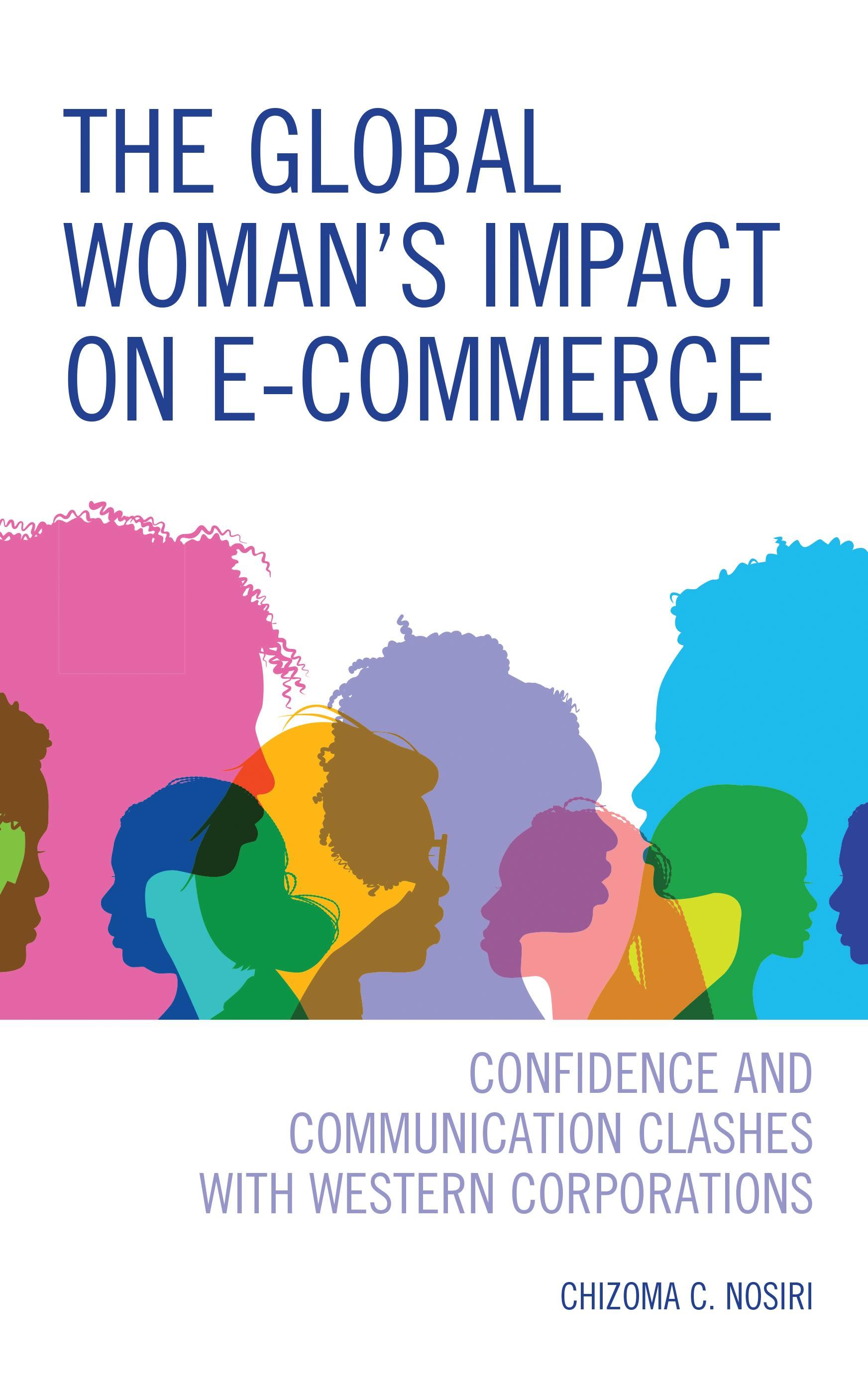
Imagine the irritations of getting unsatisfying service with Western corporations whose products are sold strictly online. Perhaps it was another Amazon.com order that was never delivered to a residence in New Delhi, India, an uncertain TransUnion error made on the credit of an individual in Hong Kong, or a lack of action by Citibank to refund a Nigerian customer’s account. Receiving incompetent management feedback or the corporate’s reluctance to resolve minor customers’ issues are unlimited in the United States and even greatly unconstrained in the global environment. These consumer conflicts elevated to the global environment become massive, and are destructive to the global consumer domain structure of the Global Female consumer, her online engagement behavior and confidence, and online companies branding on a global level. Such Non-Western consumer and corporate conflict interactions can create a catastrophe of cultural wars and clashes.
This book discusses the cross-cultural study, which determines if Western corporations’ computer-mediated-communication complaint of a select group of global female consumer, who were born, raised, and live in China, Nigeria, and India, is affected by their self-confidence, cultural norms, or language barriers. The book follows a scholarly study which determined the factors that make Western corporations’ online tools unfavorable to the select group of global females when it comes to expressing their concerns as opposed to complaining and addressing conflict issues with the local native businesses in their country. In addition, the study explored the difference in her confidence level and behavior during a complaint using corporate computer-mediated-communication tools contrasted with social media platforms (i.e. Facebook or Twitter). This book show cases the global female consumer’s experience to explore whether she is welcomed, treated as a family member, friend, guest, visitor or stranger during her online shopping. Since her perspective and complaint is an important component to Western corporations’ global success this book illustrates how her voice and money matters.
This book discusses the cross-cultural study, which determines if Western corporations’ computer-mediated-communication complaint of a select group of global female consumer, who were born, raised, and live in China, Nigeria, and India, is affected by their self-confidence, cultural norms, or language barriers. The book follows a scholarly study which determined the factors that make Western corporations’ online tools unfavorable to the select group of global females when it comes to expressing their concerns as opposed to complaining and addressing conflict issues with the local native businesses in their country. In addition, the study explored the difference in her confidence level and behavior during a complaint using corporate computer-mediated-communication tools contrasted with social media platforms (i.e. Facebook or Twitter). This book show cases the global female consumer’s experience to explore whether she is welcomed, treated as a family member, friend, guest, visitor or stranger during her online shopping. Since her perspective and complaint is an important component to Western corporations’ global success this book illustrates how her voice and money matters.
Zahle einfach mit Karte, Klarna, Apple Pay oder Google Pay. Nicht zufrieden? Du hast immer ein 14-tägiges Widerrufsrecht. Lies mehr in unseren AGB. Hast du Fragen, schreib uns eine E-Mail an hello@memmo.org.
Memmo macht das Lernen einfacher – wo auch immer du bist. Bei uns findest du deine Kursbücher und smarte Lerntools an einem Ort: Zusammenfassungen, Quizzes, Podcasts und Lernkarten. Und Ted, dein Lernbuddy, beantwortet alles, was du wissen möchtest. Über 50.000 Studierende lernen bereits hier – gemacht, damit du schneller lernst und weniger Stress hast.