
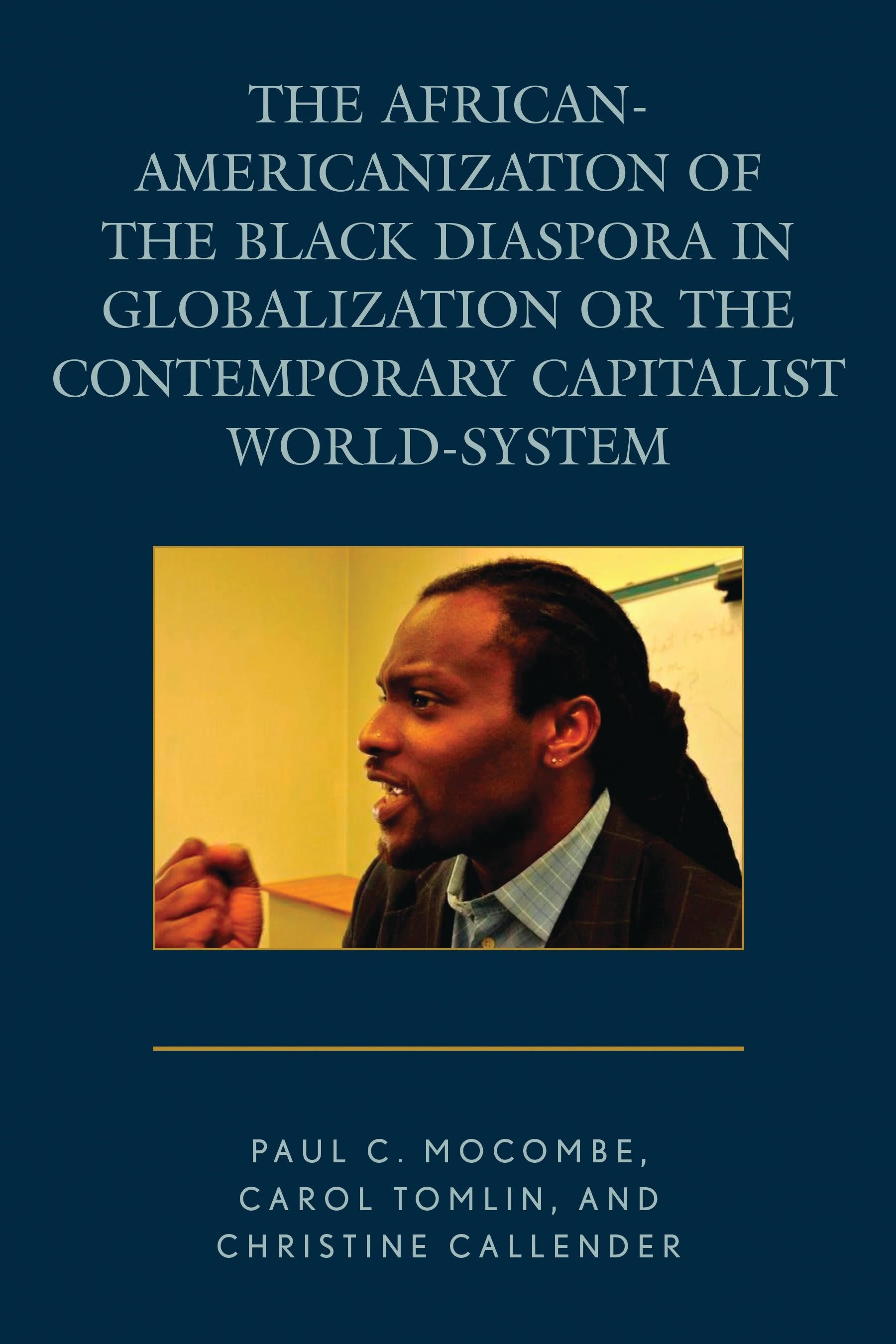
This work sets forth the argument that in the age of (neoliberal) globalization, black people around the world are ever-so slowly becoming “African-Americanized”. They are integrated and embourgeoised in the racial-class dialectic of black America by the material and ideological influences of the Protestant ethic and the spirit of capitalism as promulgated throughout the diaspora by two social class language games of the black American community: the black underclass (Hip-Hop culture), speaking for and representing black youth practical consciousness; and black American charismatic liberal/conservative bourgeois Protestant preachers like TD Jakes, Creflo Dollar, etc., speaking for and representing the black bourgeois (educated) professional and working classes. Although on the surface the practical consciousness and language of the two social class language games appear to diametrically oppose one another, the authors argue, given the two groups’ material wealth within the Protestant ethic and the spirit of capitalism of corporate (neoliberal) America, they do not. Both groups have the same underlying practical consciousness, subjects/agents of the Protestant Ethic and the spirit of capitalism. The divergences, where they exist, are due to their interpellation, embourgeoisement, and differentiation via different ideological apparatuses of the society: church and education, i.e., schools, for the latter; and prisons, the streets, and athletic and entertainment industries for the former. Contemporarily, in the age of globalization and neoliberalism, both groups have become the bearers of ideological and linguistic domination in black neoliberal America, and are antagonistically, converging the practical consciousness of the black or African diaspora towards their respective social class language games. We are suggesting that the socialization of other black people in the diaspora ought to be examined against and within the dialectical backdrop of this class power dynamic and the cultural and religious heritages of the black American people responsible for this phenomenon or process of convergence we are referring to as the “African-Americanization” of the black diaspora.
Zahle einfach mit Karte, Klarna, Apple Pay oder Google Pay. Nicht zufrieden? Du hast immer ein 14-tägiges Widerrufsrecht. Lies mehr in unseren AGB. Hast du Fragen, schreib uns eine E-Mail an hello@memmo.org.
Memmo macht das Lernen einfacher – wo auch immer du bist. Bei uns findest du deine Kursbücher und smarte Lerntools an einem Ort: Zusammenfassungen, Quizzes, Podcasts und Lernkarten. Und Ted, dein Lernbuddy, beantwortet alles, was du wissen möchtest. Über 50.000 Studierende lernen bereits hier – gemacht, damit du schneller lernst und weniger Stress hast.