
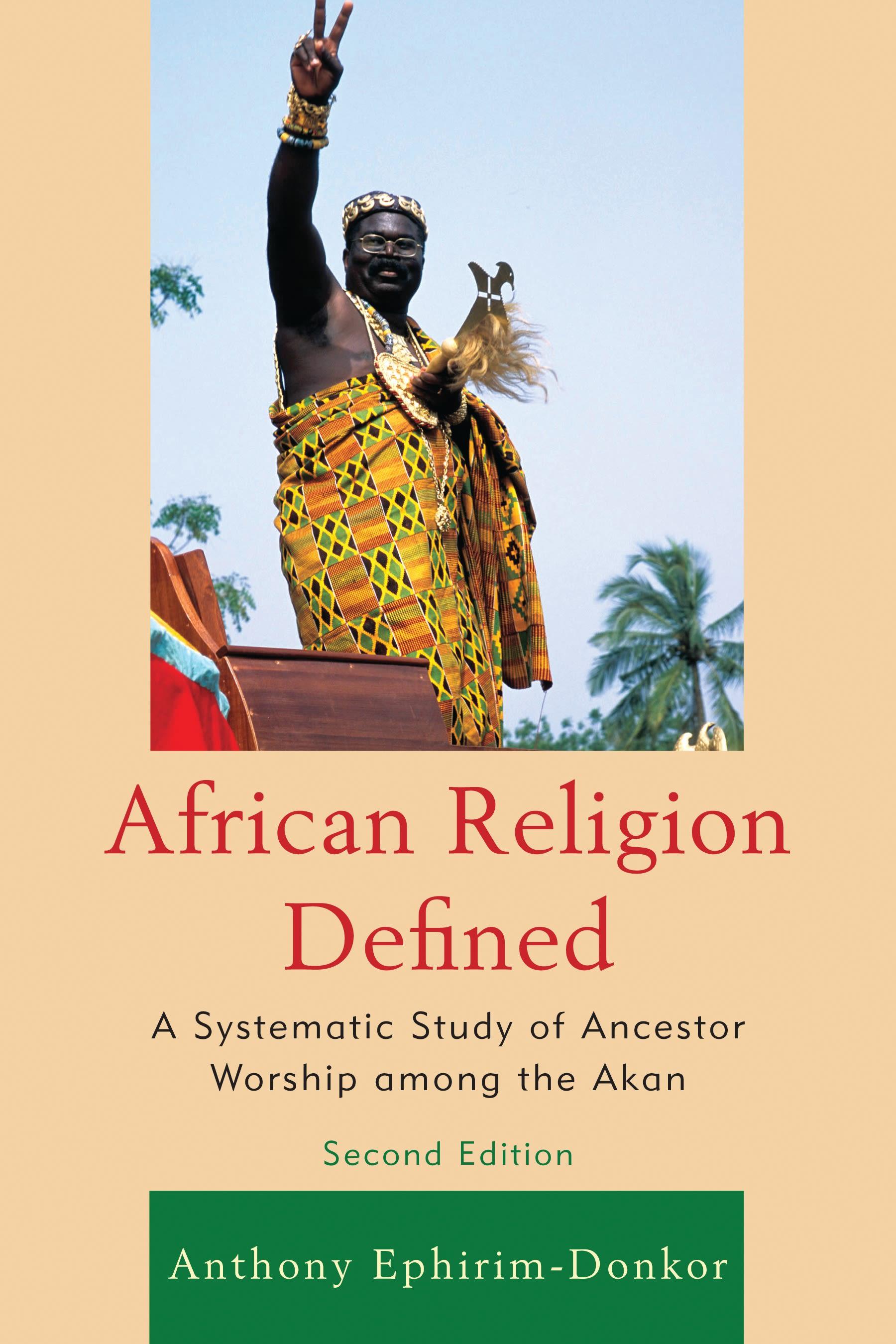
African religion is ancestor worship; it revolves around the dead, now thought to be alive and well in heaven (the Samanadzie) and propitiated by the living on earth. For the Akan, the ancestors’ stool is the emblem of the ancestors (Nananom Nsamanfo). Led by their kings and queen mothers as living ancestors, the Akan periodically propitiate the ancestors’ stools housing their ancestors. In return, the ancestors and deities influence the affairs of living descendants, making ancestor worship as tenably viable as any other religion.
This second edition updates the scholarship on ancestor worship by demonstrating the centrality of the ancestors’ stool as the ultimate religious symbol. In addition, all chapters have been expanded. A new chapter has been added to show how ancestor worship is pragmatically integrative, theologically sound, teleological as well as soteriological, with a highly trained clerical body and elders as mediators.
This second edition updates the scholarship on ancestor worship by demonstrating the centrality of the ancestors’ stool as the ultimate religious symbol. In addition, all chapters have been expanded. A new chapter has been added to show how ancestor worship is pragmatically integrative, theologically sound, teleological as well as soteriological, with a highly trained clerical body and elders as mediators.
Zahle einfach mit Karte, Klarna, Apple Pay oder Google Pay. Nicht zufrieden? Du hast immer ein 14-tägiges Widerrufsrecht. Lies mehr in unseren AGB. Hast du Fragen, schreib uns eine E-Mail an hello@memmo.org.
Memmo macht das Lernen einfacher – wo auch immer du bist. Bei uns findest du deine Kursbücher und smarte Lerntools an einem Ort: Zusammenfassungen, Quizzes, Podcasts und Lernkarten. Und Ted, dein Lernbuddy, beantwortet alles, was du wissen möchtest. Über 50.000 Studierende lernen bereits hier – gemacht, damit du schneller lernst und weniger Stress hast.