
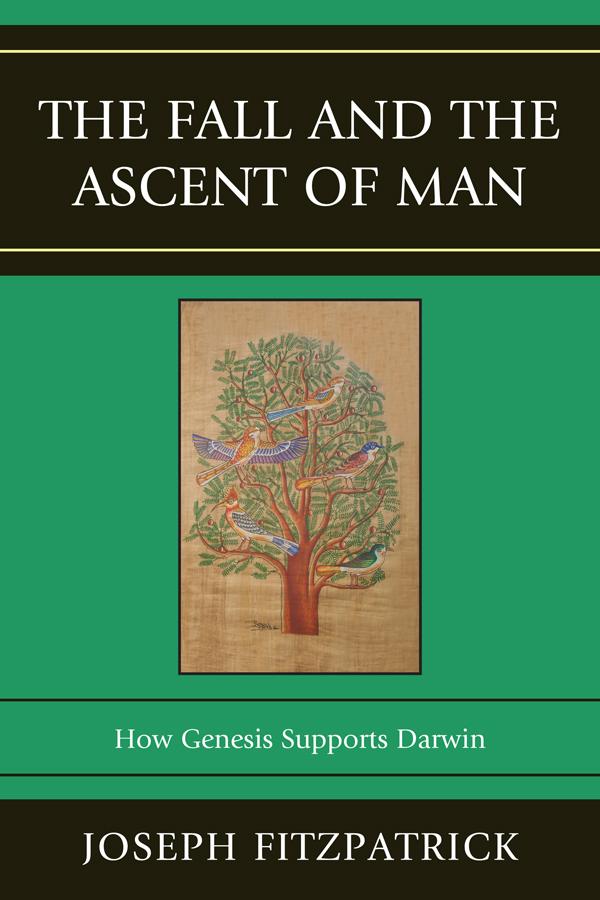
In this groundbreaking work, Joseph Fitzpatrick challenges the traditional interpretation of chapter three of Genesis: the story of Adam and Eve in Eden. This narrative was imposed on the Christian West, but not the East, through the genius of Augustine of Hippo and came to dominate Catholic and Protestant theology. Fitzpatrick points to weaknesses in Augustine’s interpretation of the Genesis story before providing a revolutionary interpretation of his own. Fitzpatrick claims that this story is about nothing less than hominisation. Far from being an account of the original sin against God, it is in fact a symbolic tale about the ascent of a hominid couple to full human consciousness.
Aided by modern anthropology, Fitzpatrick is able to enter into the mentality of the ancient Hebrews and adopt a literary approach to the biblical text by comparing it with the Babylonian Epic of Gilgamesh. In The Fall and the Ascent of Man, he clears away the clutter of centuries and lets us see the famous tale for what it is: the story of the emergence of humankind on the face of the earth, first in nature, then in history. This book provides the key for a new interpretation of the early chapters of Genesis within a new understanding of Judaeo-Christian salvation history. By offering a biblical account of human sinfulness, Fitzpatrick hopes to draw Western theology closer to that of the Orthodox East and point the way forward for Christian theology in the twenty-first century.
Aided by modern anthropology, Fitzpatrick is able to enter into the mentality of the ancient Hebrews and adopt a literary approach to the biblical text by comparing it with the Babylonian Epic of Gilgamesh. In The Fall and the Ascent of Man, he clears away the clutter of centuries and lets us see the famous tale for what it is: the story of the emergence of humankind on the face of the earth, first in nature, then in history. This book provides the key for a new interpretation of the early chapters of Genesis within a new understanding of Judaeo-Christian salvation history. By offering a biblical account of human sinfulness, Fitzpatrick hopes to draw Western theology closer to that of the Orthodox East and point the way forward for Christian theology in the twenty-first century.
Zahle einfach mit Karte, Klarna, Apple Pay oder Google Pay. Nicht zufrieden? Du hast immer ein 14-tägiges Widerrufsrecht. Lies mehr in unseren AGB. Hast du Fragen, schreib uns eine E-Mail an hello@memmo.org.
Memmo macht das Lernen einfacher – wo auch immer du bist. Bei uns findest du deine Kursbücher und smarte Lerntools an einem Ort: Zusammenfassungen, Quizzes, Podcasts und Lernkarten. Und Ted, dein Lernbuddy, beantwortet alles, was du wissen möchtest. Über 50.000 Studierende lernen bereits hier – gemacht, damit du schneller lernst und weniger Stress hast.