
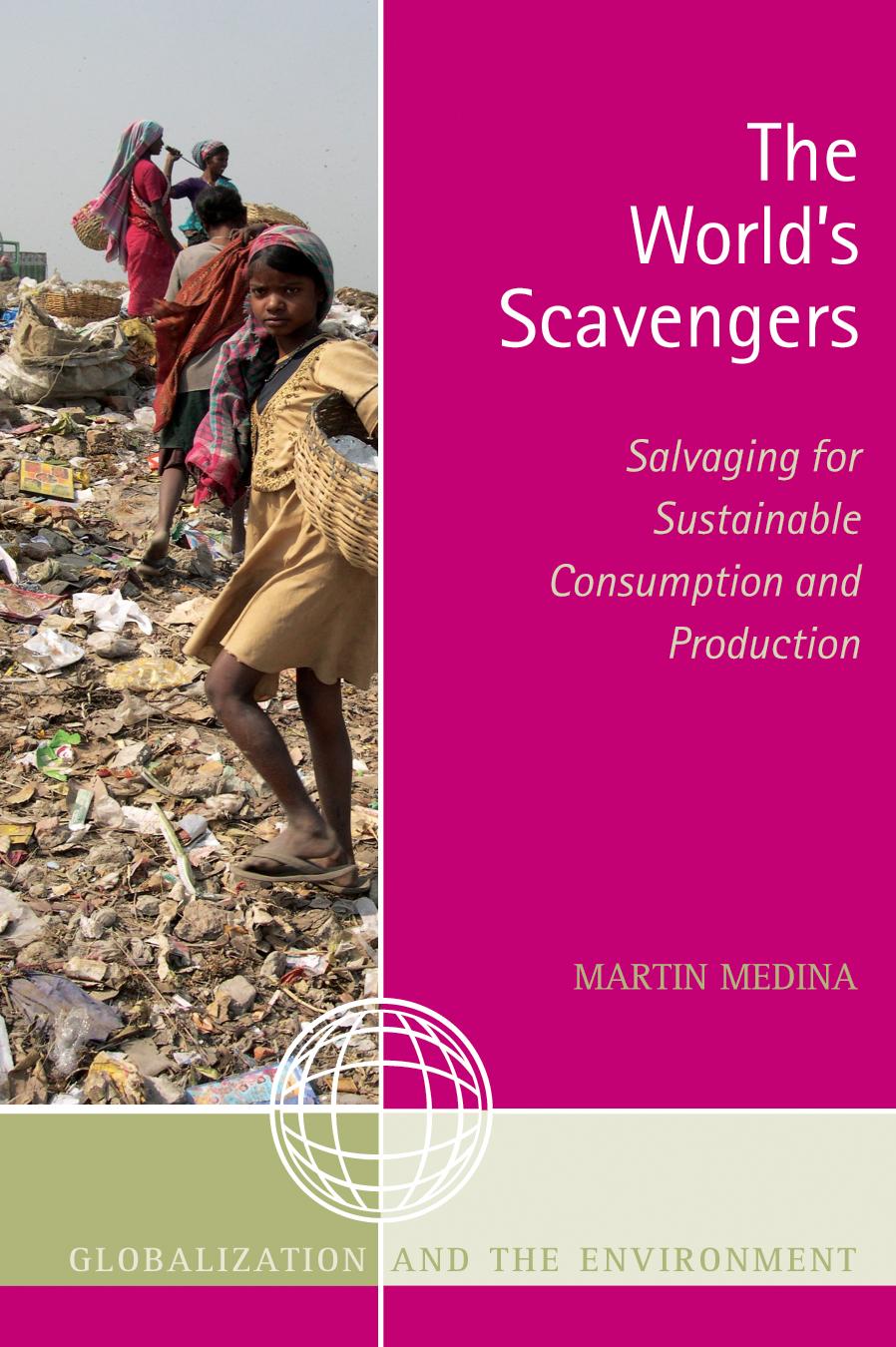
Medina tells us that up to 2% of the urban population in developing countries survives by salvaging materials from waste for recycling, which represents up to 64 million scavengers in the world today. Despite these numbers, we know little about the impact of scavenging on global capitalism development. The author examines its historical evolution and its linkages with formal and informal sector productive activities in capitalist and non-capitalist societies, in case studies from Mexico, Brazil, Colombia, Argentina, Egypt, the Philippines, and India. His new book radically alters popular perceptions on scavenging, demonstrating that many widely-held beliefs are wrong: scavenging is not primarily the activity of the poor nor is it a strictly marginal activity; the economic impact of scavenging is significant and can increase industrial competitiveness; and scavenging can be compatible with a sustainable waste management system. Scavenging represents an adaptive response to poverty, yet at the same time it can be a resource to cities, whose contributions should be recognized and understood.
Seiten: 318
Kategorie: Ekonomi & Utveckling
e-ISBN: 9780759113800
Versandgewicht: 1.2 kg
Versand in: 1-2 Tage
Zahle einfach mit Karte, Klarna, Apple Pay oder Google Pay. Nicht zufrieden? Du hast immer ein 14-tägiges Widerrufsrecht. Lies mehr in unseren AGB. Hast du Fragen, schreib uns eine E-Mail an hello@memmo.org.
Memmo macht das Lernen einfacher – wo auch immer du bist. Bei uns findest du deine Kursbücher und smarte Lerntools an einem Ort: Zusammenfassungen, Quizzes, Podcasts und Lernkarten. Und Ted, dein Lernbuddy, beantwortet alles, was du wissen möchtest. Über 50.000 Studierende lernen bereits hier – gemacht, damit du schneller lernst und weniger Stress hast.