
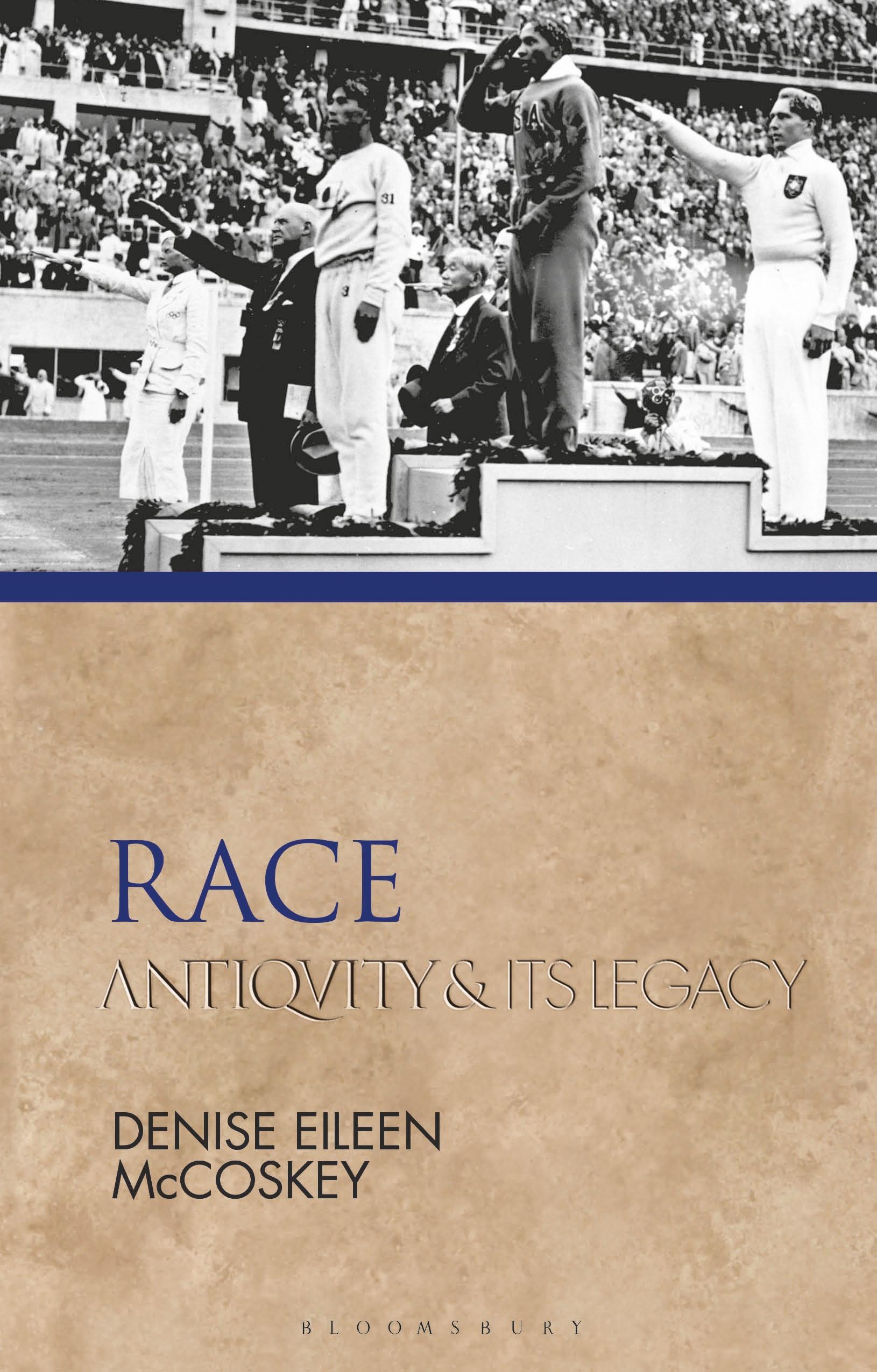
How do different cultures think about race? In the modern era, racial distinctiveness has been assessed primarily in terms of a person's physical appearance. But it was not always so. As Denise McCoskey shows, the ancient Greeks and Romans did not use skin colour as the basis for categorising ethnic disparity. The colour of one's skin lies at the foundation of racial variability today because it was used during the heyday of European exploration and colonialism to construct a hierarchy of civilizations and then justify slavery and other forms of economic exploitation. Assumptions about race thus have to take into account factors other than mere physiognomy. This is particularly true in relation to the classical world. In fifth century Athens, racial theory during the Persian Wars produced the categories 'Greek' and 'Barbarian', and set them in brutal opposition to one another: a process that could be as intense and destructive as 'black and 'white' in our own age. Ideas about race in antiquity were therefore completely distinct but as closely bound to political and historical contexts as those that came later.
This provocative book boldly explores the complex matrices of race - and the differing interpretations of ancient and modern - across epic, tragedy and the novel. Ranging from Theocritus to Toni Morrison, and from Tacitus and Pliny to Bernal's seminal study Black Athena, this is a powerful and original new assessment.
This provocative book boldly explores the complex matrices of race - and the differing interpretations of ancient and modern - across epic, tragedy and the novel. Ranging from Theocritus to Toni Morrison, and from Tacitus and Pliny to Bernal's seminal study Black Athena, this is a powerful and original new assessment.
Seiten: 264
Kategorie: Kultur-, Genus- & Postkoloniala studier
e-ISBN: 9780755697854
Versandgewicht: 1.2 kg
Versand in: 1-2 Tage
Zahle einfach mit Karte, Klarna, Apple Pay oder Google Pay. Nicht zufrieden? Du hast immer ein 14-tägiges Widerrufsrecht. Lies mehr in unseren AGB. Hast du Fragen, schreib uns eine E-Mail an hello@memmo.org.
Memmo macht das Lernen einfacher – wo auch immer du bist. Bei uns findest du deine Kursbücher und smarte Lerntools an einem Ort: Zusammenfassungen, Quizzes, Podcasts und Lernkarten. Und Ted, dein Lernbuddy, beantwortet alles, was du wissen möchtest. Über 50.000 Studierende lernen bereits hier – gemacht, damit du schneller lernst und weniger Stress hast.