
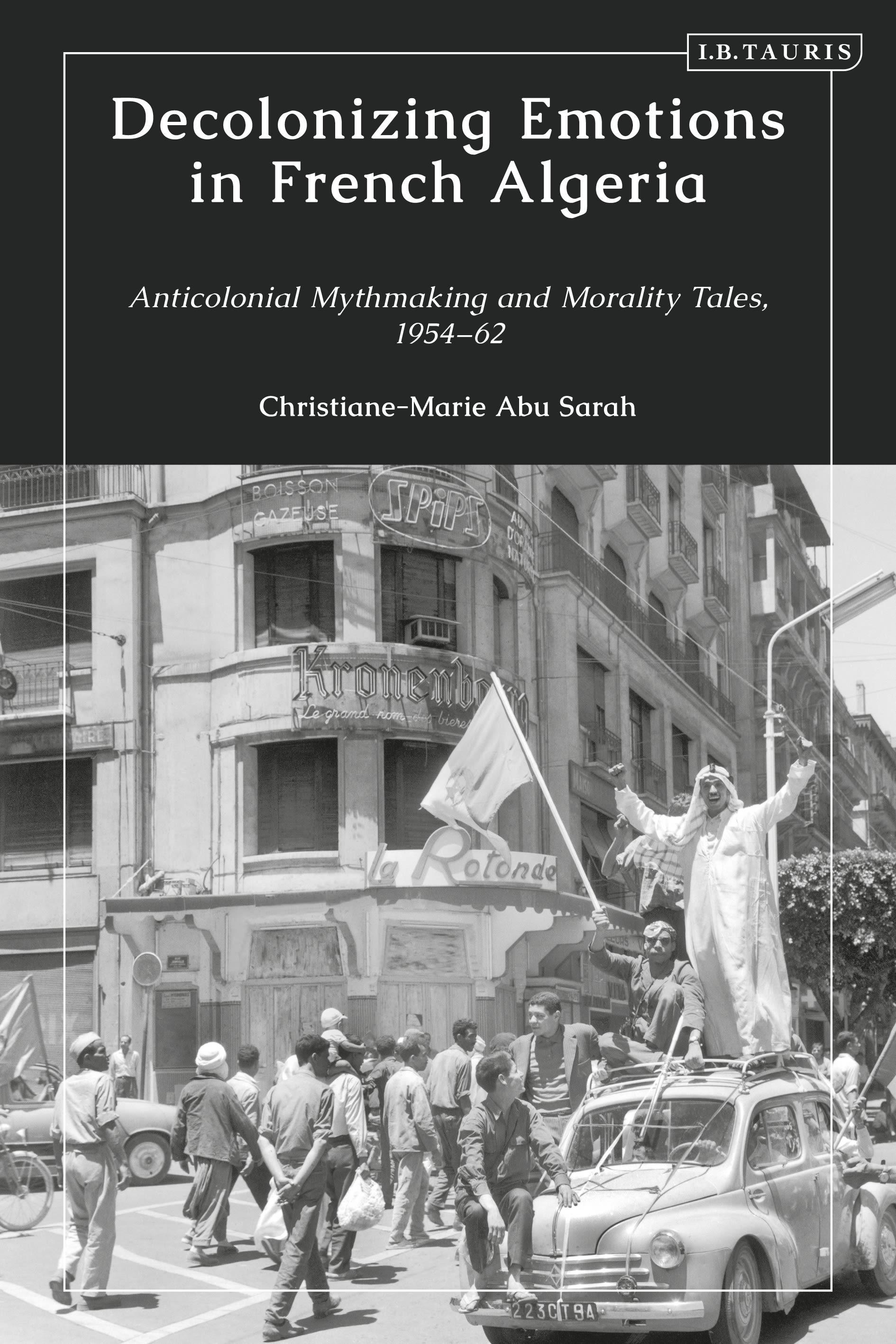
Alongside the diplomatic struggles of the early Cold War, European politicians worked to shape emotions about the postwar order-advocating fear of communism and hope for postwar recovery. In this context, the French Empire in North Africa emerged as one important emotional battleground, where Algerian nationalists and anti-colonial campaigners challenged French narratives about imperial pride and native hysteria.
During the Algerian War (1954–1962), emotions thus became a pivotal part of the independence struggle. Accordingly, Decolonizing Emotions tracks affective politics during the revolution, focusing on members of the Front de libération nationale (FLN), Combattants de la libération (CDL), and Jeune Résistance. Delving into the manifestos, poetry, and personal diaries of anti-colonial activists, the book reveals a rich world of transgressive sentiments, emotional exile, and affective border-crossings.
The stories that surface show how Algerians used biopower to combat an affective regime that refused native populations the right to be angry. The book further chronicles how Europeans complicated ideas of humanitarian pity and confronted the French production of political apathy. It is a history that holds modern relevance, speaking to contemporary debates over race relations and national pride, the pathologizing of Muslim emotions, and the contested process of how myths die (demythologization).
During the Algerian War (1954–1962), emotions thus became a pivotal part of the independence struggle. Accordingly, Decolonizing Emotions tracks affective politics during the revolution, focusing on members of the Front de libération nationale (FLN), Combattants de la libération (CDL), and Jeune Résistance. Delving into the manifestos, poetry, and personal diaries of anti-colonial activists, the book reveals a rich world of transgressive sentiments, emotional exile, and affective border-crossings.
The stories that surface show how Algerians used biopower to combat an affective regime that refused native populations the right to be angry. The book further chronicles how Europeans complicated ideas of humanitarian pity and confronted the French production of political apathy. It is a history that holds modern relevance, speaking to contemporary debates over race relations and national pride, the pathologizing of Muslim emotions, and the contested process of how myths die (demythologization).
Zahle einfach mit Karte, Klarna, Apple Pay oder Google Pay. Nicht zufrieden? Du hast immer ein 14-tägiges Widerrufsrecht. Lies mehr in unseren AGB. Hast du Fragen, schreib uns eine E-Mail an hello@memmo.org.
Memmo macht das Lernen einfacher – wo auch immer du bist. Bei uns findest du deine Kursbücher und smarte Lerntools an einem Ort: Zusammenfassungen, Quizzes, Podcasts und Lernkarten. Und Ted, dein Lernbuddy, beantwortet alles, was du wissen möchtest. Über 50.000 Studierende lernen bereits hier – gemacht, damit du schneller lernst und weniger Stress hast.