
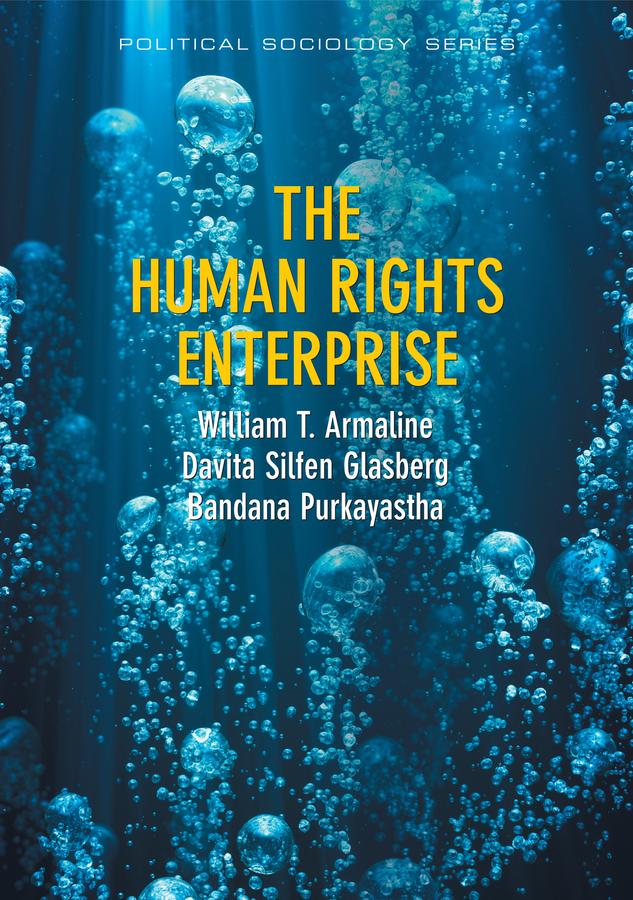
Why do powerful states like the U.S., U.K., China, and Russia repeatedly fail to meet their international legal obligations as defined by human rights instruments? How does global capitalism affect states’ ability to implement human rights, particularly in the context of global recession, state austerity, perpetual war, and environmental crisis? How are political and civil rights undermined as part of moves to impose security and surveillance regimes?
This book presents a framework for understanding human rights as a terrain of struggle over power between states, private interests, and organized, “bottom-up” social movements. The authors develop a critical sociology of human rights focusing on the concept of the human rights enterprise: the process through which rights are defined and realized. While states are designated arbiters of human rights according to human rights instruments, they do not exist in a vacuum. Political sociology helps us to understand how global neoliberalism and powerful non-governmental actors (particularly economic actors such as corporations and financial institutions) deeply affect states’ ability and likelihood to enforce human rights standards.
This book offers keen insights for understanding rights claims, and the institutionalization of, access to, and restrictions on human rights. It will be invaluable to human rights advocates, and undergraduate and graduate students across the social sciences.
Zahle einfach mit Karte, Klarna, Apple Pay oder Google Pay. Nicht zufrieden? Du hast immer ein 14-tägiges Widerrufsrecht. Lies mehr in unseren AGB. Hast du Fragen, schreib uns eine E-Mail an hello@memmo.org.
Memmo macht das Lernen einfacher – wo auch immer du bist. Bei uns findest du deine Kursbücher und smarte Lerntools an einem Ort: Zusammenfassungen, Quizzes, Podcasts und Lernkarten. Und Ted, dein Lernbuddy, beantwortet alles, was du wissen möchtest. Über 50.000 Studierende lernen bereits hier – gemacht, damit du schneller lernst und weniger Stress hast.