
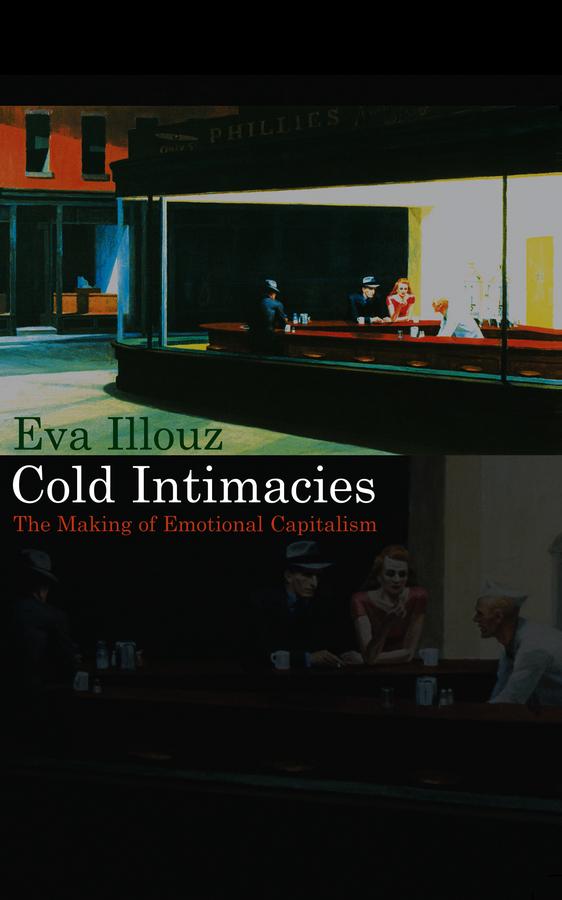
It is commonly assumed that capitalism has created an a-emotional world dominated by bureaucratic rationality; that economic behavior conflicts with intimate, authentic relationships; that the public and private spheres are irremediably opposed to each other; and that true love is opposed to calculation and self-interest.
Eva Illouz rejects these conventional ideas and argues that the culture of capitalism has fostered an intensely emotional culture in the workplace, in the family, and in our own relationship to ourselves. She argues that economic relations have become deeply emotional, while close, intimate relationships have become increasingly defined by economic and political models of bargaining, exchange, and equity. This dual process by which emotional and economic relationships come to define and shape each other is called emotional capitalism. Illouz finds evidence of this process of emotional capitalism in various social sites: self-help literature, women's magazines, talk shows, support groups, and the Internet dating sites. How did this happen? What are the social consequences of the current preoccupation with emotions? How did the public sphere become saturated with the exposure of private life? Why does suffering occupy a central place in contemporary identity? How has emotional capitalism transformed our romantic choices and experiences? Building on and revising the intellectual legacy of critical theory, this book addresses these questions and offers a new interpretation of the reasons why the public and the private, the economic and the emotional spheres have become inextricably intertwined.
Eva Illouz rejects these conventional ideas and argues that the culture of capitalism has fostered an intensely emotional culture in the workplace, in the family, and in our own relationship to ourselves. She argues that economic relations have become deeply emotional, while close, intimate relationships have become increasingly defined by economic and political models of bargaining, exchange, and equity. This dual process by which emotional and economic relationships come to define and shape each other is called emotional capitalism. Illouz finds evidence of this process of emotional capitalism in various social sites: self-help literature, women's magazines, talk shows, support groups, and the Internet dating sites. How did this happen? What are the social consequences of the current preoccupation with emotions? How did the public sphere become saturated with the exposure of private life? Why does suffering occupy a central place in contemporary identity? How has emotional capitalism transformed our romantic choices and experiences? Building on and revising the intellectual legacy of critical theory, this book addresses these questions and offers a new interpretation of the reasons why the public and the private, the economic and the emotional spheres have become inextricably intertwined.
Zahle einfach mit Karte, Klarna, Apple Pay oder Google Pay. Nicht zufrieden? Du hast immer ein 14-tägiges Widerrufsrecht. Lies mehr in unseren AGB. Hast du Fragen, schreib uns eine E-Mail an hello@memmo.org.
Memmo macht das Lernen einfacher – wo auch immer du bist. Bei uns findest du deine Kursbücher und smarte Lerntools an einem Ort: Zusammenfassungen, Quizzes, Podcasts und Lernkarten. Und Ted, dein Lernbuddy, beantwortet alles, was du wissen möchtest. Über 50.000 Studierende lernen bereits hier – gemacht, damit du schneller lernst und weniger Stress hast.
Das könnte dir auch gefallen
Buch kaufen0